“Is this experimental?”
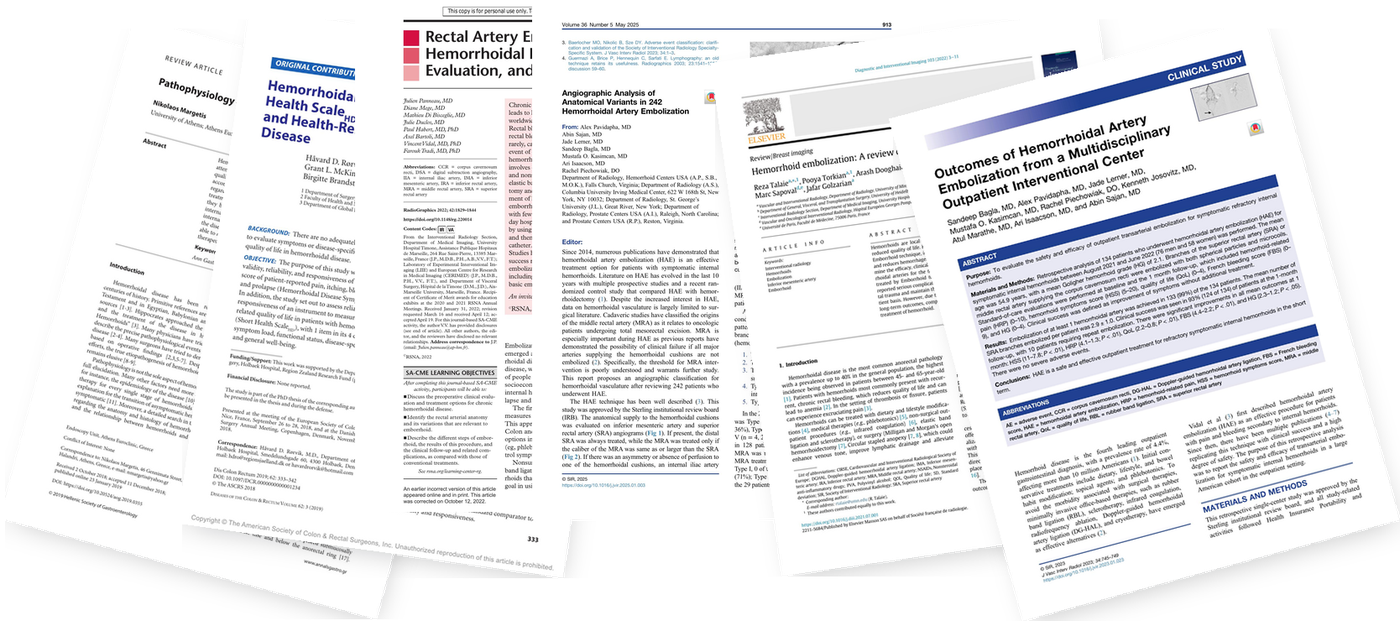
No. Hemorrhoid embolization has been performed and published since 2014, with results from roughly 250 patients across a dozen studies reviewed in the radiology literature by 2022 — and no serious complications reported in any of them.¹ What is transparently true: the trials so far are smaller and younger than the ones behind, say, knee embolization, and there is not yet a head-to-head trial against banding or surgery. We say so on this page. And it passes the test skeptics rightly apply to newer procedures: it’s a covered benefit under most insurance plans.
“Does anything go into my rectum during the procedure?”
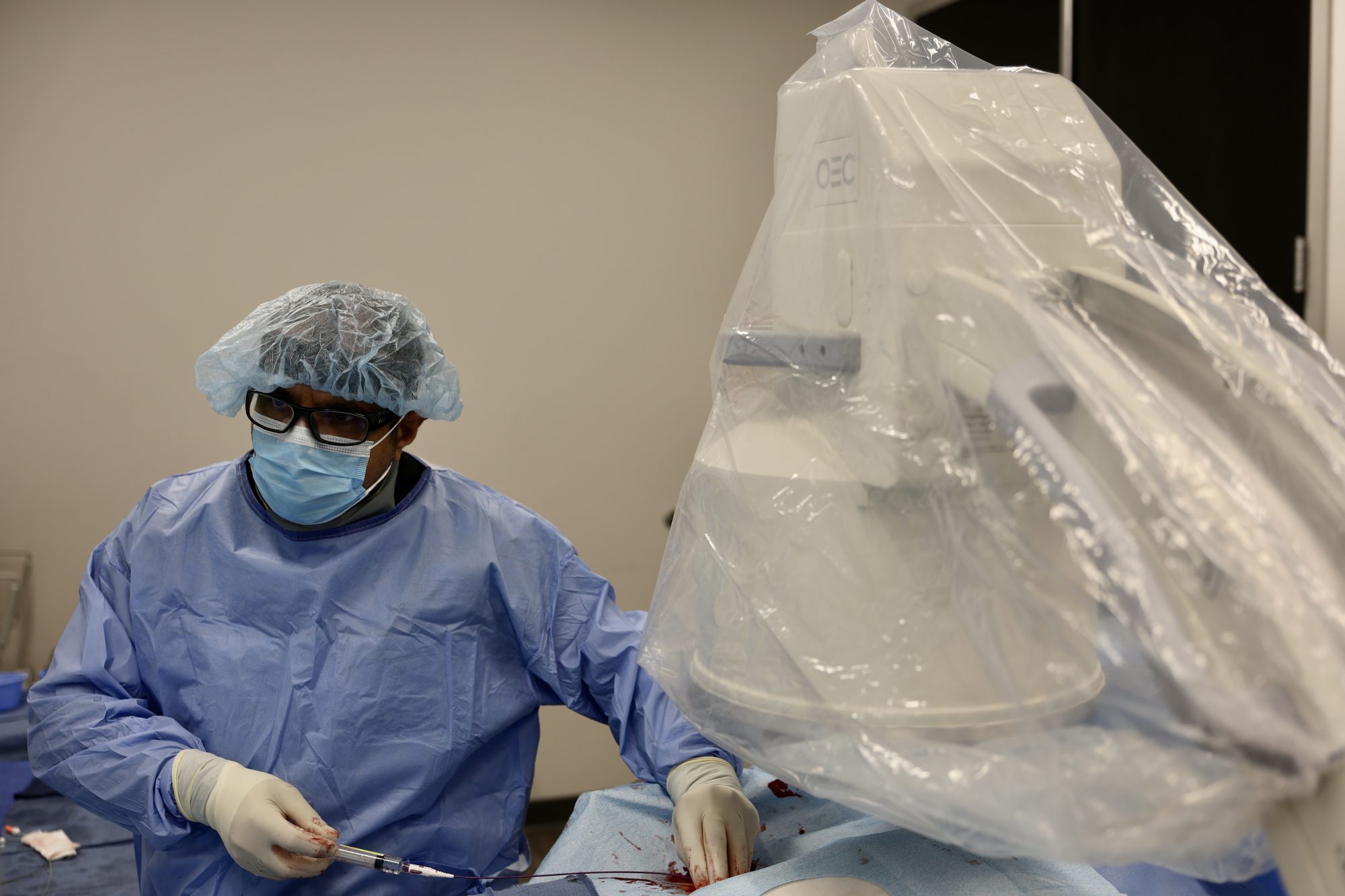
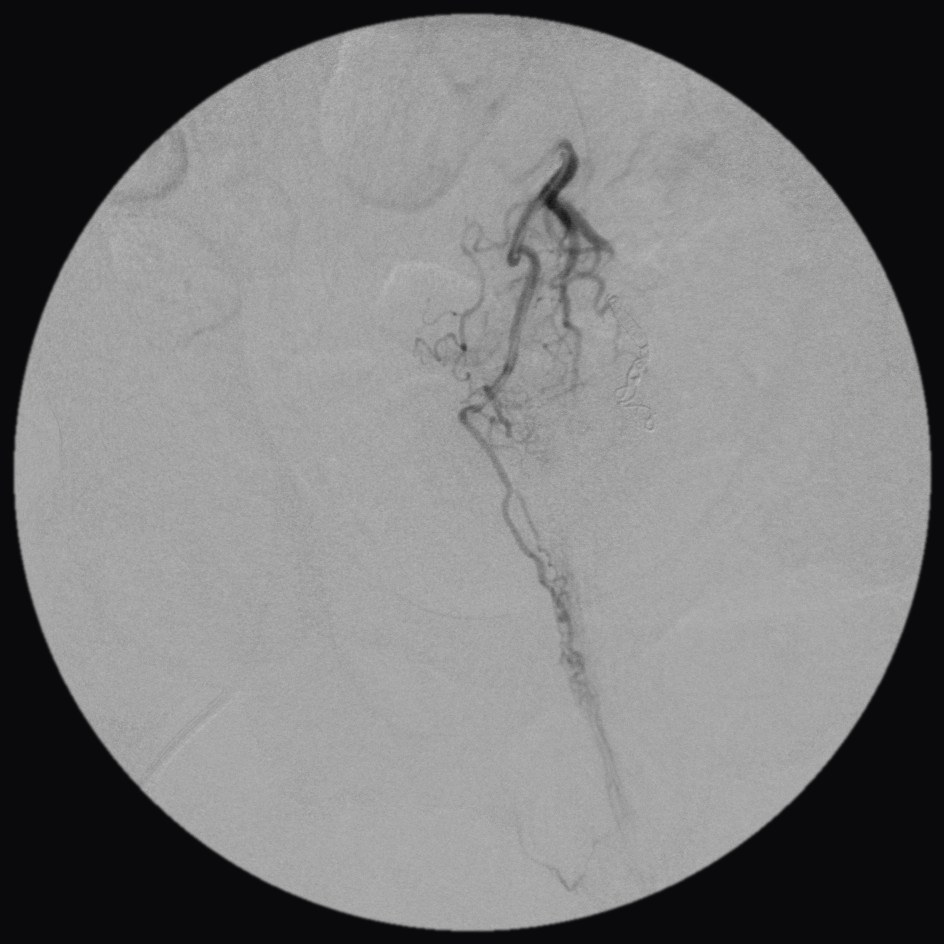
No. That is the single biggest difference between HAE and every other hemorrhoid procedure. Nothing enters the anal canal at all — no scope, no band, no instrument. The entire treatment happens inside the arteries, reached through a pinhole in your upper thigh. The only time anyone examines you is at the consultation, briefly and privately, to confirm which hemorrhoids are causing the trouble.
“Will I be awake? Does it hurt?”
You’re under IV sedation — an anti-anxiety medicine plus pain medicine — relaxed and drowsy, breathing on your own. Not general anesthesia. The access point in your thigh is numbed first. Afterward, many patients feel a pressure sensation — doctors call it tenesmus — that feels like needing to use the restroom even when you don’t. In the published series it showed up in roughly a third to most patients, eased over a few days, and needed nothing more than ibuprofen and Tylenol.¹ We’ll tell you to expect it so it doesn’t worry you.
“How long does the whole thing take?”
The procedure itself takes about an hour. Afterward you rest with us — most of the time about an hour under observation while we watch you and give you fluids, occasionally a bit longer — then you go home. Plan on three to four hours at our office all told, then home the same day. An afternoon, not a hospital stay.
“When can I go back to work? When does the bleeding stop?”
Light activity for the first 48 hours — then your normal routine. Published reviews describe patients returning to daily life the day after the procedure.¹ Bleeding typically settles within one to two weeks, and the full improvement builds over four to six weeks as the hemorrhoids shrink. Driving waits until the next day: the sedation means you’ll need a driver to take you home, no exceptions.
“What exactly goes into the arteries? Does it stay?”
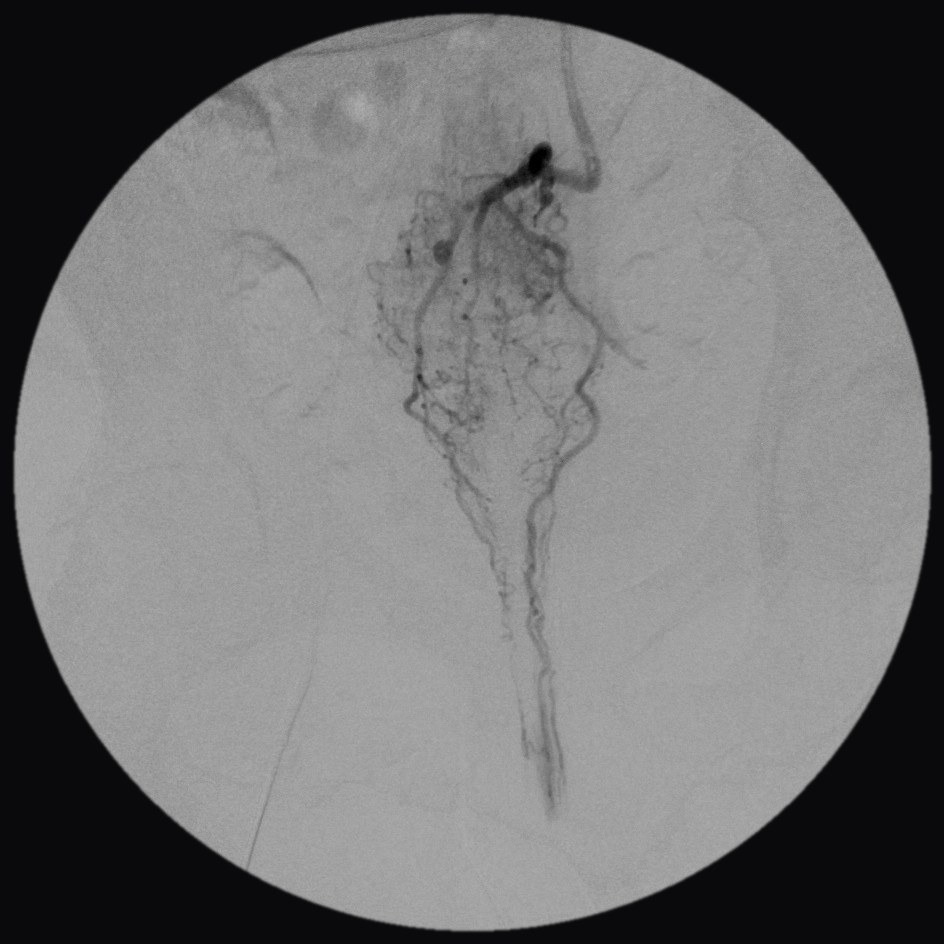
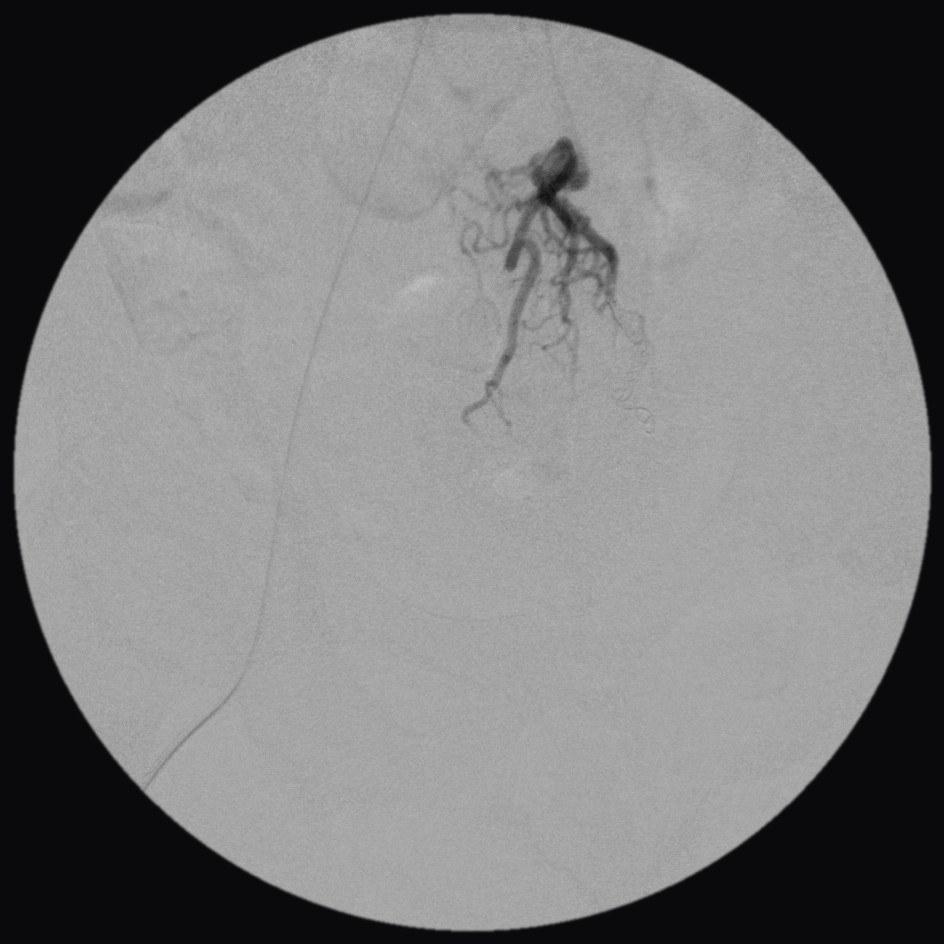
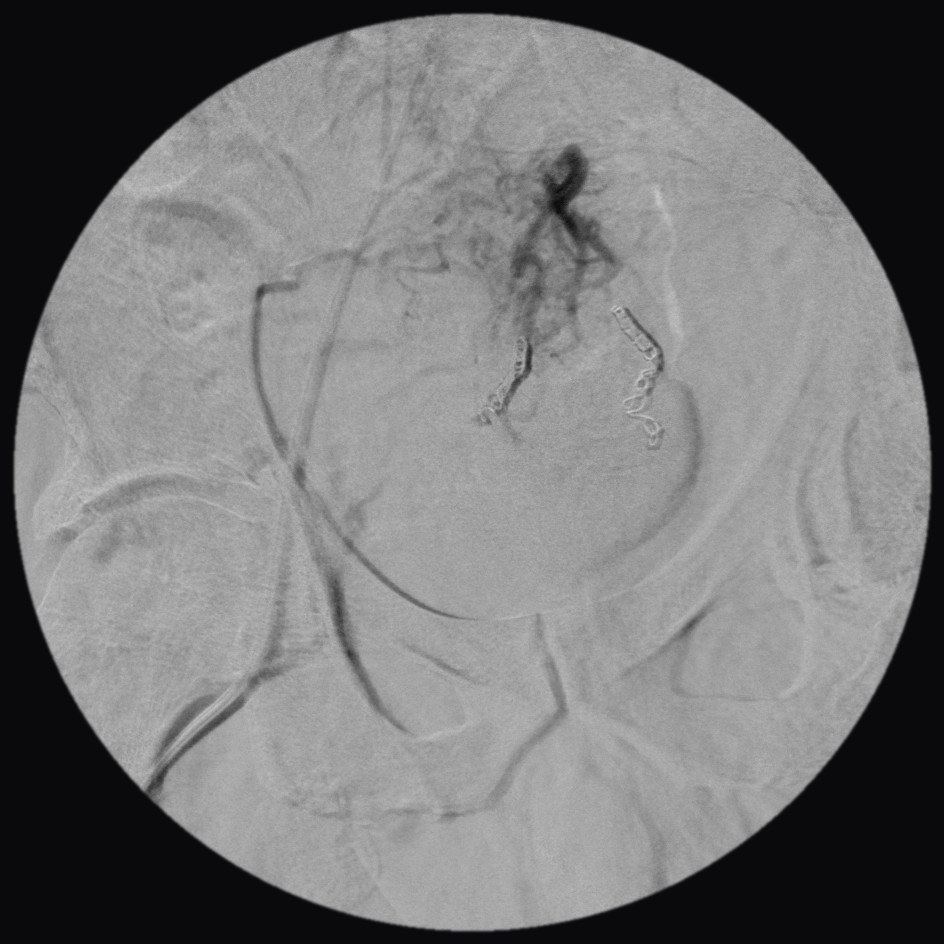
Tiny coils and microscopic particles — we typically use both, placed only in the small artery branches feeding the hemorrhoids. Yes, they stay; that’s the point. The coils are a few millimeters long, made of the same stainless steel that has been used inside blood vessels for decades, and they never touch the anal canal. Nothing is removed from your body and nothing is left where you sit.
“Will this affect my bowel control?”
It isn’t designed to, and this is where HAE most clearly differs from surgery. Nothing is done at the anus itself, so the sphincter muscle — the muscle that gives you control — is never cut, stretched, or touched. The published reviews describe HAE as preserving anal tone precisely because there is no direct anorectal trauma.¹
“How is this different from banding?”
Banding treats hemorrhoids one at a time, from inside the anal canal, and larger (grade 3) hemorrhoids often aren’t good candidates. HAE works from inside the blood vessels — nothing enters the anal canal — and treats the supply feeding the whole hemorrhoidal cushion at once. If banding didn’t hold for you, or you couldn’t face a second round, that doesn’t mean this won’t work.
“How is it different from hemorrhoid surgery?”
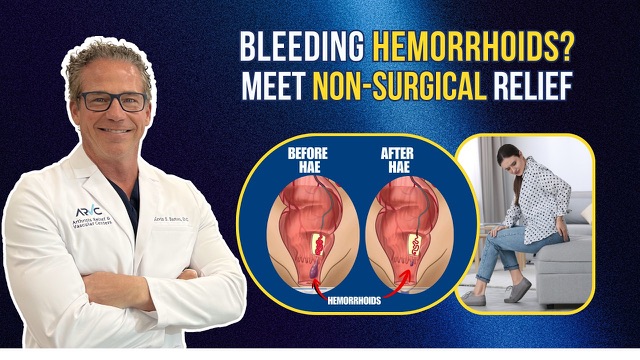
Surgery removes the hemorrhoidal tissue, which leaves a wound in a place that has to keep working every day — that’s where the recovery stories come from. HAE removes nothing. It turns down the blood supply that keeps the tissue swollen and bleeding, and the tissue stays where it is and shrinks. No wound, no packing, no first bowel movement to dread. The transparent other half: for grade 4 hemorrhoids that stay prolapsed, surgery is still the right treatment, and we’ll refer you for it.
“Does this treat external hemorrhoids?”
No — external hemorrhoids have a different blood supply, and HAE wasn’t designed for them. Many people have both kinds, though, and the internal ones usually can’t be seen. A brief exam at the consultation tells us which ones are actually causing your symptoms. If external hemorrhoids are your only problem, we’ll say so and point you to the right care.
“Will I need a colonoscopy first?”
Possibly — if you haven’t had one recently, or your symptoms have changed dramatically since your last one. Rectal bleeding has more than one possible cause, and hemorrhoids are only the most common. Before treating, we make sure the serious causes — including colorectal cancer — have been ruled out. If you’re due, we’ll help you get it scheduled.
“Can it be repeated if the bleeding comes back?”
Yes. Re-bleeding is the main way HAE falls short, and in the published series about 1 patient in 7 had a second embolization session for it — often to treat a small feeding branch that wasn’t reached the first time.¹ A repeat is done the same way, through the same pinhole. And HAE doesn’t burn any bridges: banding and surgery remain available afterward if they’re ever needed.
“Why hasn’t my gastroenterologist or colorectal surgeon mentioned this?”
HAE is done by interventional radiologists — a different specialty with a different referral network. Nobody hid it from you; it just lives outside the world of scopes and operating rooms you’ve been seeing. The research is published in journals every specialty can read, and we’ll gladly share it with your doctor.
“Is it covered by insurance?”
Yes — hemorrhoid artery embolization is a covered benefit under most insurance plans, and we’re in-network with most plans. We still do a complimentary benefits check before any procedure, so there are no surprises: you’ll know exactly where you stand before you decide anything.