
For people in San Antonio who’ve been living with hemorrhoids rather than face surgery
There’s now a hemorrhoid treatment with no cutting. No packing. No recovery stories.
ARV Centers, San Antonio
A private, ordinary medical visit. That’s the whole ask.
Hemorrhoid artery embolization shrinks internal hemorrhoids from the inside by reducing the blood flow that keeps them swollen. Nothing is cut and nothing is removed. It’s done through a pinhole in the upper thigh, you go home the same day, and most people are back to their normal routine within a day or two. No referral needed for your initial consultation.
A covered benefit under most insurance plans No referral needed for your initial consultation
If you’ve waited, you’re in good company
If you’ve had hemorrhoids for years, you’ve probably done what most people do. The creams. The wipes. The fiber. Maybe a banding or two.
And when someone mentioned surgery, you read the recovery stories — and decided you could live with it a while longer.
That’s not weakness. Those stories are why this procedure exists.
What hemorrhoids are
Everybody has them. The problem is when they swell.
Hemorrhoids are not a growth or a disease you caught. They are normal cushions of blood vessels that everyone is born with, sitting in the anal canal, and they do a job: they help seal the canal and give you fine control over continence. What people call “having hemorrhoids” is what happens when those cushions become swollen, stretched, and inflamed.
They are extremely common. About 1 in 20 Americans has symptomatic hemorrhoids, and about half of adults over 50 have dealt with them.⁵ If you are reading this feeling like something has gone uniquely wrong with you, it hasn’t.
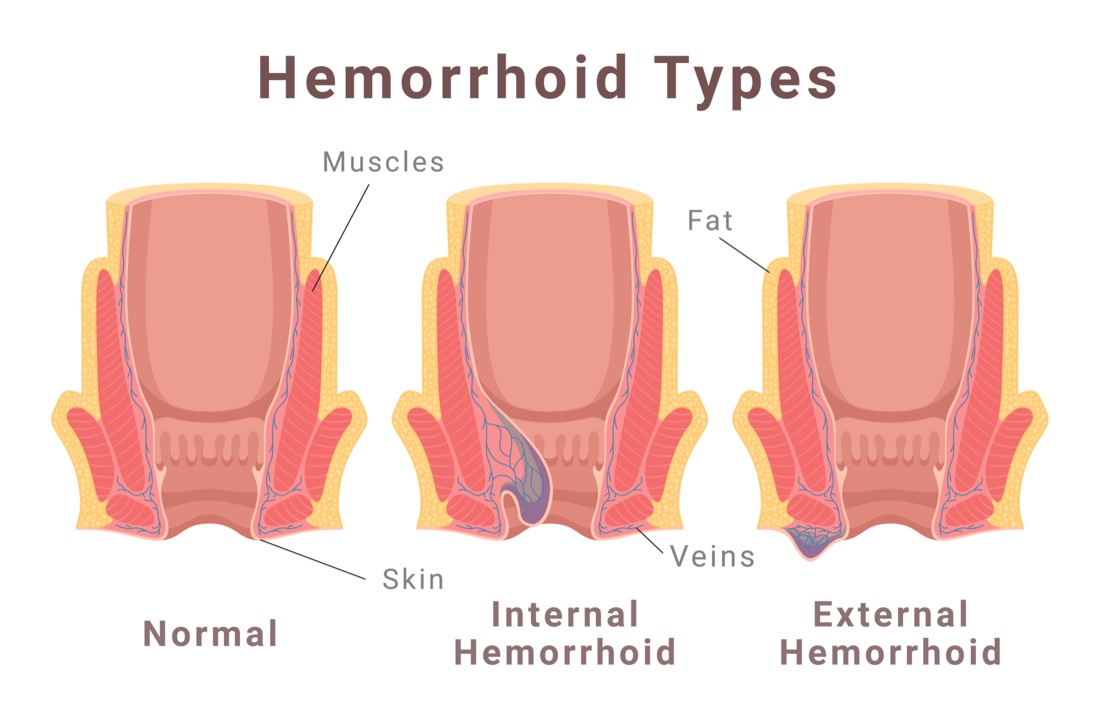
The single most useful thing to understand is that there are two different kinds, in two different places, with two different nerve supplies and two different blood supplies. Nearly everything about your symptoms — and every decision about treatment — follows from which kind you have. Many people have both.
Internal hemorrhoids — above the line
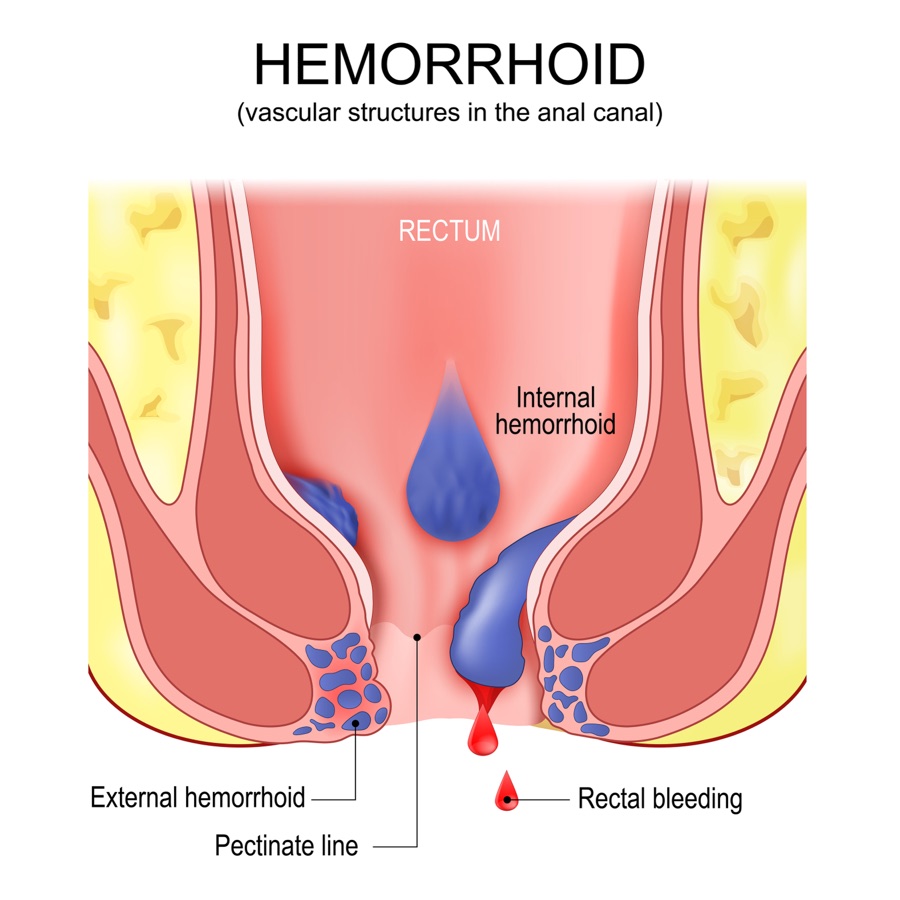
They sit above the pectinate line, in tissue that has no pain nerves. That single fact explains the classic story: bright-red bleeding with little or no pain. They can also stretch and slide down — prolapse — which is how they’re graded 1 through 4.
Their blood supply comes from above: the superior rectal artery, running down from the abdomen. Remember that — it is the whole reason a treatment done through an artery can reach them.
External hemorrhoids — below the line
They sit below the pectinate line, under ordinary skin, richly supplied with pain nerves. So they behave completely differently: they hurt, they itch, they swell, and you can feel them. They are the ones that make sitting miserable and make hygiene difficult.
Their blood supply comes from below: the inferior rectal artery. Different supply, different treatment — which is why no single procedure is the answer for everyone.
⁵ Prevalence figures: National Institute of Diabetes and Digestive and Kidney Diseases (NIDDK), Definition & Facts of Hemorrhoids — hemorrhoids affect about 1 in 20 Americans, and about half of adults older than 50 have them.
The one that is an emergency in your mind, if not in the textbook: a thrombosed external hemorrhoid. If you are in sudden, severe, unrelenting pain and you can see or feel a firm purple or blue lump at the edge of the anus, that is almost certainly a clot inside an external hemorrhoid. It is not dangerous, but it is genuinely one of the more painful things that happens to people. The pain is usually worst in the first 48 to 72 hours and then eases over a week or two. Seen early enough, the clot can sometimes be released for quick relief — so if that is what is happening, call somebody today rather than waiting it out.
Why they happen
Almost all of it comes down to pressure — and how long it lasts.
Those cushions swell when the veins inside them are put under repeated or sustained pressure. Nearly every risk factor below is a different way of doing exactly that.
Constipation — and diarrhea
Hard stool means straining, and straining is direct pressure. But diarrhea counts too, and people are always surprised by that: frequent loose stools mean frequent irritation and repeated trips, which is its own kind of strain.
Straining and heavy lifting
Anything that makes you bear down raises the pressure in those veins — pushing on the toilet, but also lifting at work or in the gym. If your job or your training involves repeated heavy lifting, that is part of the picture.
Sitting on the toilet too long
The toilet seat leaves the cushions unsupported and lets them engorge. Ten minutes with your phone, several times a day, is a genuine cause — and one of the easiest things on this page to fix. Go when you need to go, and get up.
Sitting, generally
Long uninterrupted hours seated do the same thing more slowly. We see a lot of truck drivers, pilots, and desk workers for exactly this reason. Standing up and moving for a few minutes each hour is not a small intervention here.
Pregnancy and childbirth
Growing pressure in the pelvis, hormonal changes that slow the bowel, and then the pushing of delivery. Very common, often improves afterward — and worth treating if it doesn’t.
Age, and the tissue itself
The connective tissue that anchors those cushions weakens over time, which is why prevalence climbs steadily with age. Nothing you did wrong — it is simply what the tissue does.
Every treatment
Start at the top of this list. Most people never need the bottom of it.
Almost everything here works by the same two ideas: make the stool soft so nothing has to be forced, and take the pressure off the tissue long enough for it to settle. Do the boring things properly first. They are unglamorous, they are genuinely effective for most people, and no procedure holds up well if the thing that caused the problem is still happening.
Step one — the stool itself
Fiber, deliberately
The single most effective conservative measure. Fruit, vegetables, beans and whole grains — and if that isn’t realistic every day, a supplement such as psyllium (Metamucil) or methylcellulose does the same job. Build up gradually or you will just be bloated, and fiber without water makes constipation worse.
Water, more than you think
Fiber works by holding water. Without enough fluid it stiffens stool instead of softening it. Increasing fluid intake is half of the fiber prescription, not a separate piece of advice.
Stool softeners, when needed
An over-the-counter stool softener or an osmotic laxative can bridge the gap while diet changes take hold. The goal is not to force things through — it is a soft, formed stool that passes without effort. That consistency is the target for everything on this page.
What to pull back on
Very fatty or fried food and heavily spiced food loosen stool for a lot of people, and loose frequent stools irritate the tissue as much as hard ones. Alcohol and low fluid intake work the same way. You don’t have to live like a monk — you have to notice what your own bowel reacts to.
Toilet habits
Go when you get the urge rather than holding it. Don’t sit and wait, and leave the phone outside — five minutes is plenty. A small footstool that raises your knees straightens the angle and reduces straining.
Move
Regular activity keeps the bowel regular, and getting out of the chair every hour takes sustained pressure off the tissue. If you drive or sit for a living, this is not optional advice.
Step two — comfort, and hygiene that doesn’t make it worse
Sitz baths
Sitting in a few inches of warm water for 10 to 15 minutes, two or three times a day and after bowel movements. It relaxes the muscle spasm that drives a lot of the pain, and it is one of the most reliably helpful things you can do at home — especially for external hemorrhoids and fissures.
Creams and suppositories
Over-the-counter preparations can settle itching, burning and swelling. Creams and ointments reach the outside; suppositories are aimed higher, inside the canal. Steroid-containing products are for short courses — roughly a week — because prolonged use thins the skin. They relieve symptoms; they do not fix the underlying cushion.
Wiping — and the case for a bidet
Dry paper on inflamed tissue is abrasive, and vigorous wiping keeps the irritation going. Blot, don’t scrub; skip scented or alcohol wipes.
A bidet, or even a cheap bidet attachment, is the best hygiene there is for this problem. Water cleans more thoroughly with none of the friction, then pat dry with a soft towel. Patients who make this one change often notice the difference within days.
Step three — office and surgical procedures
Rubber band ligation
The most common office procedure for internal hemorrhoids. A small band is placed at the base, cutting off its supply so it shrivels and drops off. Quick, no anesthetic, usually done one or two at a time over several visits. Effective for many people; discomfort and a dull ache afterward are common, bleeding can occur when the band separates, and recurrence over time is not unusual.
Sclerotherapy and infrared coagulation
A solution injected into the hemorrhoid to scar it down, or infrared energy used to do the same. Gentler than banding and often chosen for smaller, grade 1 to 2 internal hemorrhoids or for patients on blood thinners — generally with a higher chance of needing repeat treatment.
Hemorrhoid artery ligation (HAL/THD)
Performed through the anal canal with a Doppler probe to find the feeding arteries, which are then tied off with stitches — often combined with a lift to reposition prolapsing tissue. Same principle as targeting the blood supply, reached from inside the canal rather than through an artery.
Surgical hemorrhoidectomy
The tissue is cut out. It is the most definitive option and has the lowest recurrence rate — and it is also the most painful recovery in this field, typically two to four weeks, with a wound in a place that has to be used every day. For grade 4 disease and large external components, it remains the right operation, and we will tell you so and refer you.
Stapled hemorrhoidopexy
A circular stapler removes a ring of tissue above the hemorrhoids and lifts them back into position. Less painful than a traditional hemorrhoidectomy, though recurrence and prolapse are more likely than after excision.
Hemorrhoid artery embolization — what we do
Remember the blood supply. Internal hemorrhoids are fed from above by the superior rectal artery — so it can be reached from inside the arteries, through a pinhole in the top of the thigh. Nothing enters the anal canal: no scope, no band, no incision, no wound where you sit, and the sphincter is never touched.
It is aimed at internal hemorrhoids, particularly when bleeding is the main problem, and it does not treat external hemorrhoids or skin tags.
Nobody should be offered a procedure before the boring things have had a fair trial. And if you have done all of it properly — the fiber, the water, the habits — and you are still bleeding, that is useful information, not a failure on your part. That is the point at which the rest of this page becomes relevant.
What this is
The treatment happens inside the blood vessels — not where you sit.
Hemorrhoids are swollen blood vessels — and what keeps them swollen is blood flow. Hemorrhoid artery embolization (HAE) reduces the inflow at its source. Through a pinhole in the top of the thigh, an interventional radiologist guides a thin tube to the small arteries feeding the hemorrhoids and places tiny particles and coils that dial that blood flow down. The hemorrhoids shrink. The bleeding eases.
Here’s what makes it different from everything you’ve read about:
- Nothing is cut and nothing is removed. The treatment happens inside the blood vessels, from the inside. There’s no wound where you sit.
- The muscle that gives you control is never touched. Because nothing is done at the anus itself, the anal sphincter — and your control — are preserved.¹
- It’s outpatient. You go home the same day, and most people return to their normal routine the next day.¹
- You won’t dread the bathroom afterward. There’s no surgical wound to pass anything across. Published reviews describe minimal wound care — because there’s no wound.¹
Want the full detail? The procedure has its own page — what happens step by step, what goes into the arteries, the published numbers uncropped, and before-and-after angiograms from procedures done here: hemorrhoid artery embolization, explained →
Rectal bleeding
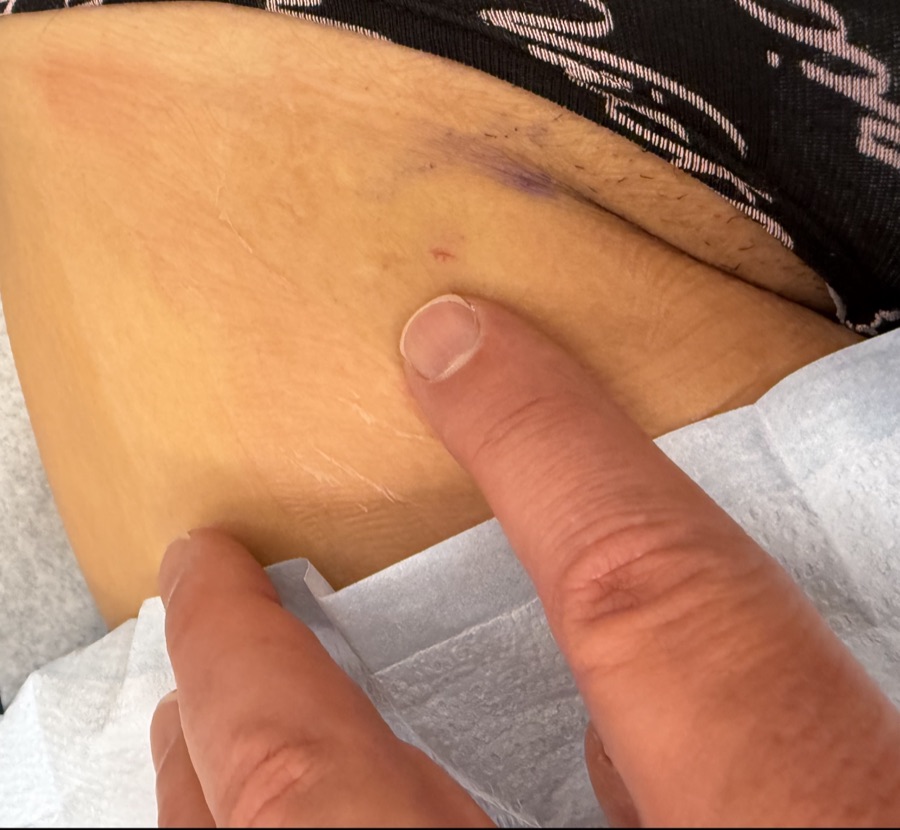
Bright-red bleeding — the most common hemorrhoid symptom.
Internal hemorrhoids are cushions of blood vessels just inside the rectum, above the line where pain nerves end (the pectinate line). That anatomy explains the classic pattern: bright-red blood — on the paper, in the bowl, streaked on the stool — often with no pain at all. The vessels sit where there are no pain nerves, so they can bleed without hurting.
And because bleeding is a blood-flow problem, it’s the symptom embolization addresses most directly: reduce the inflow feeding those cushions, and the bleeding eases. If bleeding is your main symptom, HAE was designed for exactly your situation.
Never assume bleeding is “just hemorrhoids.” Rectal bleeding has more than one possible cause, and the serious ones have to be ruled out — which is why a colonoscopy may need to come first. More on that below.
What else it could be
Three other things that bleed — and how they differ.
An anal fissure
A small tear in the lining of the anal canal, and the most common thing mistaken for hemorrhoids. The tell is the pain: a sharp, tearing, cutting pain during a bowel movement that can go on burning or spasming for minutes to hours afterward — often described as passing glass. The blood is bright red and usually small in amount, on the paper or streaking the stool. Fissures typically follow a hard stool or a bout of diarrhea, and most heal with the same stool-softening measures further down this page.
Colorectal cancer and polyps
This is the one that has to be ruled out, and the reason we ask about your colonoscopy history before we treat anything. Warning signs that make it more pressing: a change in your bowel habits that has lasted weeks, darker or mixed-in blood rather than bright red on the surface, unexplained weight loss, unexplained anemia, a family history of colorectal cancer, or being overdue for screening. Hemorrhoids are common enough that they can exist alongside something else — finding them does not finish the search.
Inflammatory bowel disease and other causes
Crohn’s disease and ulcerative colitis, diverticular bleeding, infections, and angiodysplasia can all bleed. Clues include diarrhea that won’t settle, mucus, urgency, abdominal pain, fevers, or bleeding that isn’t tied to having a bowel movement.
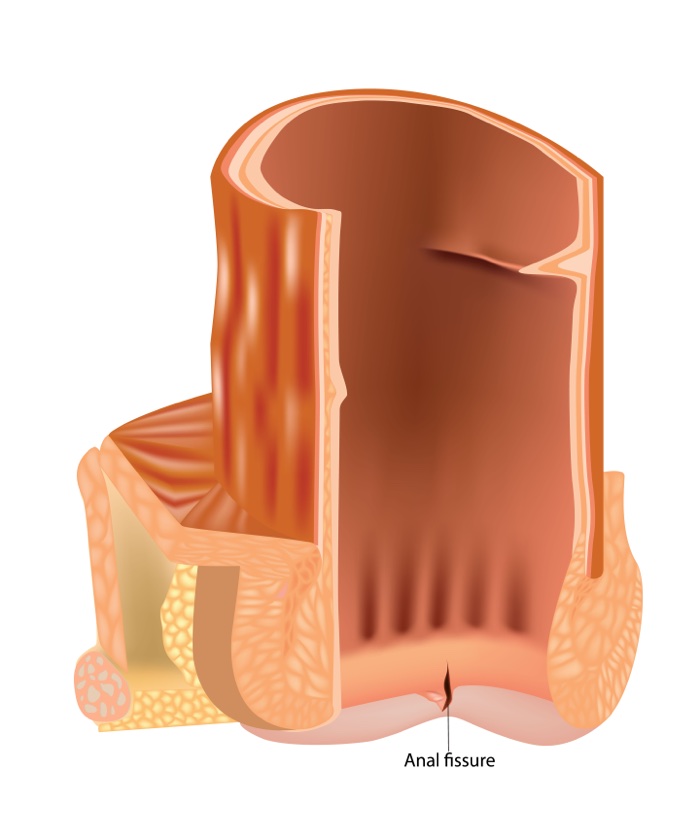
Bleeding that is painless and bright red is the hemorrhoid pattern. Bleeding with sharp pain points to a fissure. Bleeding that is dark, mixed into the stool, or comes with a change in your bowel habits points somewhere else entirely — and needs a scope, not a procedure.
The published evidence
Where the evidence stands.
HAE is newer than banding or surgery, and we’d rather you know exactly where the evidence stands than oversell it.
93–100%
of published procedures were technically successful — the doctors reached and treated the target arteries.¹
2 in 3 to 9 in 10
patients got lasting symptom relief across the published studies. Some patients need a repeat treatment — we’ll tell you plainly which group your hemorrhoids put you in.¹
Zero
serious complications reported across every published study reviewed. Minor, temporary side effects can happen, and we’ll walk you through them.¹
What it isn’t: a cure-all. Some hemorrhoids — and some symptoms — are better served by other treatments, including surgery. Who it fits is spelled out below, and we turn away patients who aren’t candidates for what we do.
Source: 1. Talaie R, et al. Hemorrhoid embolization: a review of current evidence. Diagn Interv Imaging 2022;103(1):3–11.
Who this treats
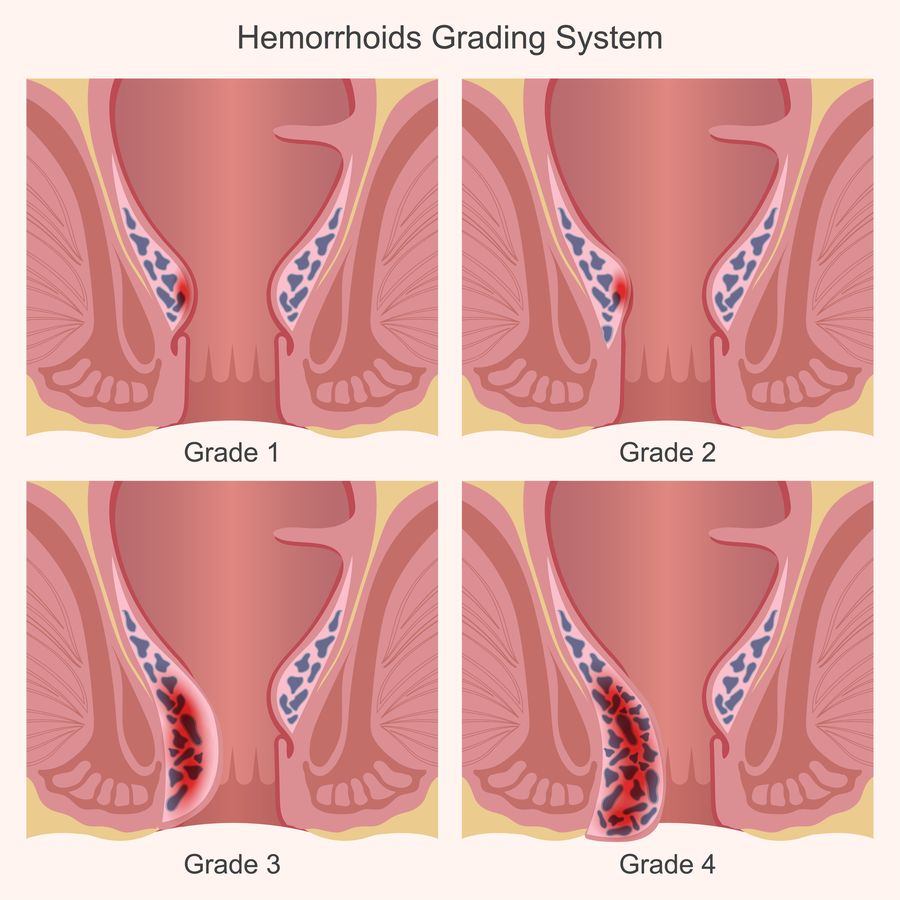
HAE is for internal hemorrhoids — grades 1 through 3.
Doctors grade internal hemorrhoids 1 through 4 by whether they prolapse — push out through the anus — and whether they go back in:
Grades 1 through 3 are treatable without surgery, and HAE is typically a good option for them — especially if rectal bleeding is your main symptom. Controlling blood flow is exactly what embolization does, and bleeding is where this procedure is at its best. Grade 4 hemorrhoids must be treated with surgery, and we’ll refer you for exactly that.
Not sure which kind you have? Come in anyway. Many people have a combination of internal and external hemorrhoids, and the internal ones usually can’t be seen — they sit inside the rectum. Only grades 2, 3, and 4 ever show themselves outside. A brief exam answers in minutes what guessing can’t.
A colonoscopy may need to come first. If you haven’t had a recent colonoscopy — or your symptoms have changed dramatically since your last one — it may be necessary before considering any treatment. Rectal bleeding has more than one possible cause, and the serious ones — including colorectal cancer — must be ruled out first. If you’re due, we’ll help you get it scheduled.
The part nobody likes to talk about
Let’s be transparent about the real reason many people wait years: nobody wants the exam.
Here’s what a consultation with us actually involves: a conversation, a review of your history, and yes — a brief, private, professional examination. It takes minutes. Our team does this every day; to us it’s as routine as listening to your heart.
There’s nothing you could show us or tell us that we haven’t seen, and nothing about it will be treated as anything other than ordinary medicine.
Your care team
The doctors who perform this procedure.
Hemorrhoid artery embolization at ARV Centers is performed by Board Certified Vascular and Interventional Radiologists — quietly, in our own IR suite, by a team that does this every day.



After your procedure
You go home with the doctor’s cell number.
When you go home, you take the on-call doctor’s cell phone number with you. Not an answering service — the doctor.
And you don’t have to wonder whether to bother us: we call you the next day to check in. Every patient, every procedure.
Before you leave, you’ll get this card
Your procedure:
On-call doctor:
Cell phone: written by hand, before you walk out
Call me if anything worries you.
Straight answers
Questions patients actually ask.
“How is this different from banding?”
Banding treats hemorrhoids one at a time, from inside the anal canal, and larger (grade 3–4) hemorrhoids often aren’t candidates. HAE works from inside the blood vessels — nothing enters the anal canal at all — and treats the blood supply feeding the whole hemorrhoidal cushion. If banding didn’t hold for you, that doesn’t mean this won’t.
“Does this treat external hemorrhoids?”
No — HAE wasn’t designed for external hemorrhoids, which have a different blood supply. That’s one more reason the exam matters: many patients have both kinds, treatments differ between them, and we need to know which ones are actually causing your symptoms.
If external hemorrhoids are your only concern — no significant rectal bleeding, and no prolapse with bowel movements or activity — they’re often managed with over-the-counter ointments and lifestyle changes: more fluids, more fiber, not sitting on the toilet too long, and sitz baths. For an external hemorrhoid that’s extremely painful, recurrent, causing hygiene concerns, or resistant to those measures, surgical removal (hemorrhoidectomy) is the more drastic option — and if that’s your situation, we’ll say so and point you the right way.
“Does the procedure hurt?”
You’re sedated and comfortable — IV sedation plus local numbing, per our standard protocol. The access point is a pinhole in the upper thigh. Most patients describe pressure, not pain, and go home the same day.
Afterward, many patients feel a pressure sensation — doctors call it tenesmus — that feels like needing to use the restroom even when you don’t. It eases with time, can linger for two or three days, and is typically managed with over-the-counter medication like ibuprofen and Tylenol.
“Will I be out of work for weeks?”
No. Plan on light activity for the first 48 hours — then back to your normal routine. Published reviews describe return to daily routine as soon as the day after the procedure.¹ Symptom improvement builds over four to six weeks, and bleeding typically settles within one to two.
“Is this covered by insurance?”
Yes — hemorrhoid artery embolization is a covered benefit under most insurance plans, and we’re in-network with most plans. We do a complimentary benefits check before any procedure. No surprises.
“Will I need a colonoscopy first?”
Possibly — if you haven’t had one recently, or your symptoms have changed dramatically since your last one. Rectal bleeding has more than one possible cause, and hemorrhoids are only the most common. Before treating, we make sure the serious causes — including colorectal cancer — have been ruled out. It protects you, and it means that when we do treat your hemorrhoids, we’re treating the right problem.
“Do I need a referral?”
Not for your initial consultation — call us directly. If your plan requires a referral or prior authorization for treatment itself, we’ll identify that during the complimentary benefits check and help you get it.
“What if I’m not a candidate?”
Then we’ll tell you, and we’ll point you to the treatment that actually fits — including a surgical referral when that’s genuinely the right answer. We turn away patients who aren’t candidates for what we do.
Free patient guide
Not ready to talk to anyone? That’s normal here. Take the guide instead.
Our free patient guide explains the non-surgical treatment for hemorrhoids — how it works, what the day is actually like, the real risks, and what recovery looks like. Written by our physicians. No appointment, no phone call, no questions asked.
We’ll email your guide plus occasional patient education. Unsubscribe anytime. Privacy policy.
You’ve managed this privately for a long time. One short, ordinary appointment is how it starts getting fixed.
Call us directly, or send this form and we’ll call you to schedule. We do a complimentary benefits check before any procedure. No surprises.
210-405-1335Consultation hours
- Monday–Thursday8:00–5:00
- Morning · last consult11:30 AM
- Afternoon · last consult4:30 PM
- FridayProcedures only
Closed on major holidays.
3212 Napier Park, San Antonio, TX 78231
Stand-in image (Map © OpenStreetMap) — the live site embeds the interactive Google map here
Schedule a private consultation
No referral needed for your initial consultation.
Rather book by phone? Call (210) 405-1335.