Gel (viscosupplementation)
Cushioning for the arthritic knee — a full weekly series, placed under live imaging and confirmed before a drop of gel goes in. The star of this page.
For people in San Antonio who don’t want a knee replacement
Lisa D. Persyn, M.D. · Physical Medicine & Rehabilitation
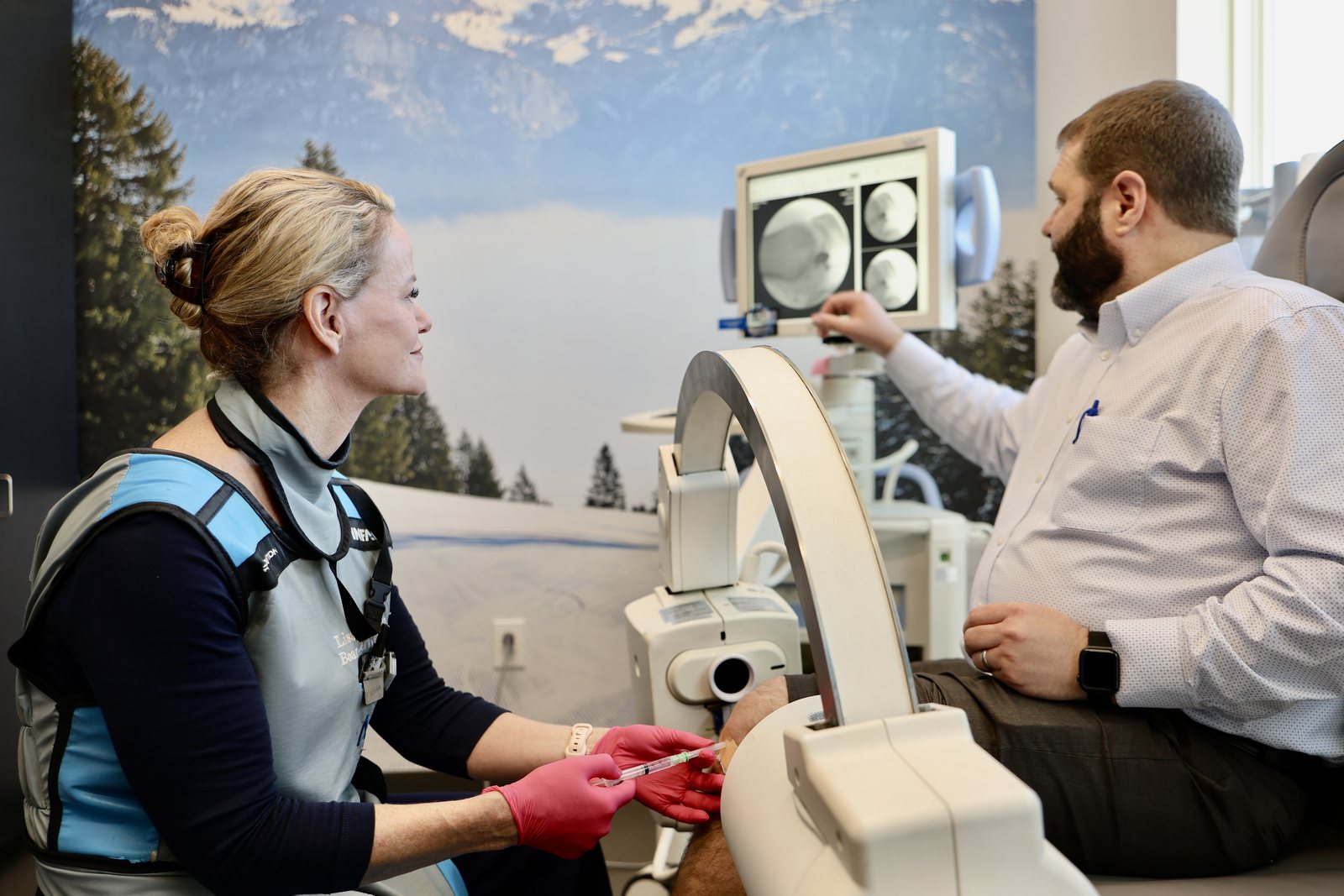
Dr. Persyn placing a gel injection while her patient follows along on the screen.
For most people it goes like this: a steroid shot, maybe two — and when those stop working, you’re told it’s time for a knee replacement. There is a great deal of road between those two. At ARV Centers, gel injections are guided by live X-ray imaging, so they land exactly where they should. And when injections aren’t enough, we can go after the inflammation at its source — a procedure called genicular artery embolization, with no joint replaced. Covered by most insurance plans, including Medicare. No referral needed for your initial consultation.
Covered by most insurance, including Medicare No referral needed for your initial consultation
Wherever you’re starting from
And when injections aren’t enough, the next step still isn’t surgery. A procedure called genicular artery embolization — GAE — treats the inflamed lining that’s driving the pain, at its source. The joint itself is left alone. Same practice, same doctors, same knee.
Maybe it started with cortisone. Wonderful for a few weeks, that’s all. Then the doctor said they couldn’t keep doing them.
Maybe you’ve had the gel shots too. A series of them, weeks apart, waiting for something to change.
“None ever did a thing.” That’s how a lot of people describe it — right before they mention the bill.
So when someone suggests another injection, you have every right to be skeptical. You’ve paid for this lesson already.
Here’s the question almost nobody asked about those shots that did nothing: where did they actually go?
The reframe
The knee joint is a narrow, moving target, wrapped in tissue that’s often swollen. Most gel shots are placed by feel — the doctor finds landmarks with their fingers and estimates. What doctors call a “blind” injection.
A blind injection can land in the fat pad, or the soft tissue near the joint, instead of the joint space itself. When that happens, the gel can’t do its job — and you feel exactly what patients report: nothing.
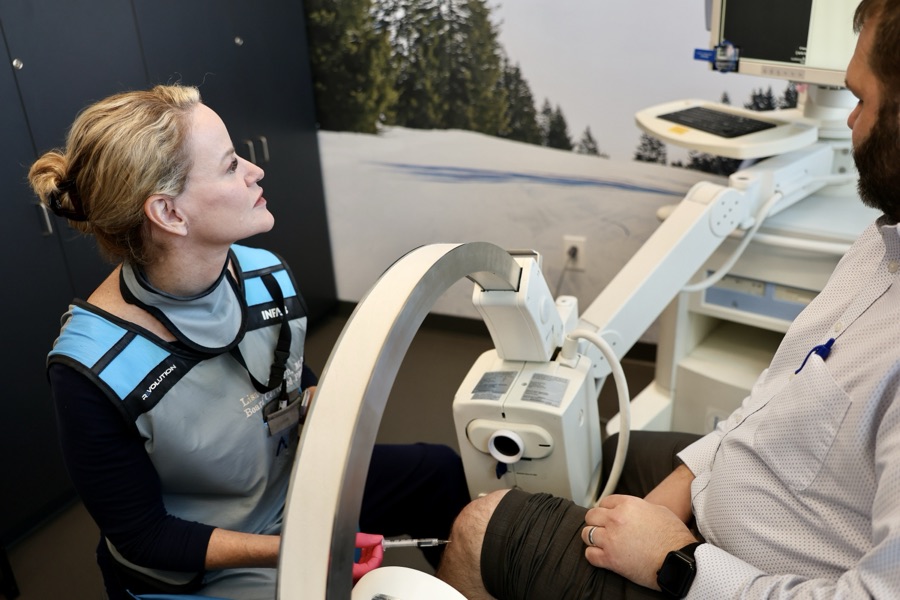
At ARV Centers, injections work differently. Your injection is guided by fluoroscopy — live X-ray video. A small amount of contrast dye confirms the needle is inside the joint space before the gel goes in. Not near it. In it.
Seeing where the needle is going doesn’t just improve accuracy. It’s also gentler — patients have less pain, less bruising, and less swelling when the needle goes where it should and nowhere else.
This page is the deep dive on our precision injections. For the big picture on knee arthritis itself — including what we do when injections aren’t enough — start with our knee pain & arthritis page.
What the gel actually is
Patients call them gel shots. Some remember them as the “rooster comb” shot — the early versions really were made from rooster combs. Most today are made in a lab.
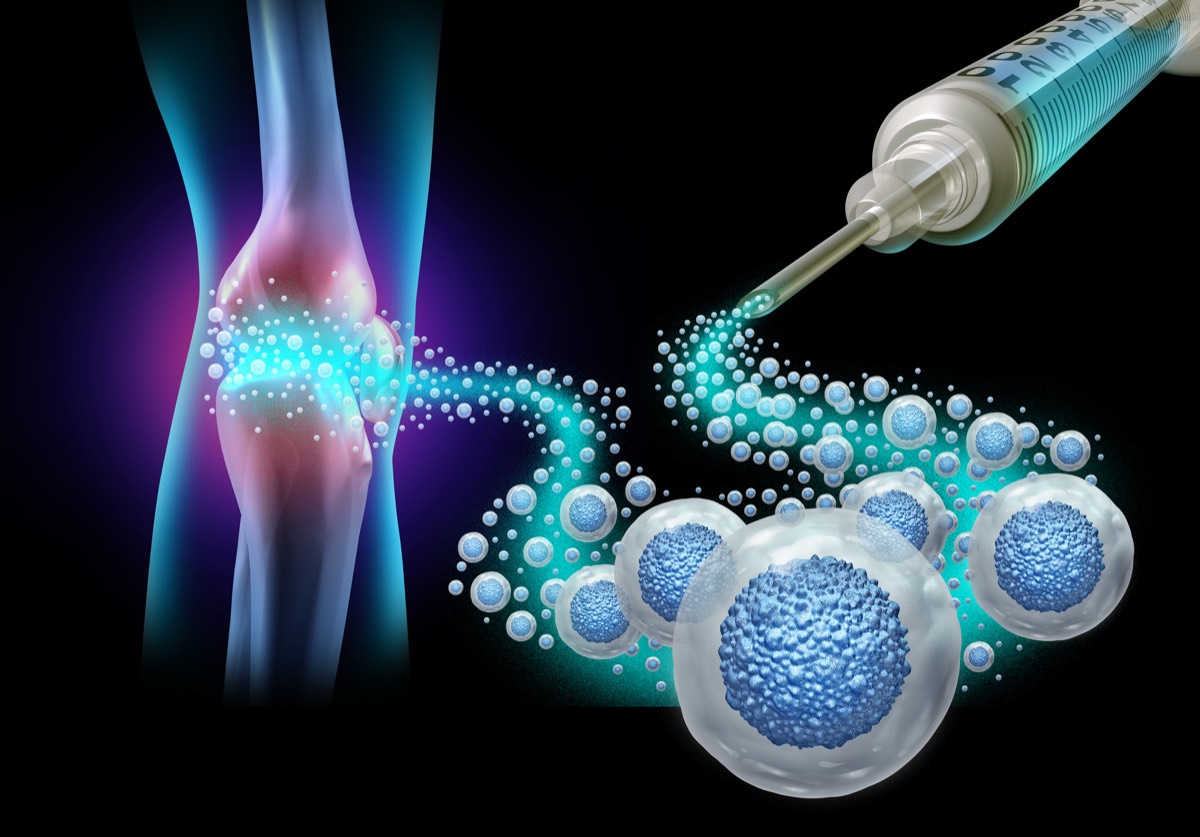
The gel is hyaluronic acid — the same substance your own joint fluid is made of. A healthy knee is bathed in fluid that’s thick and slippery, like egg white. It cushions the joint and lets the surfaces glide. In an arthritic knee, that fluid thins out. It loses its cushion. Viscosupplementation means putting that thickness back — a direct replacement for what the knee has lost.
The gel is given as a series of three to five injections, one quick visit a week. In published research, a full series delivers the strongest results, and the relief tends to last longer.1,2 Most patients notice the difference building by about the third injection.1 That’s why we treat with a full series — every time.
It doesn’t regrow cartilage, and it isn’t a cure. For the right knee, it’s a cushion and a lubricant where you need one, for months at a time — and the series can be repeated in six months when appropriate.
Beyond the gel
The same precision applies to everything we inject. The common thread: live imaging, confirmed placement, and a doctor who tells you which of these fits your knee — and which don’t.
Cushioning for the arthritic knee — a full weekly series, placed under live imaging and confirmed before a drop of gel goes in. The star of this page.
For calming a painful flare — used judiciously, not endlessly. Often the first knee injection you’ll ever have if you’ve never had one: quick, inexpensive, and often where your insurance requires you to start.
Matched to what’s actually driving your pain.
The published evidence
8 in 10
patients on repeated courses were responders at 40 months — versus about 2 in 3 with salt-water injections — in the longest placebo-controlled trial of repeated gel injections ever run (306 patients). The benefit grew with each course, measured a full year after the last one.5
6 months
of relief per cycle for most people, sometimes longer4 — which is why treatment can be repeated in six months when appropriate. A review of 17 studies found repeat courses kept working or worked better, with no added risk.6
5+ courses
was linked with nearly five years’ more time before knee replacement, in a pooled analysis of more than 400,000 knee-replacement patients. Even one course was linked with almost a year — and the more courses, the longer the runway.8,9
Zero
serious treatment-related side effects in the 40-month repeated-course trial — and a review of 17 studies of repeat courses found the same.5,6 What patients do report: mild soreness at the injection site for a day or two, at rates no higher than with salt-water injections.3
Do gel injections have a mixed reputation? Yes — and we’re happy to have that discussion at your consultation. Some published reviews found meaningful relief; others judged the average benefit small. One reason the averages disagree: the studies mix every kind of injection — placed blind and placed with imaging, given as a full series and given as one shot. We can’t fix the averages. We can control how yours is done. We’ve been doing gel injections for more than 15 years, and they give meaningful relief to a large number of our patients. Do they work for everybody? Certainly not. But given their safety profile and how long the benefit can run, they’re always worth considering before more advanced — and riskier — procedures like a knee replacement.
Not every gel is the same, either. Different preparations of hyaluronic acid have different thicknesses — what doctors call viscosity — and in our experience, response is individual: some knees do best with a thicker gel, some with a thinner one, and some in between. It’s one more thing the study averages blur together — and one more reason a gel shot that failed somewhere else isn’t the end of the story. Matching the preparation to your knee is part of the consultation — our goal is to find what works best for you.
Does a full series actually work? In a randomized trial of 100 patients, a full weekly series beat salt-water injections — and the benefit was still measurable six months after the course began.3 In a pooled analysis of 30 randomized trials covering nearly 6,000 patients, multi-injection courses relieved pain where fewer injections fell short.2 And in the largest pooled review, patients improved by roughly a third to a half on pain scores in the weeks after a course.4
Can it help put off a knee replacement? The honest answer: the studies show a strong link, not a guarantee. Some of that time is simply patients feeling well enough to wait — which, if your goal is staying off the operating table, is rather the point.
What doesn’t it do? It doesn’t regrow cartilage, and it isn’t a cure. Results are consistently better for people who catch their arthritis sooner4 — but advanced arthritis doesn’t rule you out. We regularly see patients who are “bone on bone” still get good relief from guided injections, even with severe arthritis. If we don’t think your knee will respond, we’ll say so before you spend a dollar — and unlike most places that offer injections, we’re not out of options when that happens.
If injections aren’t enough, that’s not the end of the list. We also perform genicular artery embolization (GAE) — a procedure that treats the inflamed lining of the knee itself, no injection into the joint at all. It’s the next rung on the same ladder, in the same practice, with the same doctors reviewing your case.
Sources: 1. Carrabba et al., Eur J Rheumatol Inflamm 1995 — randomized, double-blind, five-arm dose-schedule trial, 100 patients. 2. Concoff et al., BMC Musculoskelet Disord 2017 — meta-analysis of 30 randomized trials, ~6,000 patients. 3. Huskisson & Donnelly, Rheumatology 1999 — 100 patients, randomized, placebo-controlled. 4. VA Pharmacy Benefits Management monograph, 2008; Bellamy et al., Cochrane Database Syst Rev 2006 (76 trials). 5. Navarro-Sarabia et al. (AMELIA), Ann Rheum Dis 2011 — 306 patients, four repeated courses over 40 months. 6. Altman et al., Semin Arthritis Rheum 2018 — review of 17 studies of repeat courses. 7. Scali, Eur J Rheumatol Inflamm 1995 — 30-month multi-course series, 75 patients. 8. Berkani et al., J Clin Med 2022 — meta-analysis, 418,266 knee-replacement patients. 9. Altman et al., PLoS One 2015 — claims analysis, 182,022 patients.
Candidacy
We turn away patients who aren’t candidates for what we do. A transparent “this isn’t for you” costs us a procedure and earns your trust — and your referral.
What a consultation actually is
A doctor reviews your imaging and your history, examines your knee, and tells you transparently what’s driving your pain and which treatment — ours or someone else’s — fits your situation.
And if it makes sense, we can usually start your treatment the same day — unless your plan requires a prior authorization first, in which case we’ll handle that and get you back on the schedule. You don’t have to make a second trip to get started.
You don’t need a referral for the consultation — just call. And we do a complimentary benefits check before any procedure. No surprises. If your plan requires a referral or prior authorization for treatment itself, we’ll help you get it.
The visit itself
Your first visit is the longer one — about 30 minutes. We take X-rays of the knee, go through a complete history, and do a full physical examination: orthopedic testing, range of motion, and an assessment of the joint itself. That is what tells us whether a guided injection is the right call for your knee, and where exactly it needs to go.
The injection visit itself is short. You sit in a chair — there is no table and no gown. The imaging confirms placement, the injection takes seconds, and you walk out on your own two feet. For the next day or two, take it easy on that knee — no extreme exercise. Then you come back the following week for the next injection in the series, with a team that already knows you.
Your care team
Injections at ARVC are performed by Lisa D. Persyn, M.D., board-certified in physical medicine and rehabilitation — a specialty devoted to restoring function without surgery. Dr. Persyn has performed more than 100,000 knee injections. When it’s your knee on the table, that experience is the difference you feel — or rather, don’t.

Lisa D. Persyn, M.D.
Board Certified · Physical Medicine & Rehabilitation
Performs your injections

Meredith Reynolds, MSN, ACNP-BC
Board Certified · Acute Care Nurse Practitioner
Exams & care through your visit
Meredith Reynolds is typically part of your care as well, whether she’s examining you or assisting with your injections — so when you come back for the next one in your series, the team in the room already knows you. Meet the whole team →
After your injection
Questions after your injection? You call, we answer. And if something ever feels urgent after hours, our phone line has an emergency option that rings the on-call doctor’s cell phone directly — any hour, any day.
When you come back for the next injection in your series, you’ll be talking to a team that knows you by name — not starting over with a stranger.
If something ever feels urgent after hours
Call: (210) 405-1335
Choose: the emergency option
It rings: the on-call doctor’s cell — directly
Any hour, any day.
Patient stories
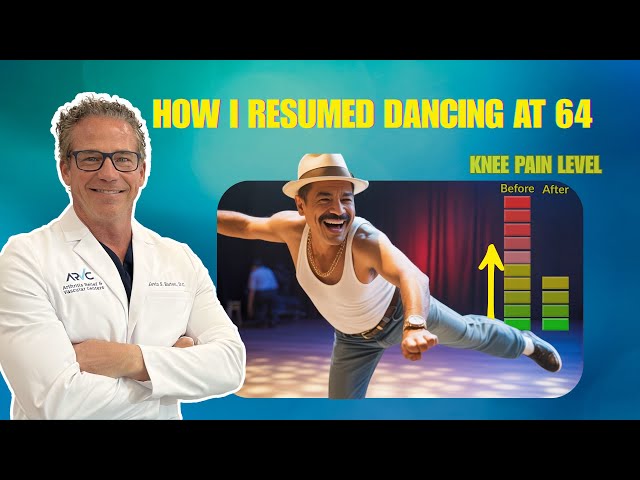 Knee · Viscosupplementation
How a dancer fixed his knee pain — fast Watch on YouTube →
Knee · Viscosupplementation
How a dancer fixed his knee pain — fast Watch on YouTube →
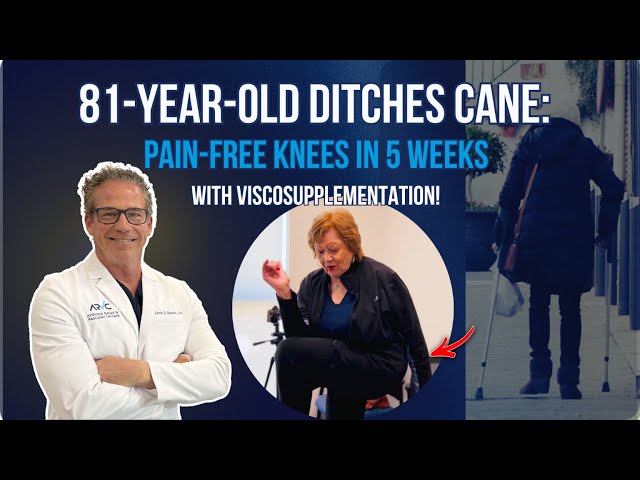 Knee · Viscosupplementation
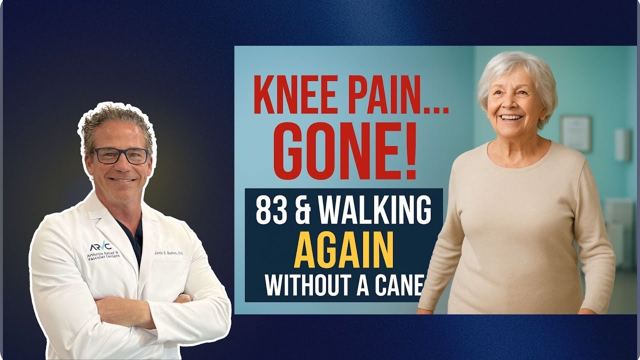
From cane to walking free at 81 Watch on YouTube →
Knee · Viscosupplementation
From cane to walking free at 81 Watch on YouTube →
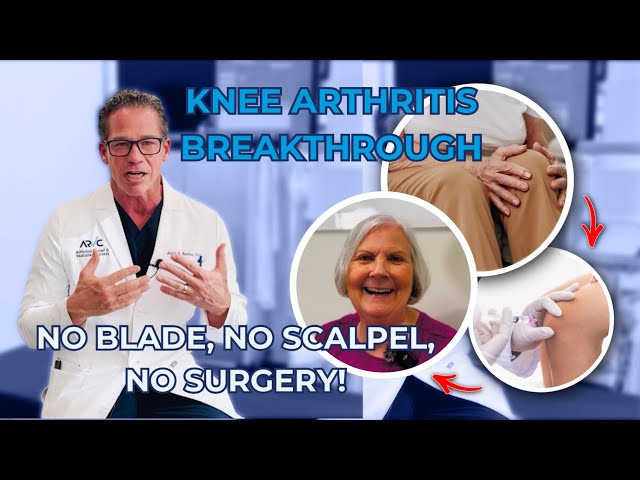 Knee · Viscosupplementation
From walking stick to treadmill — a no-surgery recovery Watch on YouTube →
Knee · Viscosupplementation
From walking stick to treadmill — a no-surgery recovery Watch on YouTube →
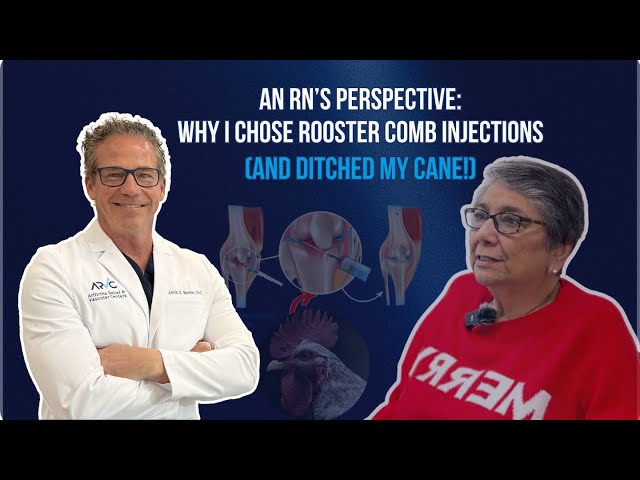 Knee · Viscosupplementation
The simple knee treatment that changed a nurse’s life Watch on YouTube →
Knee · Viscosupplementation
The simple knee treatment that changed a nurse’s life Watch on YouTube →
 Knee · Viscosupplementation
“I tried gel shots for knee pain — and this happened” Watch on YouTube →
Knee · Viscosupplementation
“I tried gel shots for knee pain — and this happened” Watch on YouTube →
 Knee · Viscosupplementation
Knee arthritis pain relief at 73 Watch on YouTube →
Knee · Viscosupplementation
Knee arthritis pain relief at 73 Watch on YouTube →
Every patient’s story is their own. Results vary. These are real ARV Centers patients, sharing their experiences with their permission.
Straight answers
Two honest possibilities. One: the shot missed — blind injections sometimes land outside the joint space, and a gel shot that misses can’t work. Ours are confirmed by live X-ray before the gel goes in. Two: your knee may be past the point where gel helps. If that’s the case, we’ll tell you — and talk with you about treating the inflamed lining of the knee instead. Either way, you’ll leave with an answer instead of another guess.
Far less than most people fear. We freeze the skin first with a numbing cold spray — honestly, most patients say the cold spray is the most uncomfortable part. The needle stick itself is quick. Dr. Persyn has performed more than 100,000 knee injections, and that kind of practice shows up in your comfort. The live X-ray helps too: because we can see the bony landmarks, the needle goes where it should and nowhere else — which means less pain, less bruising, and less swelling than an injection placed by feel. Everyone’s different, and some soreness afterward is normal. But almost every patient tells us it was easier than they expected. And if needles genuinely terrify you, say so — we’ll take it slow.
For most people, about three to six months per course — sometimes longer.4 In a randomized trial, the benefit of a single series was still measurable at six months.3 Treatment can be repeated in six months when appropriate. We’ll tell you plainly what to expect for your knee — and if we don’t think it will help, we’ll say that instead.
Yes — gel injections for knee arthritis are covered by most insurance plans, including Medicare. We do a complimentary benefits check before any procedure, so you’ll know exactly where you stand. No surprises.
Gel treatment is a short series — one quick visit a week for a few weeks. That’s how the treatment is designed to work: the gel builds in the joint across the series, and the published research ties the full series to the strongest results.1,2 Most patients feel the difference building by about the third injection.1 We’ll map out the exact schedule at your consultation.
No. Gel injections are an established, insurance-covered treatment. PRP is a different thing — made from your own blood, cash-pay rather than covered, with real but mixed research behind it. We offer PRP too, when it’s genuinely worth it, and we’ve published our transparent take — including the price and when we’d say no — on its own page. The truth about PRP → Stem cells and amniotic products we’ve chosen not to sell. And unlike the clinics running seminar ads, we’ll tell you when an injection is not worth your money.
Sometimes. Early randomized research suggests the two together may work better than either alone — they do different jobs in the joint (the gel is the cushion; PRP calms the inflammation). The gel portion is covered by most insurance; the PRP portion is cash, at a price we publish. Whether the combination fits your knee is a consultation conversation. How we combine them →
Same treatment. The original gel was purified from rooster combs, which are naturally rich in hyaluronic acid. Most modern versions are made in a lab. The nickname stuck.
Usually, yes. Some gels are still made from rooster combs — a real concern if you have an allergy to eggs, feathers, or poultry. Others are made by fermentation, with nothing avian in them, and we offer those non-avian options. Tell us about any allergy at your consultation and we’ll choose accordingly.
Different jobs. Cortisone calms inflammation during a flare — it works fast, but the relief typically fades within weeks. Gel replaces the thinned fluid that’s supposed to cushion the joint — it builds more slowly and lasts months.4 Some knees need one, some the other, some both at different times. That’s a consultation conversation, not a menu.
Then you’re exactly the patient the rest of our practice exists for. We perform genicular artery embolization (GAE) — it treats the inflamed lining of the knee itself, and it’s not an injection into the joint at all. Injections close no doors here.
Free patient guide
Our free knee arthritis guide explains what’s actually causing your pain, every treatment option — surgical and non-surgical — and the questions worth asking any doctor, including us. Written by our physicians. No appointment required, and no follow-up phone call unless you ask for one.
We’ll email your guide plus occasional patient education. Unsubscribe anytime. Privacy policy.
Bring your X-rays if you have them. Call us directly, or send this form and we’ll call you to schedule. We’ll tell you — transparently — whether the next injection would be different, or whether your knee needs something else entirely. We do a complimentary benefits check before any procedure. No surprises.
210-405-1335Closed on major holidays.
3212 Napier Park, San Antonio, TX 78231
Stand-in image (Map © OpenStreetMap) — the live site embeds the interactive Google map here
No referral needed for your initial consultation.
Rather book by phone? Call (210) 405-1335.