What to know first
Where the evidence stands — plainly.
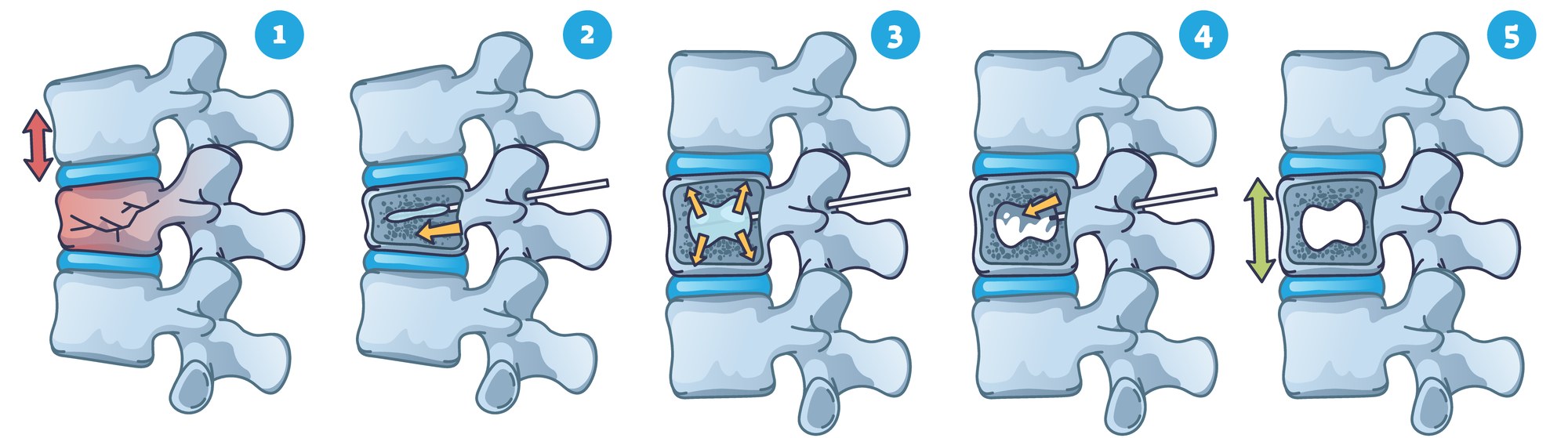
Vertebral augmentation — kyphoplasty and its older cousin, vertebroplasty
— has been studied for more than thirty years, and the research has sharpened over
time toward one conclusion: the people who benefit most are the ones with severe
pain from a recent fracture, treated within about six weeks. That is who the
strongest trials enrolled, and it is who we treat. It is why national bodies and the medical
societies — NICE in the UK, the American College of Radiology, the neurosurgical
societies, the American Academy of Family Physicians and the interventional radiology
societies among them — advise vertebral augmentation for painful osteoporotic
compression fractures.⁵ ⁶ ⁷ You may read that some older studies found no
benefit; those studies mixed fresh fractures with months-old, already-healing ones. The
newer, better-selected trials came out the other way.⁵
Here is what the recent data show — and notice what each study
selected for.
44% vs 21%
Patients who reached mild pain two weeks after treatment, versus after a placebo
procedure, in VAPOUR — the double-blind, placebo-controlled trial that enrolled
only fresh (under six weeks) and severe (7 out of 10 or worse)
fractures. More than twice as likely, and the advantage held at six months. Treated
patients also kept 30% more of the vertebra’s height, and hospitalized patients
went home about five and a half days sooner.¹ ⁵
60 days
Extra days free of bed rest and restricted activity gained by balloon-kyphoplasty
patients in the FREE trial — 300 patients, 21 centres, the largest randomized test
of kyphoplasty itself. Physical function was significantly better at one month and held
through six; back pain relief lasted the full two years; and the vertebra’s front
height (27% restored) and its wedge angle (3.3° corrected) were still holding at
two years.² ⁵
Under 4 weeks
In a 2025 meta-analysis, kyphoplasty done within four weeks of the fracture gave
significantly better pain relief and better correction of the wedge angle than
kyphoplasty done later. “Sooner” is not a sales pitch on this page.
It’s the finding.³
And the other side of the ledger — what waiting costs. In VAPOUR, nearly
half of the untreated fractures had lost more height by six months.⁵ In another
trial, every treated patient was up and walking within 24 hours, against 2% of those managed
with rest and medication.⁵ Across the randomized trials, major complications from the
procedure occurred in fewer than 1% of patients, with no procedure-related deaths — and
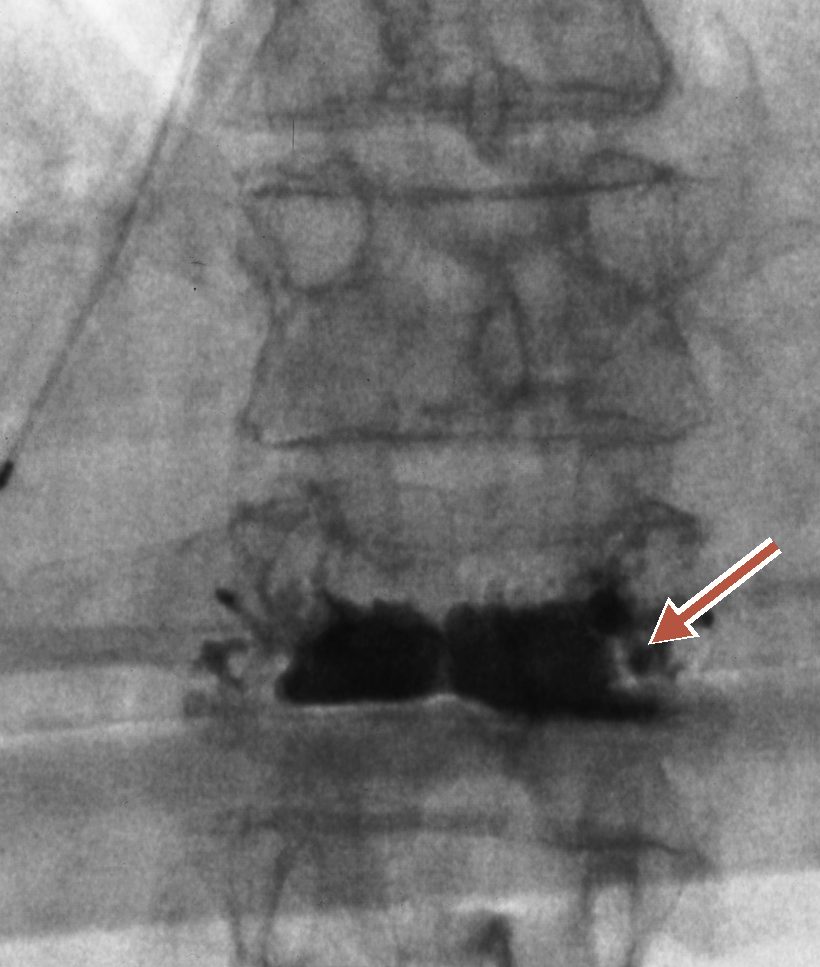
kyphoplasty’s balloon lets the cement go in at lower pressure, which means fewer cement
leaks than the older technique.⁵
Put together, here is the position we’ll hold across the desk:
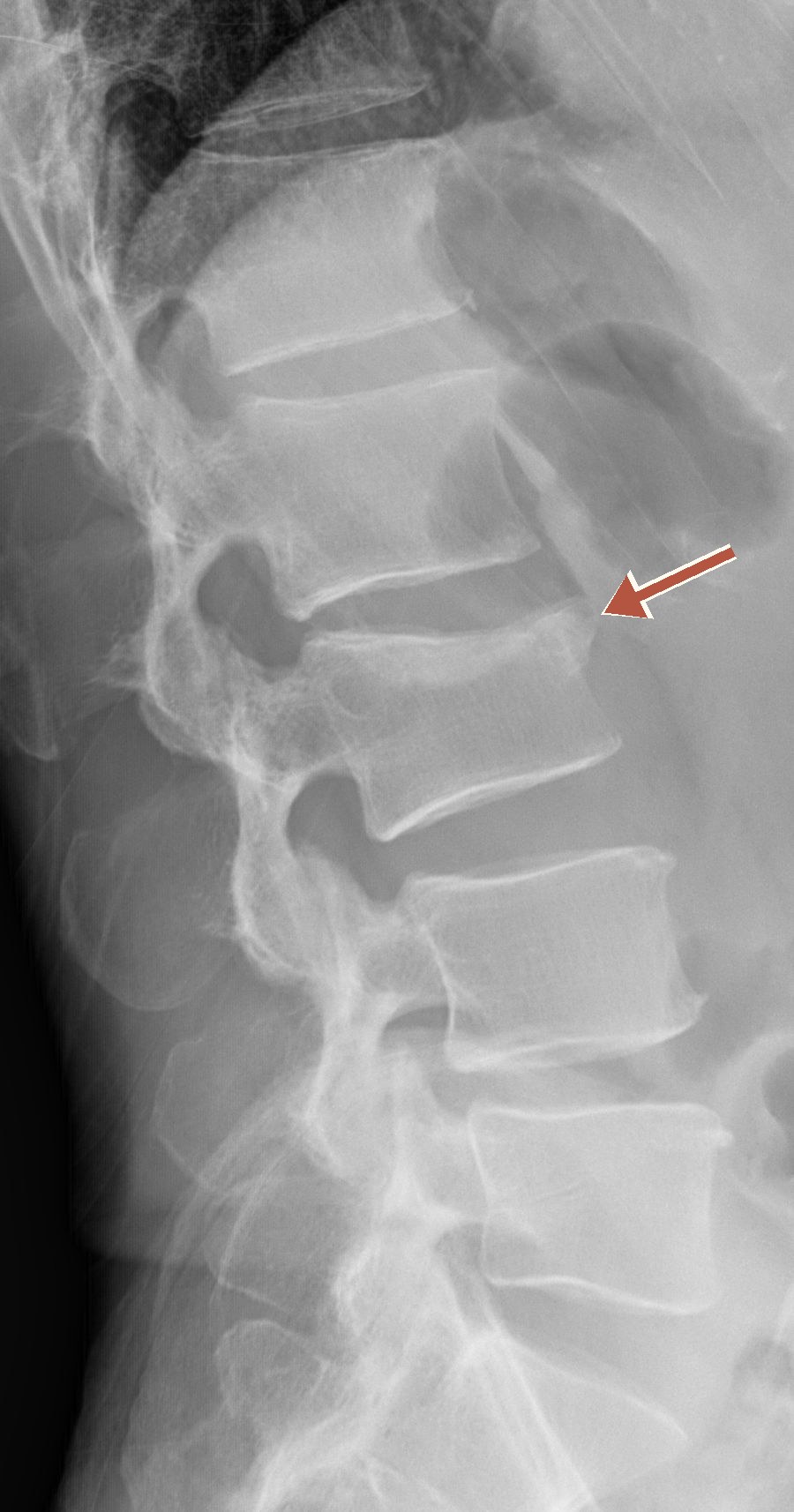
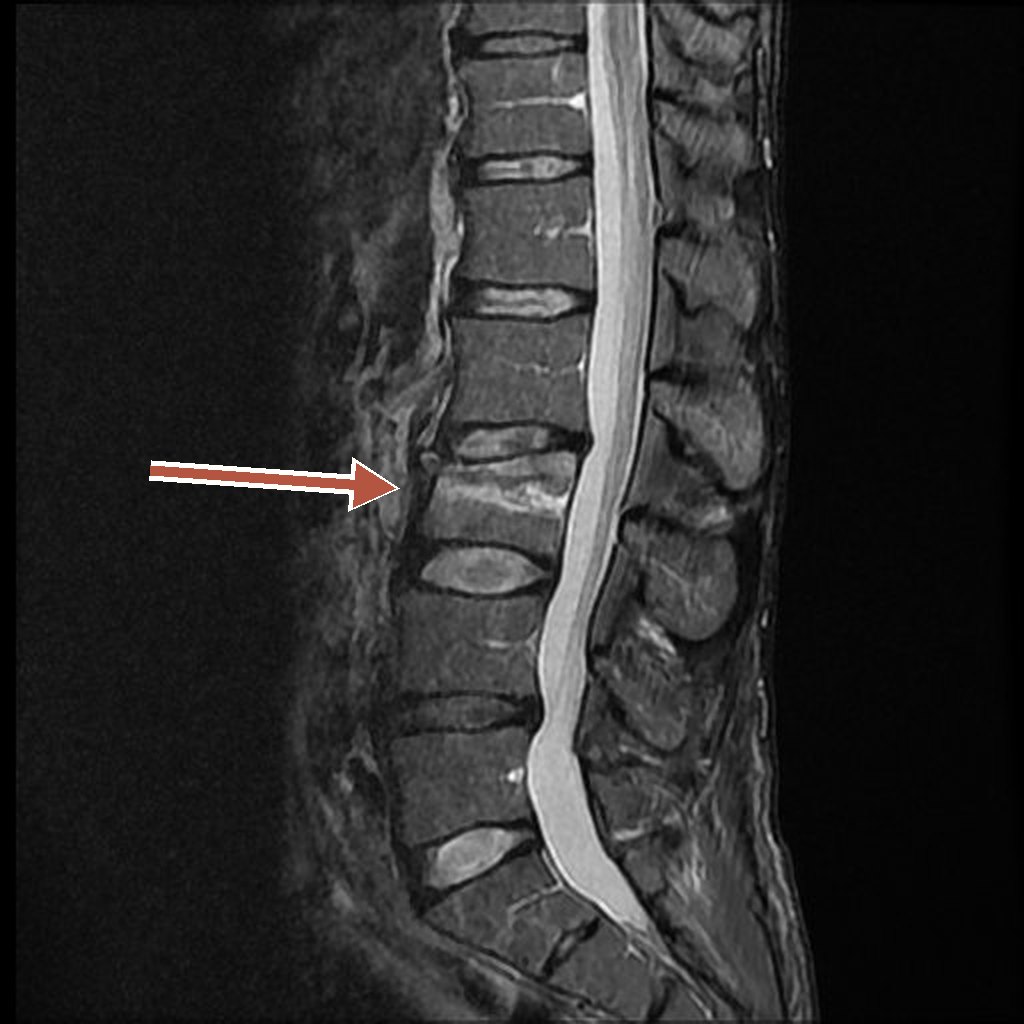
Kyphoplasty is not for every compression fracture. The evidence is strongest for
people with a recent fracture — weeks, not months — and severe pain, and it fades
for older fractures that have already begun to heal. If your fracture is fresh and the pain is
bad, this is a real option worth discussing quickly. If it’s been months, we’ll
tell you that honestly.
We do a complimentary benefits check before any procedure. No
surprises.
Sources: 1. Clark et al., VAPOUR,
Lancet 2016 — multicentre, randomised, double-blind, placebo-controlled;
120 patients with 1–2 osteoporotic fractures <6 weeks old and pain ≥7/10; primary
outcome pain <4/10 at 14 days: 24/61 (44%) vs 12/59 (21%), p=0.011, durable to 6 months;
median admission shortened 5.5 days; 30% greater vertebral height preservation vs sham.
2. Wardlaw et al., FREE, Lancet 2009 — 300 patients, 21 sites, balloon
kyphoplasty vs non-surgical care; SF-36 Physical Component Summary difference 5.2 points at
1 month (95% CI 2.9–7.4, p<0.001), durable to 6 months; 60 days gained without
restricted activity/bed rest; adverse-event frequency did not differ; 2-year follow-up
(Boonen et al. 2011): durable back-pain reduction; 27% anterior height restoration and 3.3°
kyphosis correction maintained. 3. Time to balloon kyphoplasty, systematic review with
meta-analysis, N Am Spine Soc J 2025 — <4 weeks vs >4 weeks: better pain
scores and kyphotic-angle correction. 4. Network meta-analysis of 23 RCTs / 2,838 patients,
Eur Radiol 2024 — adjacent-level fracture, kyphoplasty vs natural history
RR 1.35 (95% CI 0.78–2.34), p=0.23. 5. Chandra RV, Maingard J, Asadi H, et al.
Vertebroplasty and kyphoplasty for osteoporotic vertebral fractures: what are the latest
data? AJNR Am J Neuroradiol 2018;39:798–806 — review of the randomized
trials, claims data and society positions; source for: bed-rest costs (bone loss from 2 days;
15% aerobic capacity/strength lost after 10 days ≈ 10 years of ageing), VAPOUR height
preservation and admission data, FREE 2-year anatomic outcomes, Farrokhi 2011 (100% vs 2%
ambulatory at 24 h), major complications <1% with no procedural mortality across the RCTs,
lower cement-leak rate with kyphoplasty (2,838-patient meta-analysis), sham-arm height loss
in ~50% by 6 months, and the NICE / 2014 society / CIRSE positions. 6. Barr JD, Jensen ME,
Hirsch JA, et al. Position statement on percutaneous vertebral augmentation — SIR,
AANS/CNS, ACR, ASNR, ASSR, CIRA, SNIS. J Vasc Interv Radiol 2014;25:171–181.
7. NICE Technology Appraisal TA279 (2013): percutaneous vertebroplasty and percutaneous
balloon kyphoplasty for treating osteoporotic vertebral compression fractures. Sources 1, 2, 5
full text or abstract verified; 3, 4, 6, 7 via secondary summaries — full texts before any
print or ad use.