
For people who’ve heard PRP called a miracle by one clinic and a scam by everyone else
The truth about PRP — including when it’s not worth your money.
Guided, not guessed
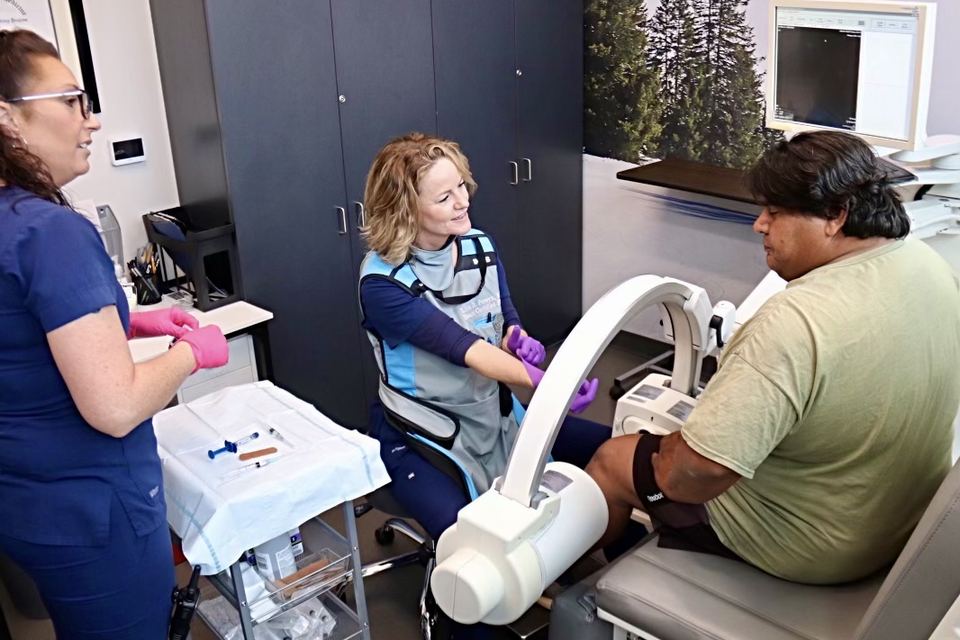
Every ARVC injection is placed under live imaging. PRP is no exception.
PRP uses your own blood — concentrated and injected precisely where your joint needs it — to calm the inflammation driving your pain. The research behind it is real, and so are its limits. PRP is not covered by insurance, but we will tell you plainly when it’s worth considering and when it’s not.
$900 per injection — the price published, never hidden No referral needed for your initial consultation
Does this sound familiar?
Maybe your story starts with cortisone. The first shot felt like a miracle. The second lasted three weeks. And somewhere around the third, your doctor said the words you’ve been chewing on since: we can’t keep doing these.
So you started reading about PRP — and immediately hit the noise. Dinner seminars. “Regenerative medicine.” Testimonials that sound too good, from clinics that take cash and don’t take questions. Maybe someone you know tried it: “my friend spent $5,000 and it didn’t work.” We’ve heard that one in our own exam rooms.
And maybe you’ve done the math yourself: if PRP really worked, wouldn’t insurance cover it?
That’s a fair question. It deserves a straight answer — not a sales pitch.
The straight answer
Why insurance doesn’t pay — and what that does and doesn’t mean.
PRP sits in an awkward middle. There is real published research behind it — randomized trials, pooled analyses, year-long follow-ups.1 But the studies used different preparations, different doses, and different techniques, so the results are mixed enough that insurers won’t pay yet. “Mixed” is not the same as “fake.” It means the details matter.
And that’s exactly the problem with how PRP is usually sold. The details — what’s actually in the syringe, and whether it lands where it should — are the difference between the studies where PRP worked and the ones where it didn’t.2 Most clinics selling PRP never mention either.
We can’t fix the industry. We can control how yours is done — and tell you, before you spend a dollar, whether your pain is one PRP can actually help.
The treatment
What PRP actually is — and isn’t.
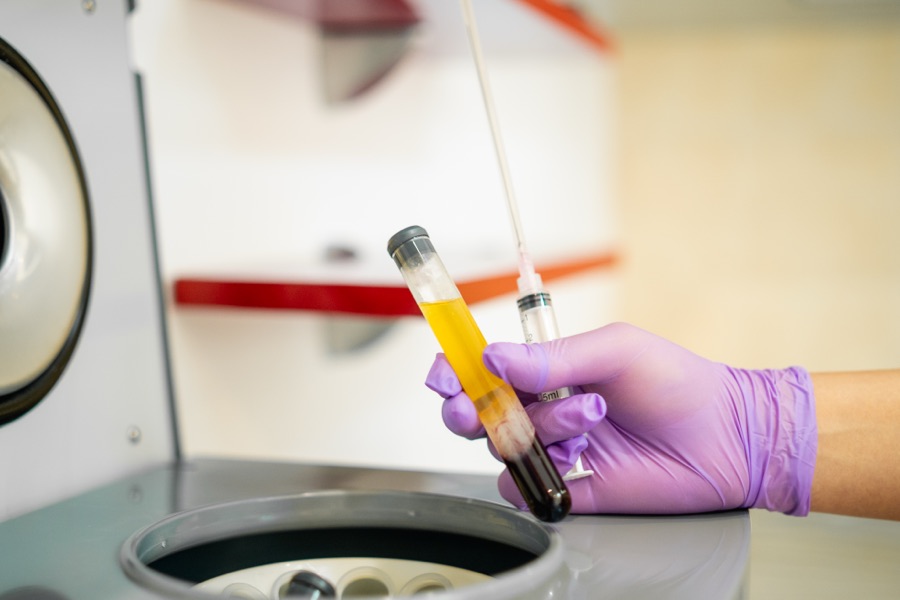
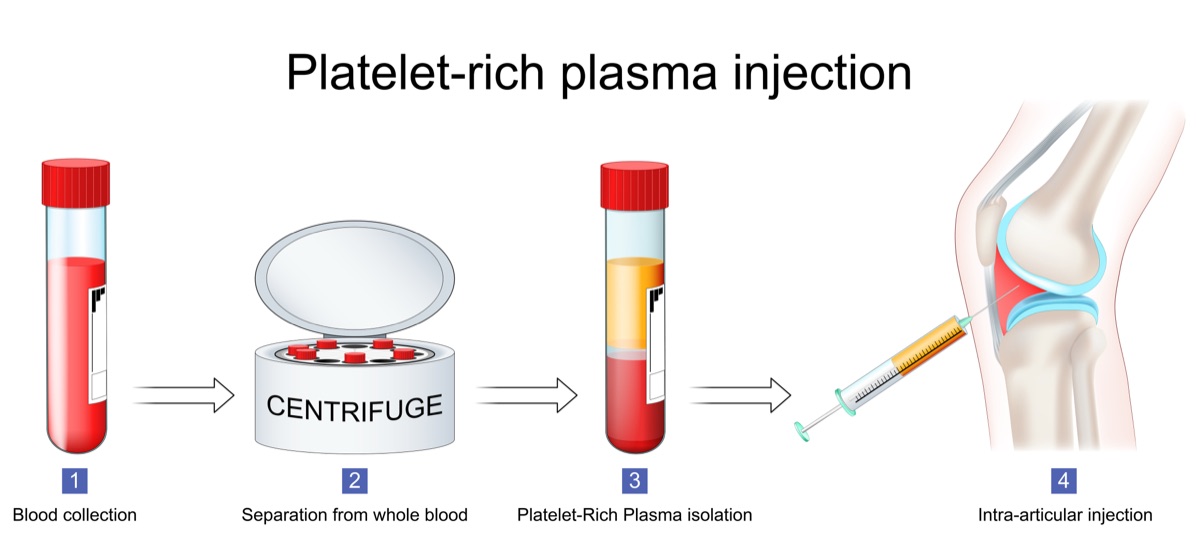
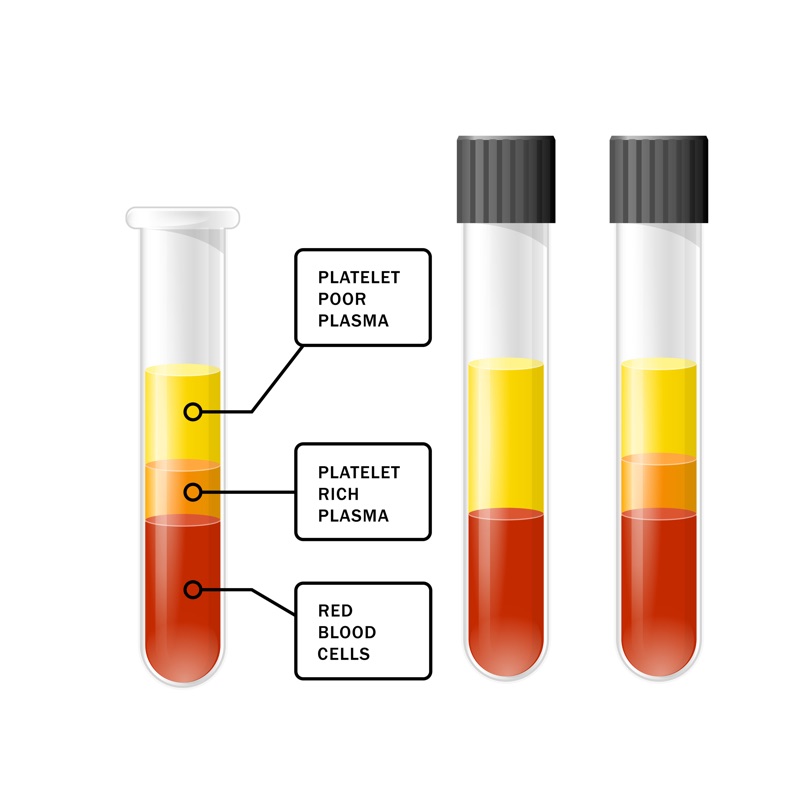
PRP stands for platelet-rich plasma. It starts with a simple blood draw — your own blood, nothing synthetic, nothing from a donor. Your blood is spun in a centrifuge to concentrate the platelets: the cells your body rushes to any injury first, carrying hundreds of growth factors — the chemical signals that direct healing and dial down inflammation.3
That concentrated layer is drawn off and injected into the painful joint or tendon — under live imaging guidance, so it goes exactly where it’s needed. Not near it. In it.
What it does: calms the inflamed environment inside the joint that’s driving your pain.1,3 What it doesn’t do: it does not regrow cartilage.1 Anyone who tells you otherwise is selling something the research doesn’t support — that claim is one of the reasons this field has a credibility problem.
Where we use it
A tool — not a cure-all.
At ARV Centers, PRP is one instrument on a bigger shelf. We use it for:
- Tennis elbow and golfer’s elbow — stubborn tendon pain at the elbow
- Knee pain from arthritis — where most of the published research lives
- Shoulder pain — including tendon and rotator cuff–related pain
- Plantar fasciitis — stubborn heel pain that rest and stretching haven’t touched
- Bursitis — inflamed cushioning sacs around joints
- Other joint and tendon pain — decided case by case, and we’ll tell you if yours isn’t a fit
The strongest published evidence is for the knee — so the numbers below come from knee research, and we’ll say so plainly rather than borrow knee statistics for every joint.
The published evidence
Where the evidence stands — plainly.
How does PRP compare with cortisone? That’s the comparison that matters. Cortisone works fast and fades fast — relief is typically measured in weeks, and the benefit hasn’t been shown to hold up long-term.2 PRP is the opposite shape: it builds slowly, because it’s signaling your body rather than numbing the joint. In a pooled analysis of eight randomized trials — 648 patients, rated at low risk of bias — PRP beat cortisone at three, six, and nine months, and the advantage was biggest at six and nine months.5 Read that again: the gap didn’t shrink over time. It grew. In a separate head-to-head randomized trial, PRP patients also reported better function and quality of life than cortisone patients.2,4 If cortisone keeps wearing off on you, that’s not a failure — it’s the treatment doing exactly what it does. It’s also the strongest reason patients consider PRP.
What about PRP against the gel shots? In a 2020 review that gathered twelve pooled analyses of PRP for knee arthritis, eleven of the twelve found PRP outperformed gel injections or placebo on the standard pain-and-function score — and none found it worse.1 That’s more support than most people expect. It’s not a guarantee for any one knee: some analyses of pain scores alone found no clear edge,1 and against placebo injections specifically, the published record is mixed. We’d rather tell you that than have you find it on Google and wonder what else we skipped.
How long does it last? In published trials, relief typically lasts six months to a year.1,2 Not permanent — we’ll say that before you pay, not after. Treatment can be repeated when appropriate.
Not all PRP is the same — and it matters. Different preparations put very different things in the syringe. The research points toward preparations low in red and white blood cells for arthritic joints — in one pooled comparison, that type improved outcomes where the other did not.2 Ask any clinic offering PRP what’s in theirs. If they can’t answer, that’s your answer.
Who does it work best for? Mild to moderate arthritis. The research is consistent: the further a joint has worn down, the less PRP can do.1–3 If your knee is bone on bone, PRP is probably not where your money should go — and we’ll tell you so.
Is it safe? Side-effect rates in the research are similar to other joint injections — the common one is soreness or stiffness for a few days.1,3 Because PRP is made from your own blood, there’s nothing synthetic and nothing from a donor in it.
PRP is not covered by insurance, but we will tell you plainly when it’s worth considering and when it’s not.
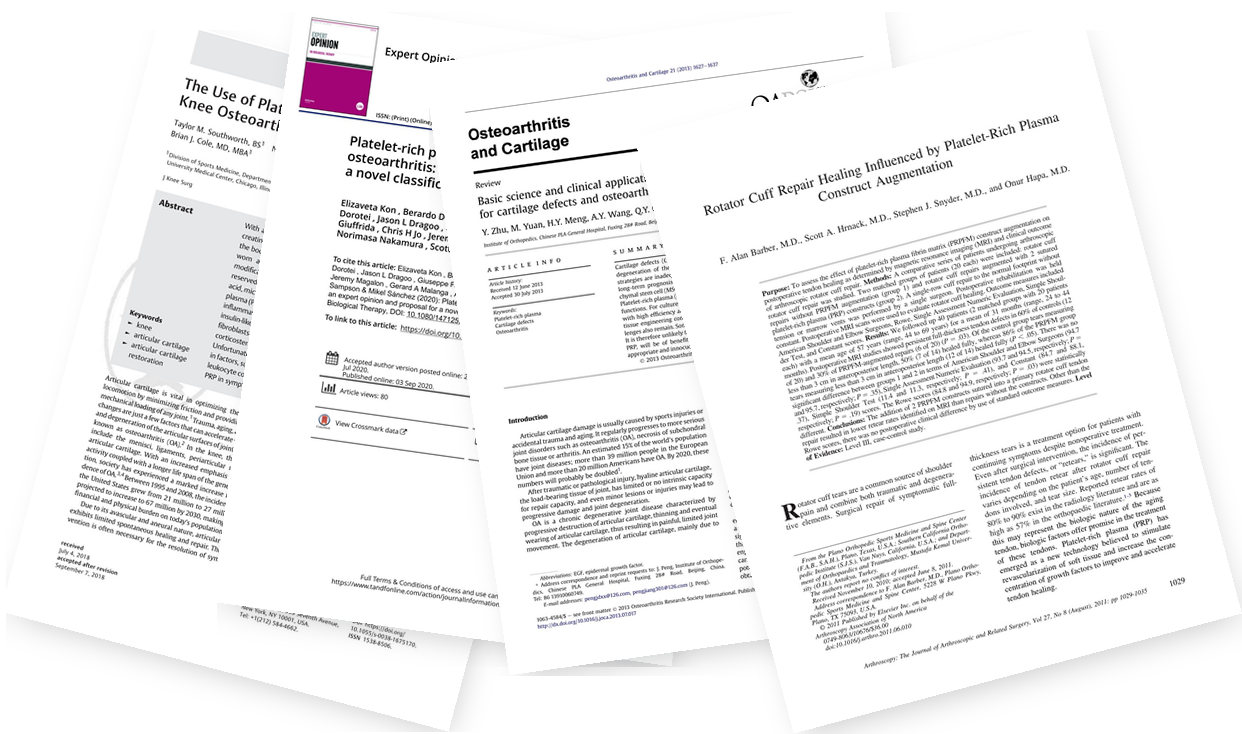
Sources: 1. Kon et al., Expert Opinion on Biological Therapy 2020 — review of 12 meta-analyses of PRP for knee osteoarthritis. 2. Southworth et al., The Journal of Knee Surgery 2018. 3. Zhu et al., Osteoarthritis and Cartilage 2013. 4. Forogh et al., J Sports Med Phys Fitness 2016 — double-blind randomized trial, PRP vs corticosteroid. 5. McLarnon & Heron, BMC Musculoskeletal Disorders 2021 — meta-analysis of 8 randomized trials, 648 patients: PRP superior to corticosteroid at 3, 6, and 9 months, greatest effect at 6 and 9.
Two tools, one joint
PRP + gel injections: better together?
Some patients don’t have to choose between PRP and gel injections (viscosupplementation). Early randomized research suggests the two together may work better than either alone6,7 — and it makes mechanical sense, because they do different jobs. The gel replaces the thick, slippery fluid an arthritic joint has lost — it’s the cushion. PRP delivers concentrated platelets whose growth factors calm the inflammation inside the joint — it’s the fire hose. One treats how the joint moves; the other treats the environment it moves in.
In a randomized trial reported at a major pain-medicine congress, patients who received both together had better pain relief and function than those who received PRP alone.7 Another randomized study found the combination beat either treatment by itself6 — and a peer-reviewed review concluded the studies support the combination as the optimal injection treatment for knee arthritis.2
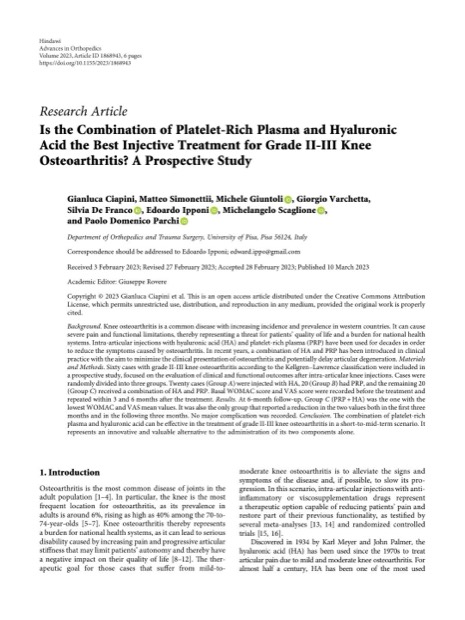
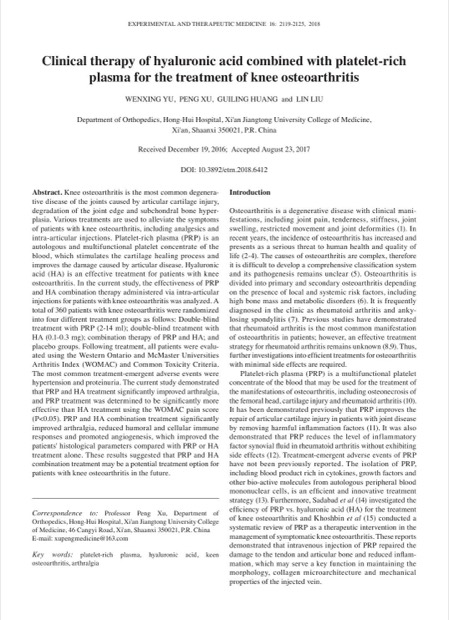
Both of these are free to read in full — click either one. We would rather you checked the research than took our word for it.
Is the combination right for you? That’s an imaging-and-exam conversation, not a menu item. Worth knowing going in: the gel portion is typically covered by insurance, and the PRP portion is not — we’ll lay out exactly what that means for your costs before anything is scheduled. Our guided gel injections are the first rung of the knee treatment ladder.
Sources: 6. Lana et al., J Stem Cells Regen Med 2016 — randomized trial, gel vs PRP vs both. 7. Akhtaruzzaman et al., World Congress on Pain 2018 — 74-patient randomized comparison, presented as a conference poster (not yet a peer-reviewed publication).
Candidacy
Who this is for — and who it isn’t.
PRP may be worth considering if:
- Cortisone helped but keeps wearing off — and your doctor is rightly reluctant to keep repeating it. This is the patient the head-to-head research describes best
- You have mild to moderate arthritis or stubborn tendon pain, and you want to treat the cause of the inflammation, not just numb it
- You want a treatment made from your own blood, with nothing synthetic in the syringe
- You’ve researched PRP, you know it’s cash-pay, and you want a transparent read on whether it’s worth it for your joint — even if the answer is no
It’s probably not right for you if:
- Your joint is severely worn — bone on bone. PRP does least for the joints that have worn furthest, and we won’t take your money for it. For those knees we talk about GAE instead — which is covered by insurance
- You’ve been promised PRP will “regenerate” or “regrow” your joint. It won’t, and we won’t tell you otherwise
- The out-of-pocket cost would strain you. There are covered treatments that work — gel injections among them — and we’ll walk you through those first
We turn away patients who aren’t candidates for what we do. With PRP, we’d rather lose an injection fee than sell you a disappointment.
What it costs
$900 per injection — and we tell you up front.
If your treatment plan calls for more than one, each additional injection is discounted — and we’ll tell you the exact total before anything is scheduled. No packages you have to buy up front, no “today-only” discount.
And because we’re an insurance-based practice, PRP has to earn its place in your plan against treatments that are covered. If a covered option fits your joint better, that’s what we’ll recommend. PRP is something we offer when it’s the right tool — not a product we need to sell.
We do a complimentary benefits check before any procedure. No surprises — and with PRP, the price is on this page.
Your care team
Performed by a physician. Guided by imaging.
PRP at ARVC is a physician procedure from draw to injection — not a franchise add-on. A visit is simple: a blood draw from your arm, a short wait while the centrifuge concentrates your platelets, then the guided injection. You walk out the same day.

Lisa D. Persyn, M.D.
Board Certified · Physical Medicine & Rehabilitation
Performs your injection

Meredith Reynolds, MSN, ACNP-BC
Board Certified · Acute Care Nurse Practitioner
Exams & care through your visit
PRP injections are performed by Dr. Persyn — board-certified in physical medicine and rehabilitation, a specialty devoted to restoring function without surgery. Meredith Reynolds is typically part of your care as well, whether she’s examining you or assisting with the procedure — so the team in the room already knows you. Meet the whole team →
After your injection
Soreness for a day or two is normal. Being ignored isn’t.
Some soreness after PRP is part of how the treatment works — plan for a quiet couple of days. Questions afterward? You call, we answer. And if something ever feels urgent after hours, our phone line has an emergency option that rings the on-call doctor’s cell phone directly — any hour, any day.
Straight answers
Questions patients actually ask.
“Is PRP covered by insurance?”
No. PRP is not covered by insurance, but we will tell you plainly when it’s worth considering and when it’s not. We’re an insurance-based practice — most of what we do is covered — so PRP has to earn its recommendation against covered options, not against a sales quota.
“How much does it cost?”
$900 per injection. If your plan calls for more than one, each additional injection is discounted — and you’ll know the exact total before anything is scheduled. No packages, no pressure.
“If PRP works, why doesn’t insurance pay for it?”
Because the research, while real, is mixed — trials used different preparations, doses, and techniques, so results vary from study to study. Insurers wait for that to settle. It’s a fair standard, and it’s also why we’ll tell you honestly whether the research fits a joint like yours before you pay anything.
“Is this the same as stem cells?”
No — and the difference matters. PRP is concentrated platelets from your own blood, drawn the same day. Nothing else is offered here: no stem cells, no amniotic products. Those categories carry weaker evidence and heavier marketing, and we’ve chosen not to sell them.
“Cortisone or PRP — which should I get?”
They’re different shapes of relief. Cortisone is fast and temporary — it calms a flare in days and typically fades in weeks. PRP builds over weeks and, in published trials, lasts months; in a pooled analysis of eight randomized trials, PRP showed superiority over cortisone at six and nine months. Cortisone is covered by insurance; PRP isn’t. If you need to get through your daughter’s wedding next month, cortisone might be the right call — and we’ll say so. If you’re tired of re-buying the same three weeks of relief, that’s the patient PRP was studied for.
“Does it hurt?”
A straight answer: it depends on where the injection goes. Into a joint — a knee or a shoulder — it’s more comfortable: most patients feel pressure more than pain, because the joint has space to receive the fluid. Into a tendon — tennis elbow, for example — it can genuinely ache. A tendon has no open space to receive fluid, so the tendon feels the volume as it goes in, and for those moments the ache can be significant.
We’ll numb the area before the injection, and we’d rather tell you about the uncomfortable part up front than have it surprise you. Soreness for a day or two afterward is part of how the treatment works.
“How long until I feel something — and how long does it last?”
PRP builds gradually — it’s signaling your body, not numbing the joint, so most patients notice change over weeks, not days. In published trials, relief typically lasts six months to a year. Treatment can be repeated when appropriate.
“Can I do PRP and the gel injections together?”
Sometimes — early randomized research suggests the combination may work better than either alone, because they do different jobs in the joint. The gel is typically covered by insurance; the PRP portion isn’t. We’ll lay out both parts of that math at your consultation.
“I’m bone on bone. Will PRP help me?”
We’ll be straight with you: probably not. The research consistently shows PRP does least for the most worn joints. If that’s your knee, we’d rather talk about genicular artery embolization — a covered procedure that treats the inflamed lining of the knee, and doesn’t depend on how much cartilage is left.
“Why should I believe you and not the clinic that promised me a ‘regenerated’ knee?”
Ask both of us the same three questions. What’s in the syringe? What does the published research show for a joint like mine? And when would you tell me not to do this? We’ll answer all three in plain language, with the studies on the table. A transparent “no” costs us an injection fee. It’s also the reason our “yes” means something.
Free patient guide
Not ready to talk to anyone? Take the guide instead.
Our physicians wrote a plain-English guide to PRP — what it actually is, what the published research shows (and doesn’t), what it costs, who it helps most, and the questions worth asking any clinic that offers it, including us. No appointment required, and no follow-up phone call unless you ask for one.
We’ll email your guide plus occasional patient education. Unsubscribe anytime. Privacy policy.
Bring your imaging if you have it. Bring your skepticism, too.
Your skepticism is earned — and it survives a transparent conversation just fine. You’ll leave knowing whether PRP is worth considering for your joint, what it would cost, and what we’d recommend instead if it isn’t — including covered options. Call us directly, or send this form and we’ll call you to schedule.
210-405-1335Consultation hours
- Monday–Thursday8:00–5:00
- Morning · last consult11:30 AM
- Afternoon · last consult4:30 PM
- FridayProcedures only
Closed on major holidays.
3212 Napier Park, San Antonio, TX 78231
Stand-in image (Map © OpenStreetMap) — the live site embeds the interactive Google map here
Schedule a PRP consultation
No referral needed for your initial consultation.
Rather book by phone? Call (210) 405-1335.