
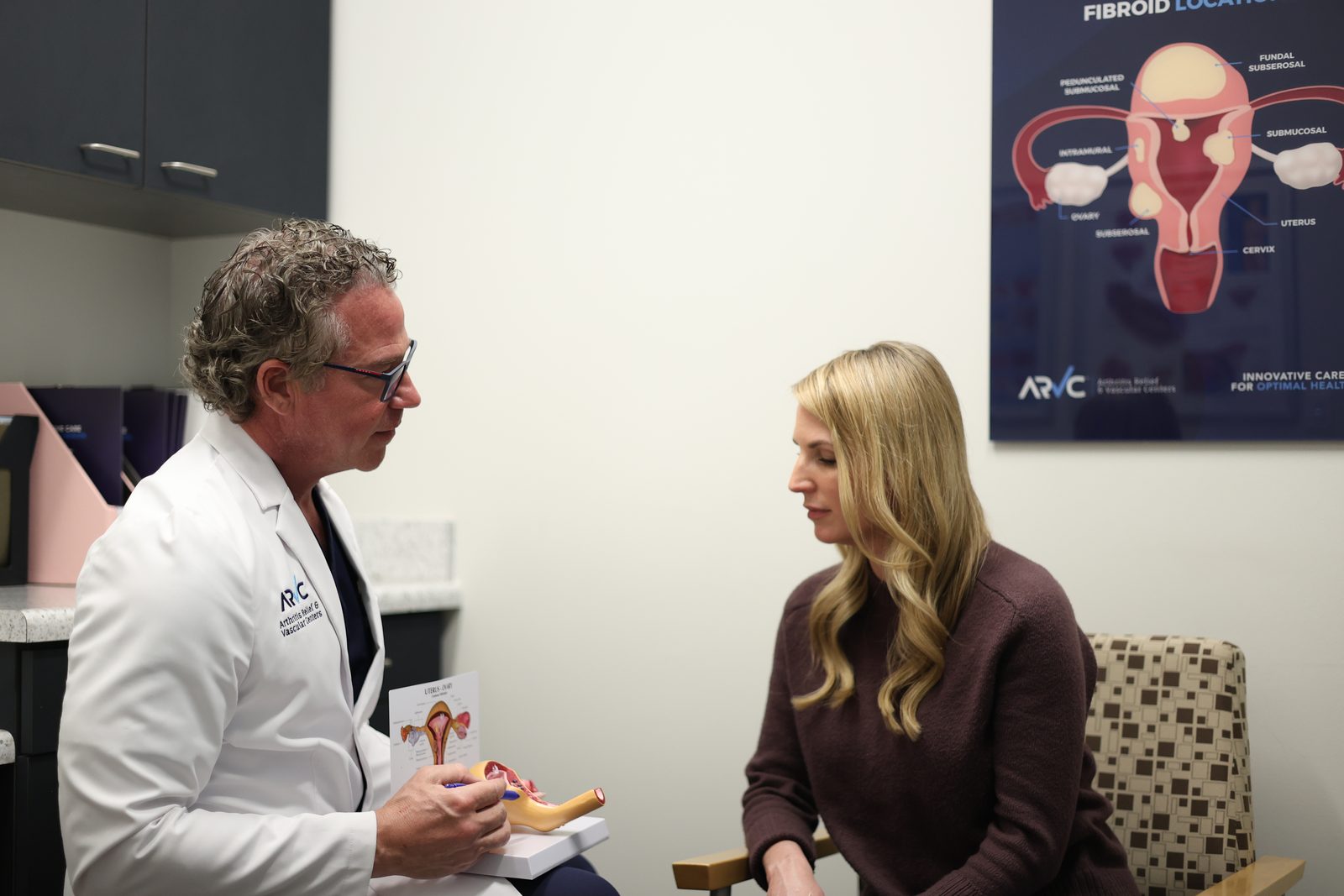
Most women with symptomatic fibroids are offered one or two options. There are at least eight.
This article lays out all of them — including the ones we perform, the ones we don’t, and the one that has been the default answer for a century. We have an obvious interest in one of these treatments, so we’ve tried to write the version we’d want a member of our own family to read: what each option actually does, what it doesn’t do, how long it lasts, and who it suits.
Before the options: where your fibroids are
The first question is never “which procedure?” It’s where exactly are your fibroids? Location decides what they do to you and which treatments can even reach them.
- Bulging into the cavity (submucosal, intracavitary) — these drive the heaviest bleeding and most of the fertility effect.
- In the muscle wall (intramural) — a mixed picture; moderate effect on fertility, and often the source of pressure.
- On the outside (subserosal, pedunculated) — these drive bulk, bloating, back pain and bladder symptoms, and generally don’t affect fertility.
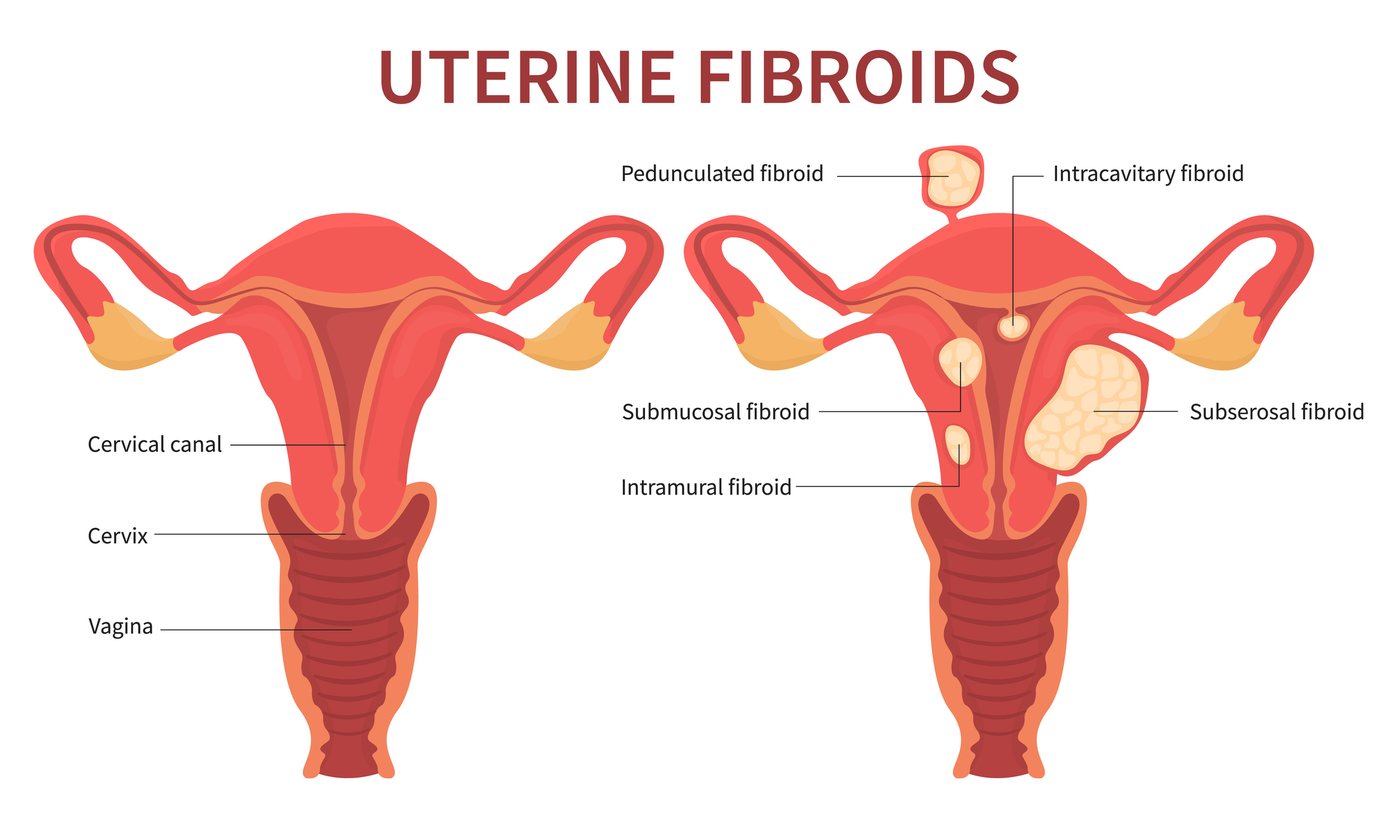
Any conversation about treatment that hasn’t started with your imaging is a conversation about statistics, not about you.
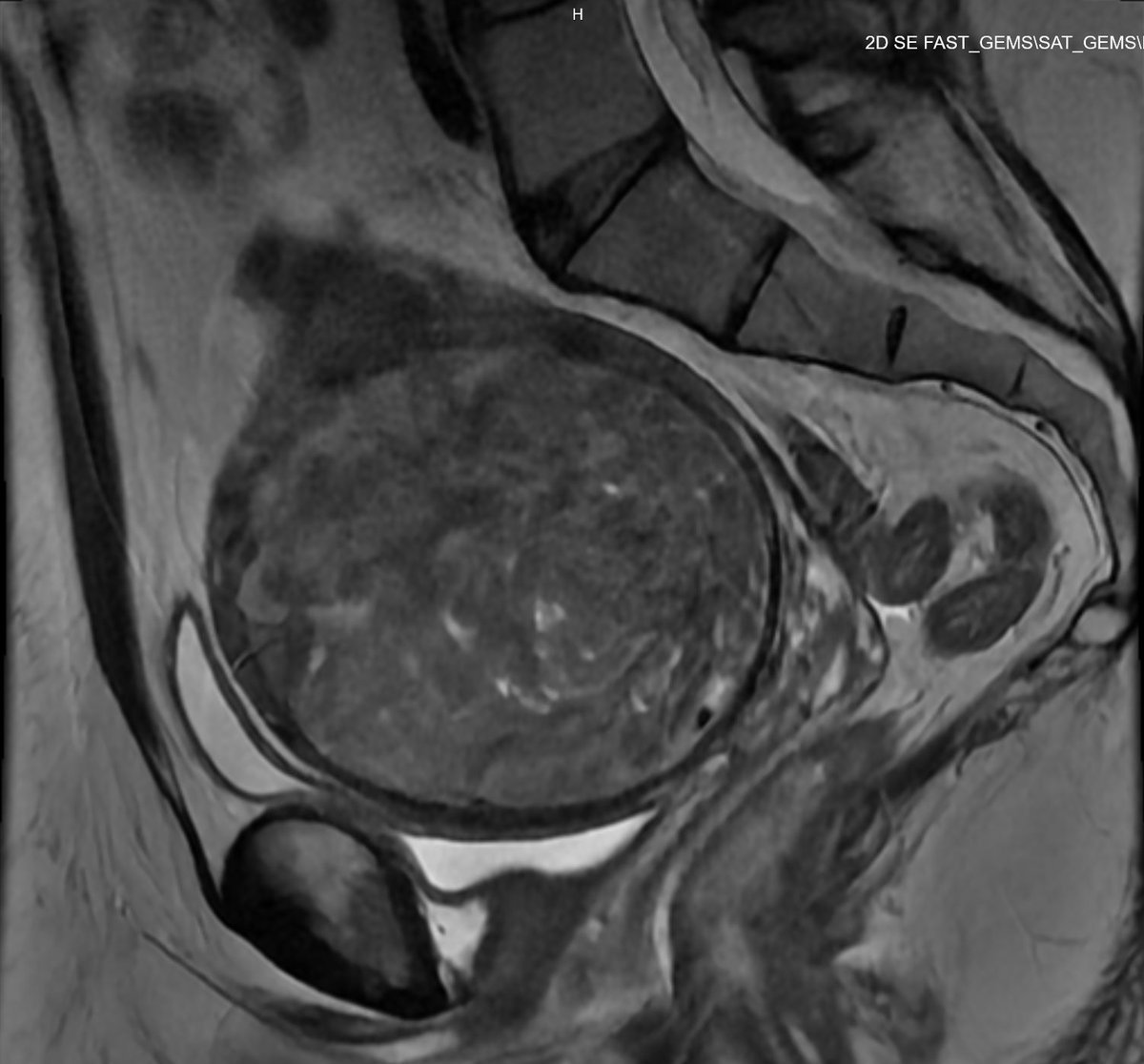
1. Watchful waiting
What it is: monitoring, not treating.
Around 26 million American women aged 15–50 have fibroids; more than 15 million have symptoms. Only a minority ever need intervention. If your fibroids aren’t bothering you, the right treatment is usually none — and ACOG explicitly supports expectant management for women who are asymptomatic or don’t want intervention.
The catch: fibroids grow on estrogen, so “wait it out until menopause” is a real strategy if menopause is near and a long sentence if it isn’t.
2. Medication
The honest spine of this whole section: none of the drug options shrink fibroids durably. All of them are symptom control. That distinction is what women in fibroid forums say nobody told them.
| Option | What it does | What to know |
|---|---|---|
| NSAIDs (ibuprofen, naproxen) | Cuts blood loss by roughly 124 mL per cycle; helps pain | Less effective than the other options here. No effect on fibroid size. |
| Tranexamic acid (Lysteda) | Cuts blood loss by roughly 94 mL per cycle | Non-hormonal, taken only on bleeding days. No effect on fibroid size. |
| The pill / progestin-only pills | Reduces menstrual blood loss | Roughly 13% reduction per cycle at 12 months in a head-to-head with the IUD. Does nothing to the fibroid. |
| 52-mg levonorgestrel IUD (Mirena) | The most effective medical option for bleeding — about 91% reduction | Fibroids are its specific failure mode: expulsion rates around 11% in women with fibroids versus 0–3% without, tracking with fibroid size over 3 cm and a distorted cavity. |
| GnRH agonists (Lupron) | Shrinks fibroids by inducing a temporary menopause | Hot flashes, sweats, bone loss with long-term use — and the fibroids regrow when the drug stops. Usually a short course before surgery. |
| Oral GnRH antagonists (Oriahnn, Myfembree) | Reduces heavy bleeding, with add-back hormones to soften the side effects | Approved for use up to 24 months. The label itself contemplates an endpoint, because of bone density. What happens at month 25 is a conversation worth having in advance. |
Medication is a legitimate first step and often the right one. What it is not is a plan for a fibroid that is causing bulk symptoms, and it should never be offered instead of a diagnosis.
Compared with UFE: nothing on that list makes a fibroid smaller for good. The day you stop taking it, you are where you started — usually a year or two older, with fibroids a year or two bigger.
3. Endometrial ablation
What it is: destroying the uterine lining to reduce bleeding.
Note what it treats: the lining, not the fibroids. It can help heavy bleeding and does nothing for bulk, pressure or size. It is also not compatible with a future pregnancy, and contraception is required afterwards.
Durability: the least durable of the uterus-sparing procedures — 33% needed another procedure within five years in a large insurance-claims analysis. In a real-world Ontario cohort of more than 52,000 patients, 16.5% went on to a hysterectomy within five years.
Compared with UFE: ablation treats a symptom and leaves the fibroids in place, still growing, still pressing. UFE treats the fibroids themselves — which is why it works for bulk and pressure, and why it doesn’t take a future pregnancy off the table.
4. Myomectomy
What it is: surgically removing the fibroids and leaving the uterus.
It is recommended by ACOG, and for some women — particularly a woman who wants to be pregnant soon — it is a reasonable answer. It is also major surgery, and that is the part usually said quickly. It comes in three routes, and the route is decided by where your fibroids sit:
- Hysteroscopic — through the cervix, no incision. Reaches only the fibroids bulging into the cavity. Everything in the wall or on the outside is left where it is.
- Laparoscopic / robotic — keyhole incisions, general anesthesia.
- Abdominal (open) — a full incision, for very large or very numerous fibroids, and the longest recovery.
Recurrence is the number to ask about, and it is not small. When women are actually re-scanned afterward — rather than counted only if they come back for a second operation — fibroids are back in roughly half of them within five years. One ultrasound follow-up study of 145 women put cumulative recurrence at 51% at five years. A second study, using a fibroid of 1 cm or more on ultrasound or MRI as the threshold, found 47% after open surgery and 57% after laparoscopic surgery at five years — rising to 63% and 76% by eight. ACOG separately notes that about 1 in 10 women who have a myomectomy end up having a hysterectomy within 5 to 10 years.
The reason is mechanical, not surgical skill. A surgeon can only remove the fibroids they can see and safely reach. Women with multiple fibroids — the common case — almost always have small ones that are missed, and the ones left behind keep their blood supply and keep growing. That is how a woman ends up back in an operating room within five years for a problem she was told had been removed.
Compared with UFE: myomectomy is surgery with incisions, anesthesia and weeks of recovery, and it treats only the fibroids that can be reached. UFE is a pinhole in the groin, no incision, and you go home the same day — and because it works by cutting off the blood supply the fibroids all depend on, it treats every fibroid in the uterus at once, including the ones too small for anyone to see today.
5. Radiofrequency ablation (Acessa, Sonata)
What it is: heating each fibroid with a probe under ultrasound guidance and leaving it in place to shrink. We don’t perform it; it belongs on any honest list.
- Acessa is laparoscopic — two small abdominal incisions. The manufacturer’s own labeling states it is not recommended for women planning future pregnancy.
- Sonata is transcervical — no incisions at all.
The drawback is built into how it works. Radiofrequency ablation treats fibroids one at a time. Each fibroid has to be individually found on ultrasound, individually punctured with a probe, and individually heated. That makes the whole treatment dependent on access and on what the ultrasound can see — and ultrasound does not see everything. Fibroids that are small, deep in the wall, awkwardly placed, or hidden behind another fibroid get missed.
Missed fibroids are not neutral. They keep their blood supply, and they keep growing. A woman can feel better for a year or two while the fibroids nobody treated quietly enlarge, and then find herself symptomatic again with the same uterus and one treatment already spent. Short-term numbers for ablation look reasonable for exactly this reason: the follow-up horizon is short enough that the untreated fibroids haven’t finished growing yet.
Then there is size. Ablation works by heating a fibroid from a probe inside it, so the fibroid has to be small enough to be heated through — and the largest fibroid ablation can treat successfully is considerably smaller than the largest fibroid UFE can treat. Every procedure on this page has a size limit, ours included. UFE’s is simply the highest: we treat fibroids up to 17 cm, and success holds at sizes well past the point where ablation stops being an option at all.
Compared with UFE: UFE never has to find your fibroids one by one, and it is not limited by how big they are in the way ablation is. It treats the blood supply that every fibroid in the uterus depends on, so the small ones, the deep ones, the ones nobody can see on ultrasound and the large ones are all treated in the same sitting — through a pinhole, with no probe passed into the uterus and nothing left to grow back on its own schedule.
6. Focused ultrasound (MRgFUS)
What it is: completely incisionless — MRI-guided ultrasound waves heat fibroid tissue from outside the body. Also not something we perform.
Durability is the problem. Pooled across 5,216 patients, the need for another fibroid procedure runs about 1% at 12 months, 7% at two years, 19% at three years and 29% by five — and, like radiofrequency ablation, it treats the fibroids it can target rather than the uterus as a whole. Access is limited, treatment sessions are long, and it is not recommended for women planning a pregnancy.
Compared with UFE: the same one-fibroid-at-a-time limitation, a weaker durability record, and far fewer places in the country that can offer it.
7. Uterine fibroid embolization (UFE)
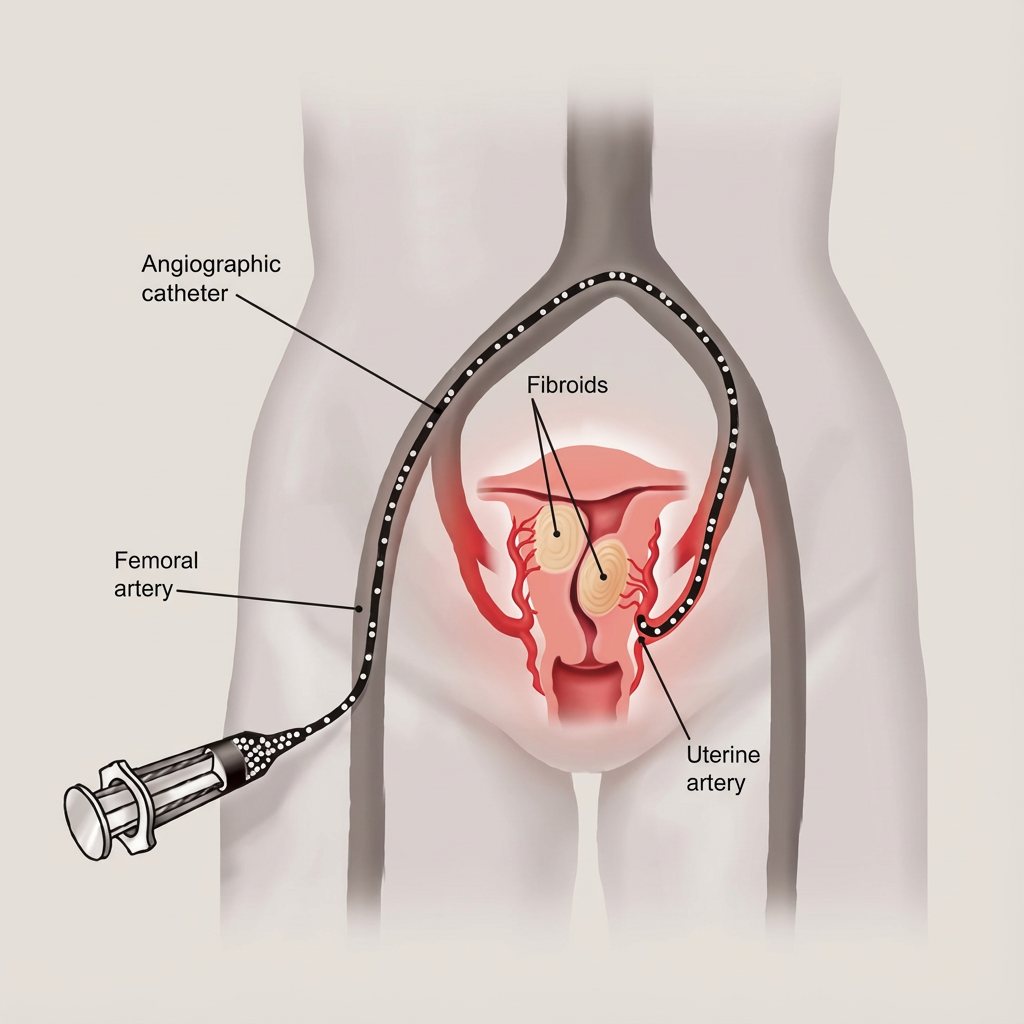
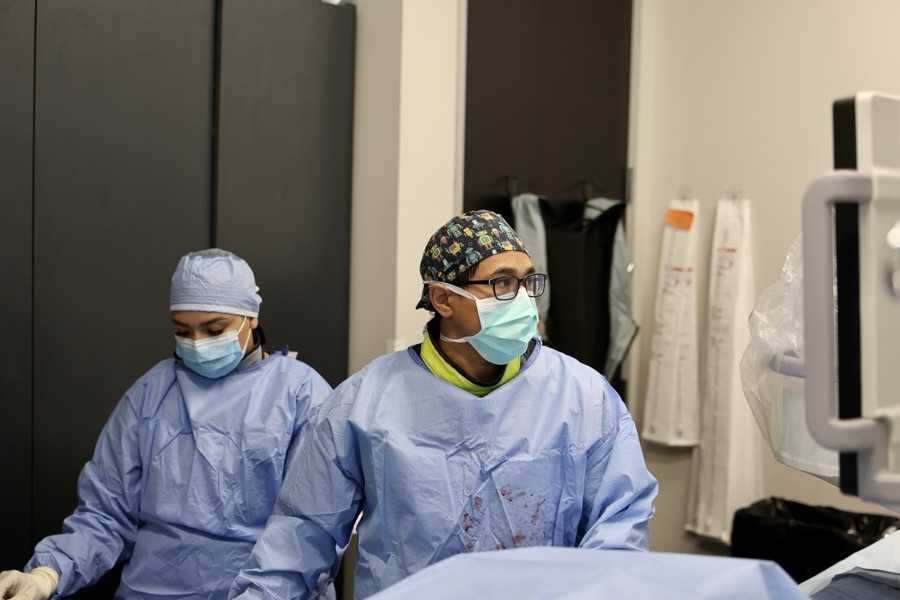
What it is: the treatment we perform. Fibroids are muscle tumors that live on blood supply — give a fibroid blood and it grows; take the blood away and it shrinks. Through a pinhole in the groin, an interventional radiologist guides a tiny catheter to the arteries feeding your fibroids and releases particles that block them. Same day, no incision, uterus intact.
It is not new or fringe. The technique dates to 1970s Paris, was first used for fibroids in the early 1990s, and uses devices FDA-cleared for this specific purpose since 2002. ACOG grades it Level A — its highest evidence rating — for women who want to keep their uterus.
What the numbers actually say:
- 9 in 10. The Society of Interventional Radiology tells patients that approximately nine out of ten women who undergo uterine fibroid embolization experience significant improvement, or have their symptoms go away completely.
- 96% for heavy bleeding. In a series of 1,285 women treated in an office-based setting — the same setting we treat in — heavy bleeding improved in 96%. Pelvic pain improved in 94%, bulk symptoms in 94%, fatigue in 94% and urinary frequency in 92%.
- Zero days in the hospital, against a five-day stay for surgery in the randomized comparison. Not one day — none. We perform UFE in our own office angiography suite under twilight sedation, and you go home the same day, after about an hour of recovery.
- Every fibroid, in one sitting. Nothing has to be found, punctured or cut out individually — which is why the number of fibroids you have doesn’t change the procedure.
Angiograms from a uterine fibroid embolization performed at ARV Centers, San Antonio. Patient identifying information removed. Individual results vary.
What to expect honestly: the procedure itself doesn’t hurt, but the first night does. As the fibroids react to losing their blood supply, the cramping is very real — for most women about 18 hours. Every patient is counseled about this in advance and goes home with real pain medication and a plan.
Why your OB/GYN may not have mentioned it
UFE is performed by interventional radiologists — a different specialty with a different training path and referral network. When OB/GYNs across 33 states were surveyed about which treatment they most frequently recommend beyond medication, the answers were hysterectomy, then myomectomy. Not one of the 104 physicians surveyed named UFE. Meanwhile their own professional college, ACOG, recommends uterine artery embolization at Level A — its highest evidence grade — for women who want to keep their uterus. This is a structural gap, not a criticism of anyone’s doctor.
8. Hysterectomy
What it is: removal of the uterus. It is the only option that guarantees fibroids never return, it is guideline-recommended, and for many women it is the right choice. Anyone who soft-pedals that is selling you something.
Two things worth knowing that patients often aren’t told:
- Removing your ovaries is a separate decision from removing your uterus. A fibroid hysterectomy does not require oophorectomy.
- ACOG’s own recommendation includes a counseling clause — patients should be “counseled about the long-term health risks.” The substance behind that clause is a long-running cohort study that found modestly increased rates of cardiovascular and metabolic conditions after hysterectomy even with ovaries conserved, with the strongest signal in women operated on very young. These are associations with modest absolute risks, not a reason to avoid a needed operation. They are a reason to have the conversation.
Compared with UFE: it is the one option that ends the fibroid question for good, and it is also the biggest thing on this list — an operation, a hospital stay, weeks of recovery, and a decision that cannot be revisited. We offer UFE first for the reason we would want it offered to someone in our own family: it is the smaller step, and it closes no doors. If it doesn’t give you what you need, hysterectomy is still there afterward.
The whole menu, on one page
Everything above, in one place. The last column is the honest part: most of this list is care we don’t provide and have no stake in.
| Treatment | Keeps uterus | Treats bleeding | Treats bulk & pressure | Pregnancy after | Do we do it? |
|---|---|---|---|---|---|
| Watchful waiting | ✓ | — | — | ✓ | n/a |
| NSAIDs | ✓ | Partly | — | ✓ | No |
| Tranexamic acid | ✓ | ✓ | — | ✓ | No |
| Hormonal contraceptives | ✓ | ✓ | — | After stopping | No |
| 52-mg hormonal IUD | ✓ | ✓✓ | — | After removal | No |
| GnRH agonist (Lupron) | ✓ | ✓ | Temporarily | After stopping | No |
| GnRH antagonist (Oriahnn, Myfembree) | ✓ | ✓ | Temporarily | Not while taking | No |
| Endometrial ablation | ✓ | ✓ | — | No | No |
| Myomectomy | ✓ | ✓ | ✓ | ✓ | Refer |
| Radiofrequency ablation | ✓ | ✓ | ✓ | Not recommended | No |
| Focused ultrasound | ✓ | ✓ | ✓ | Not recommended | No |
| UFE | ✓ | ✓ | ✓ | ✓ | Yes |
| Hysterectomy | No | ✓ Permanent | ✓ Permanent | No | Refer |
One row treats bleeding and bulk, keeps the uterus, leaves pregnancy on the table, and gets you home the same day. That is the argument for UFE, and it is the reason this practice exists.
Start with your imaging, not with a procedure
Read back through the drawbacks and they rhyme. Medication doesn’t shrink anything. Ablation only treats the lining. Myomectomy, radiofrequency ablation and focused ultrasound are all limited by the same thing — a fibroid has to be found and reached before it can be treated, and the ones that get missed are the ones that bring you back. Hysterectomy solves it by removing the organ.
UFE is the option that doesn’t work fibroid by fibroid. It treats the blood supply they all live on, in one sitting, through a pinhole, with your uterus still yours at the end of the day. It is covered by most insurance plans, including Medicare, and it does not require a referral to come talk to us.
What it can’t do is be chosen from a website. Fibroid decisions are made off your imaging — where they sit, how many, how big, how close you are to menopause — and there are situations where we are the wrong answer and will say so. Very large fibroids need surgery to resolve the bulk; we don’t treat above 17 cm, and we refer for exactly that.
On fertility: every uterus-sparing treatment on this page carries its own risk factors for future fertility — none of them is neutral, and any source that presents one of them as risk-free on that front is not being straight with you. If a future pregnancy is on your mind, we will go through the risk factors specific to UFE with you at your consultation, against your own imaging and your own history. The published fertility data has its own article if you want to read ahead.
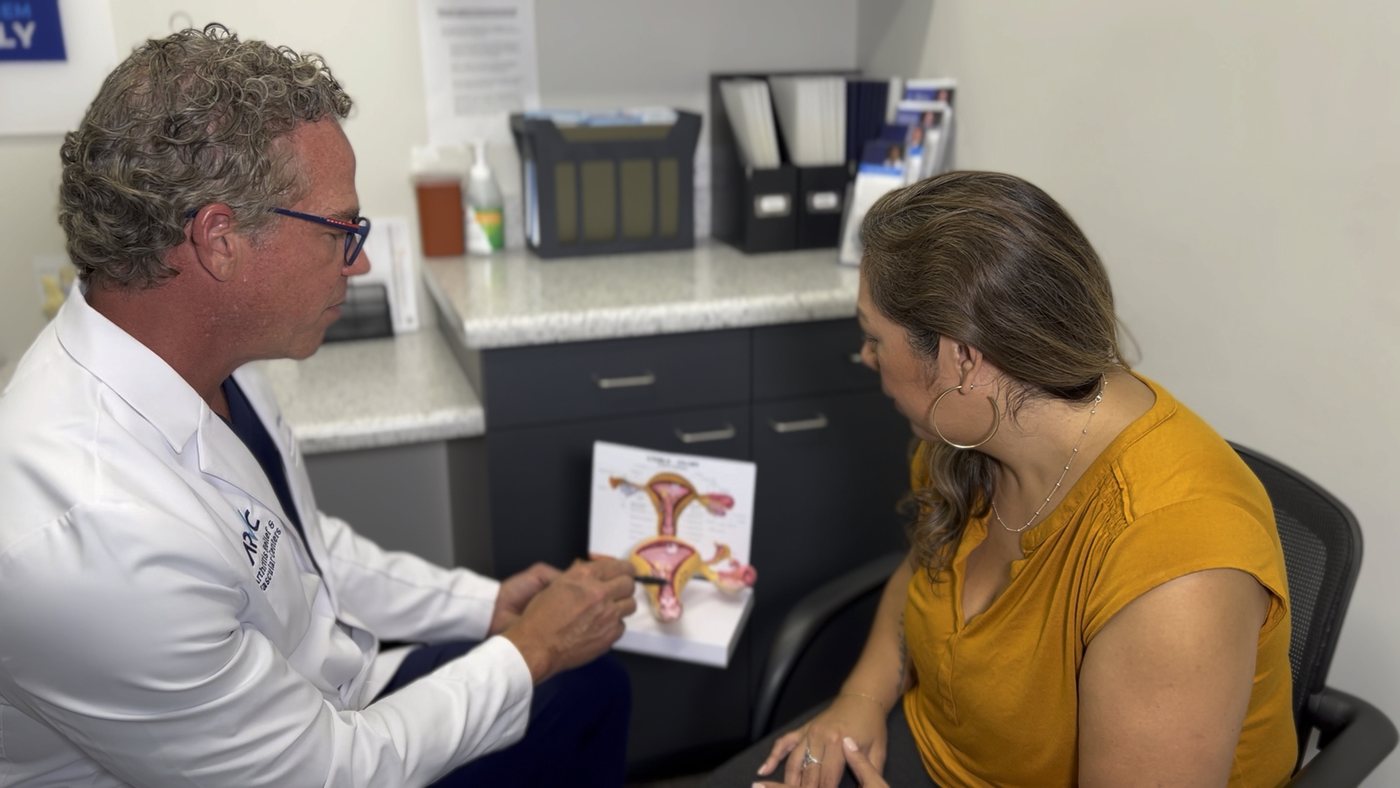
Bring us your ultrasound or MRI and we will tell you plainly what your fibroids are doing and whether we can help. Read more about fibroids and UFE, or book a consultation.
Written and reviewed by the physicians of Arthritis Relief & Vascular Centers. This article is general health education, not medical advice, and reading it does not create a doctor–patient relationship. Every case is different — talk with a physician who has seen your imaging and examined you before making a treatment decision. If you are having a medical emergency, call 911.