

Most people who put off hemorrhoid treatment aren’t putting off the treatment. They’re putting off the exam, the banding, and the recovery they’ve read about.
That’s a rational thing to do, and it’s why some people live with bleeding for years. So this article does the opposite of most medical writing on the subject: it starts with the parts you’re dreading, and tells you which of them a newer option removes.
What internal hemorrhoids actually are
Internal hemorrhoids are cushions of blood vessels inside the lower rectum. Everyone has them — they’re normal anatomy. They become a problem when the blood flowing into them outruns the blood flowing out: the cushions swell, slide downward, and bleed.
The arteries feeding them are branches of one vessel, the superior rectal artery. In people with symptomatic hemorrhoids, those branches carry more flow than they should. That extra inflow is the supply line keeping the swelling and the bleeding alive.
The treatment that works upstream
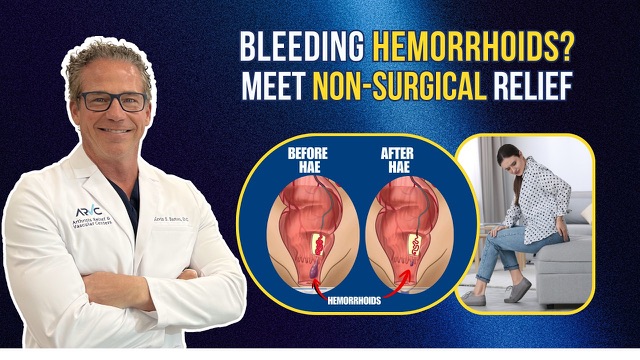
Hemorrhoid artery embolization — HAE — goes at that supply line directly, and it is the only hemorrhoid treatment that doesn’t work at the anus.
Through a pinhole in your upper thigh, a catheter thinner than a phone-charger cord travels to the small branches feeding the hemorrhoids. An interventional radiologist places tiny coils and microscopic particles there and turns the excess inflow down. The hemorrhoidal tissue stays exactly where it is — nothing is cut or removed — but with its supply reduced, it shrinks over the following weeks and the bleeding eases.
Because the rectum has more than one blood supply, the healthy tissue around the hemorrhoids keeps the flow it needs.
What that removes from the experience
- Nothing enters the anal canal. No scope, no band, no instrument. Banding, sclerotherapy and surgery all work from inside the anal canal, on the tissue itself. HAE works on the arteries upstream, from inside the bloodstream.
- There is no wound where you sit. Nothing is cut, nothing is stitched. The surgical recovery people describe in forums is a description of healing an incision in a place that cannot be rested — and there isn’t one here.
- The muscle that gives you control is never touched. The published reviews report anal tone preserved and no direct anorectal trauma.
- You lie on your back, covered, the whole time. Nothing about the position is undignified.
The exam — and why it matters more than you’d think
We won’t tell you there is no exam, because there is one. But the reason it exists isn’t procedure or paperwork. It’s that the exam is how we make sure your expectations and ours are the same expectations before anything gets scheduled.
What it actually is: at your consultation, a doctor takes your history and performs a brief, private, professional examination. It takes minutes, it happens once, and on procedure day nothing goes near it at all.
What it’s looking for is the split between internal and external.
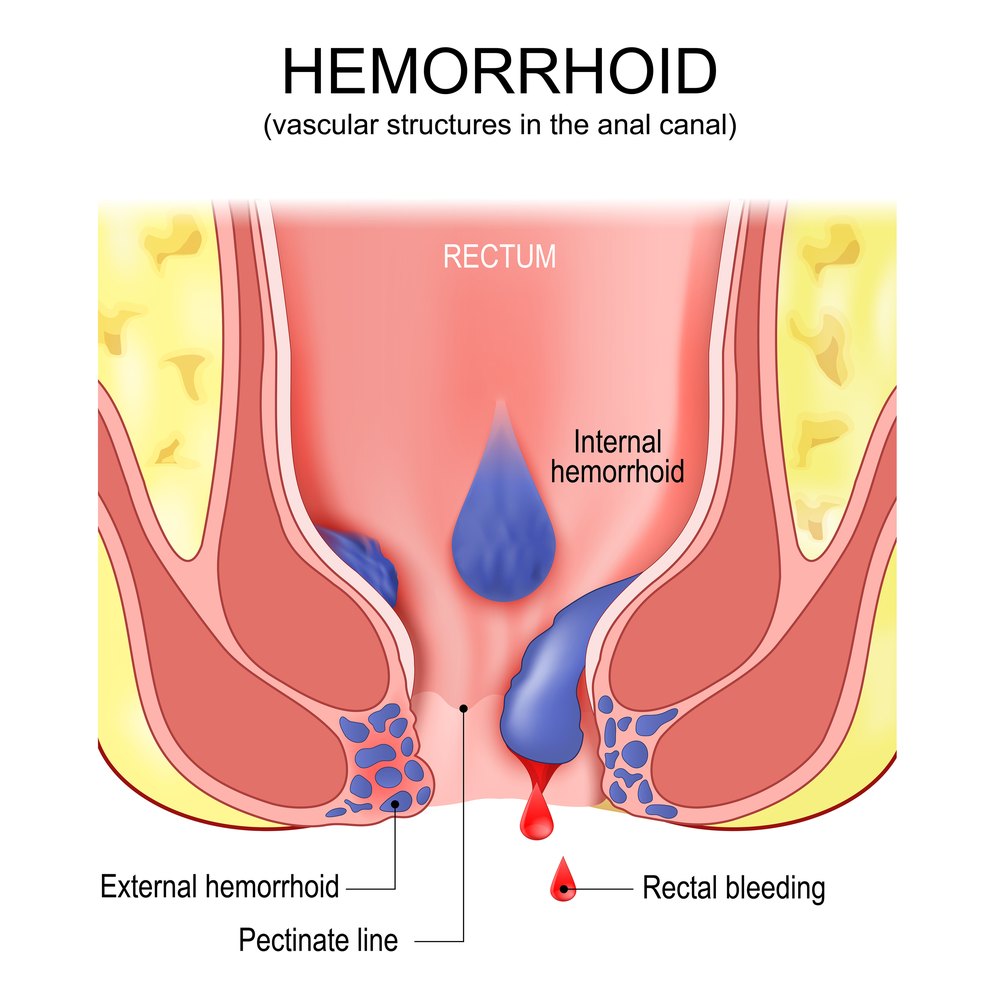
Most people who come to us have internal hemorrhoids that bleed. Many of them also have some external hemorrhoids. In a perfect world one treatment would settle all of it — but embolization works on the arteries feeding the internal hemorrhoids, so those are the ones we expect to improve. We are not going to tell you the external ones will.
There is a genuine caveat in your favor. The venous drainage of the two areas communicates, so external hemorrhoids sometimes do settle down as well. We never promise that. If it happens, it’s a bonus and we’re glad — but it isn’t what you came for, and you shouldn’t decide based on it.
And the exam catches the case that matters most: the patient whose external hemorrhoids are large enough that they, not the internal ones, are the real source of the trouble. Treating that person’s internal hemorrhoids would be the wrong procedure, performed well. Two minutes of examination is what stands between you and that outcome, which is why we won’t schedule anyone without it.
Many of our patients tell us the exam they dreaded for years turned out to be the easiest part of the whole thing. That’s not a sales line; it’s the most common piece of feedback we get about it.
The limits, before the results
Three of them, and they matter:
- It’s for internal hemorrhoids only. External hemorrhoids have a different blood supply and HAE wasn’t designed for them. Many people have both kinds — which is exactly what the exam sorts out.
- It isn’t for grade 4. HAE treats internal hemorrhoids graded 1 through 3. A hemorrhoid that stays prolapsed and won’t go back in still needs surgery, and we’ll refer you for exactly that rather than sell you the wrong procedure.
- It isn’t a guarantee. The numbers are below, uncropped.
See it for yourself
These are angiograms — X-ray pictures taken while dye flows through the arteries — from a hemorrhoid artery embolization performed here. In the “before” images, the dark tangle is the cluster of vessels feeding the hemorrhoids. In the “after” images, minutes later: it no longer fills.
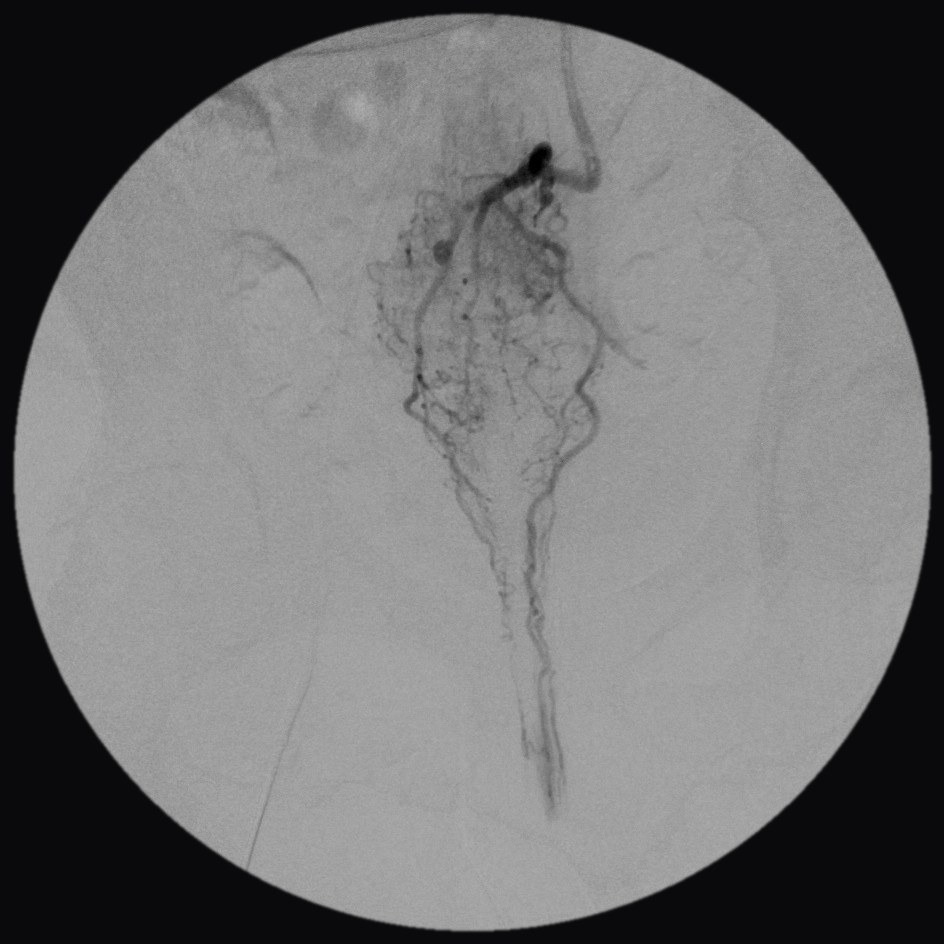
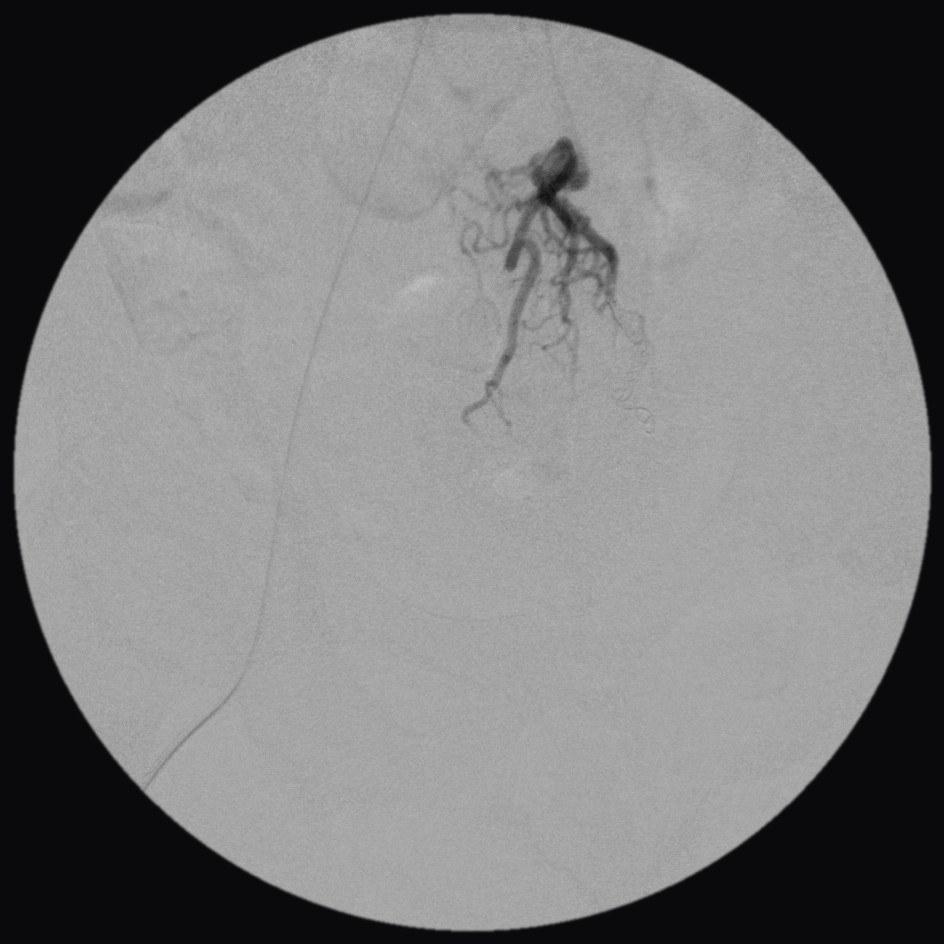
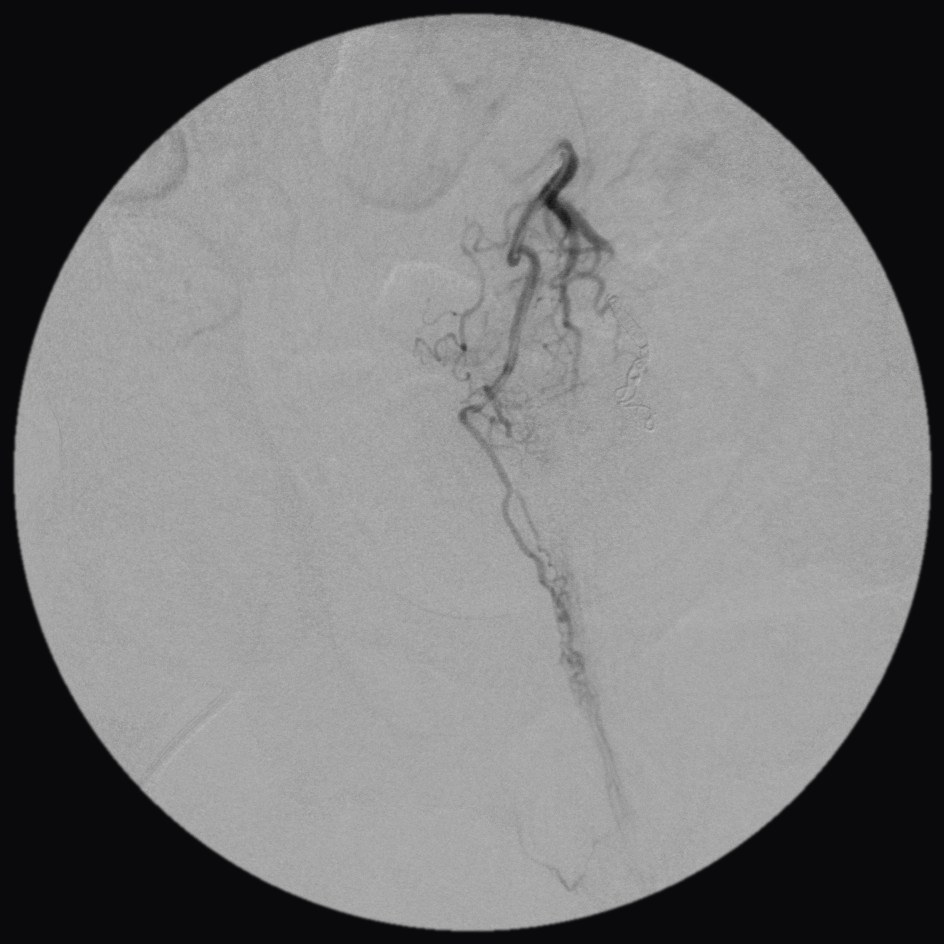
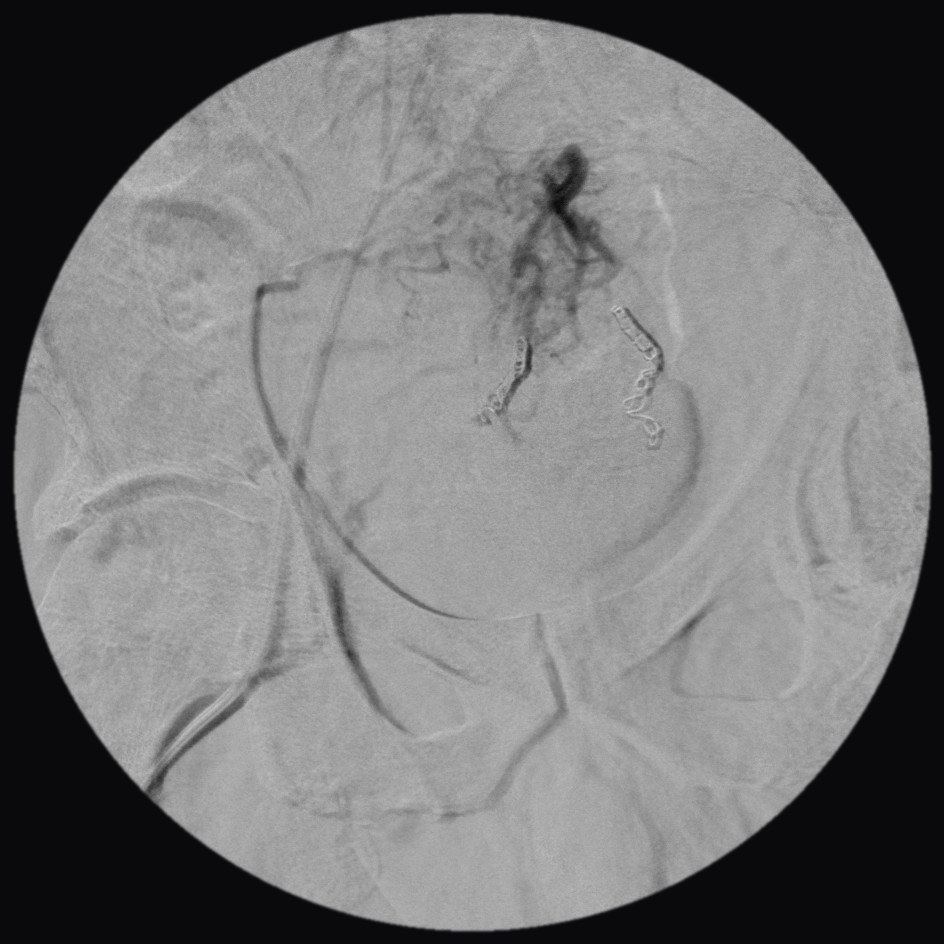
Angiograms from a hemorrhoid artery embolization performed at ARV Centers, San Antonio. Nothing in these pictures went anywhere near the anal canal. Patient identifying information removed. Individual results vary — the study data below is the fairer way to set expectations.
What the published evidence shows
The evidence base is a dozen published series from France, Italy, China, Russia, Turkey and Hungary, reviewed together in the radiology literature in 2022 — roughly 250 patients with grade 1–3 internal hemorrhoids who had already failed creams, fiber or banding.
| What the review found | |
|---|---|
| 93–100% | of procedures were technically successful — the doctors reached and treated the branches feeding the hemorrhoids. |
| 63–94% | clinical success — roughly 2 in 3 to 9 in 10 patients got lasting relief of their symptoms. |
| Zero | serious complications reported across every published study reviewed. |
| 1 in 7 | patients had bleeding return and were treated with a second embolization session. |
The transparent half: these are small studies with short follow-up, and there is no randomized trial yet comparing HAE head-to-head against banding or surgery. The review authors say so plainly, and so do we. Re-bleeding is the main way HAE falls short, often because a small feeding branch wasn’t reached the first time. Grade matters too — in one series, 94% of grade 1–2 patients were satisfied with their improvement against 84% of grade 3. Both good; not the same.
The side effects, all of them
A pressure sensation like needing the restroom — doctors call it tenesmus — reported in roughly a third to most patients depending on the study, lasting up to a few days and managed with ibuprofen and Tylenol. Temporary abdominal or rectal discomfort. And in one study that compared particle sizes, small sores at the anorectal junction with the smallest particles, graded minor and needing no more than routine care.
That is the list from the published series. Nothing on it involves the sphincter or bowel control.
What the day looks like
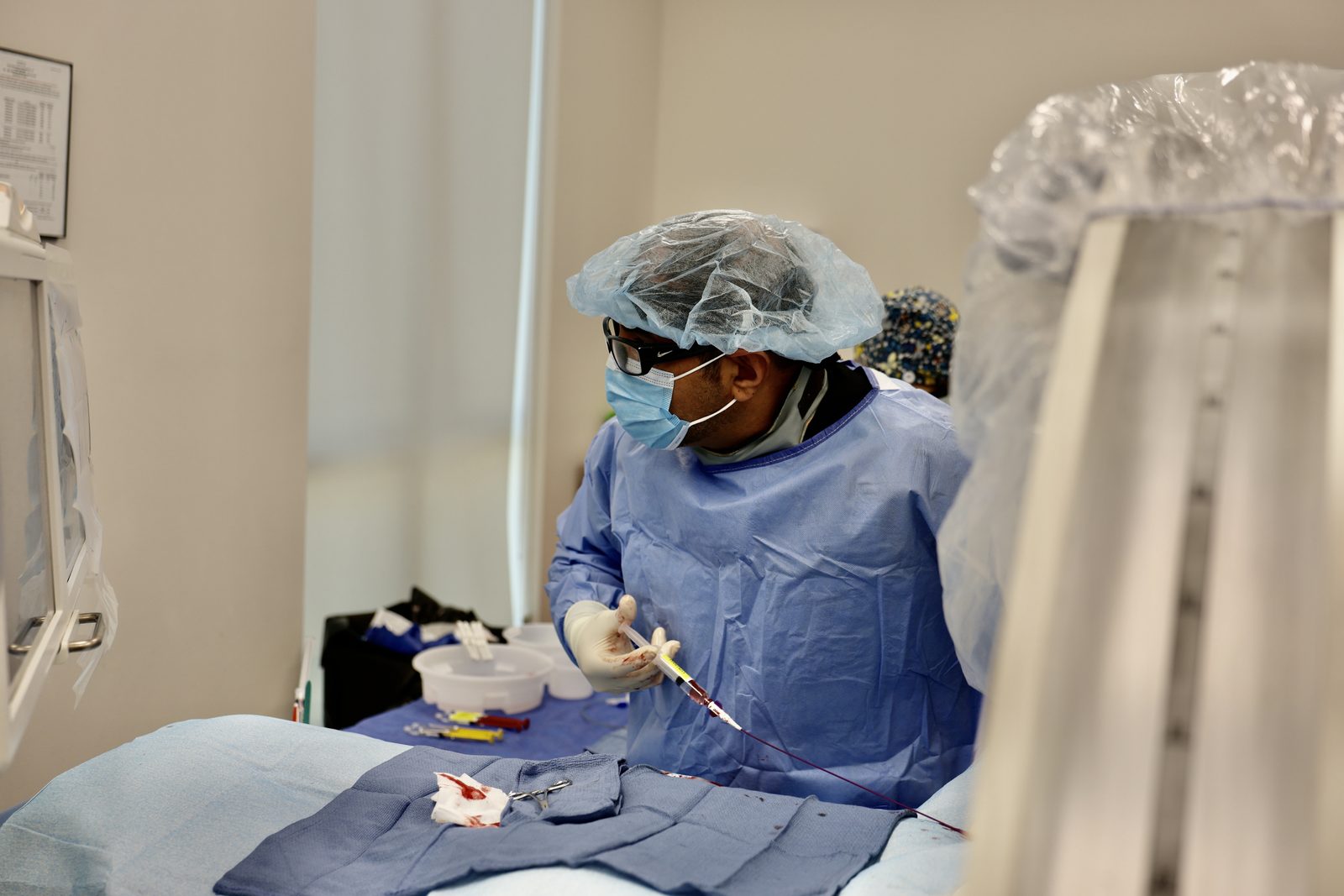
IV sedation — an anti-anxiety medicine plus pain medicine, so you’re relaxed and drowsy and breathing on your own. Not general anesthesia. The thigh is numbed, the pinhole is made, and you’re usually on the table about an hour. Then roughly an hour of observation and you go home with your driver. Plan on three to four hours with us all told.
Expect pressure or cramping for the first day or so; a heating pad and alternating Tylenol and ibuprofen handle it. Light activity for 48 hours, then your normal routine. If you take a blood thinner, that doesn’t rule you out — we coordinate a short pause with your prescribing doctor.
One thing that has to be said
Rectal bleeding is the symptom that must not be self-diagnosed. Hemorrhoids are by far the most common cause, and they’re probably your cause — but a colonoscopy may need to come first, depending on your age, your history and what the bleeding looks like. If your bleeding hasn’t been evaluated, that’s the first appointment to make, whether or not it’s with us.
What we won’t claim
A cure, permanence, or a number for your hemorrhoids. What we’ll say is narrower and more useful: for internal hemorrhoids that bleed, HAE addresses the source with no cutting and no wound, the published safety record is clean, and if it ever isn’t enough it takes nothing off the table — a repeat, banding and surgery all remain available afterwards.
If you’ve been reading about this late at night for a while, that’s a common way to arrive here. The full procedure page walks the treatment itself, in motion — one branch, four runs, in the order it was done, or you can book a consultation. There is nothing you could say that this team hasn’t heard.
Written and reviewed by the physicians of Arthritis Relief & Vascular Centers. This article is general health education, not medical advice, and reading it does not create a doctor–patient relationship. Every case is different — talk with a physician who has seen your imaging and examined you before making a treatment decision. If you are having a medical emergency, call 911.