
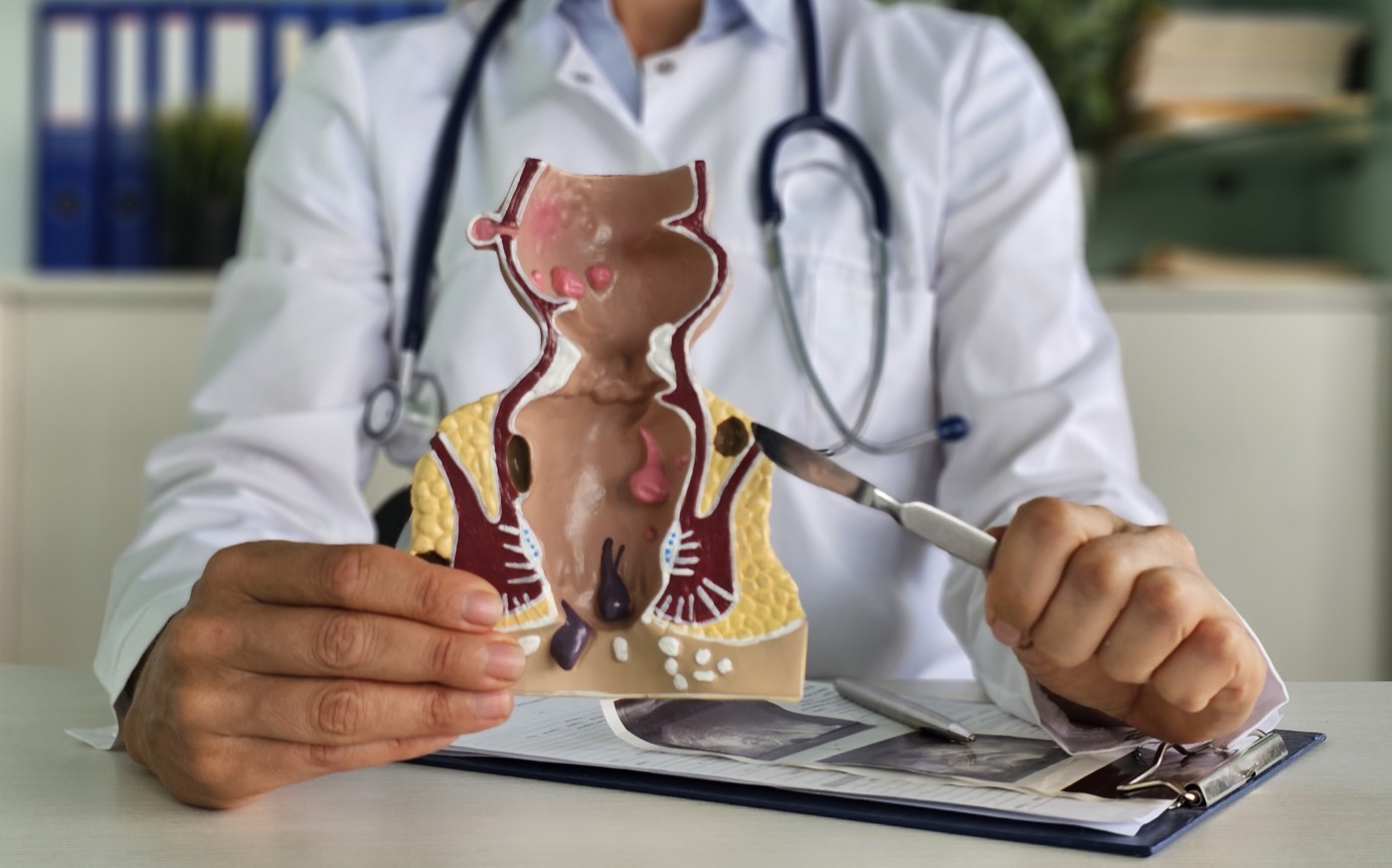
“Hemorrhoids” is one word for two different conditions. They sit in different places, they feel different, they have different blood supplies — and they respond to different treatments.
So the first useful question isn’t “how do I treat hemorrhoids?” It’s “which kind do I have?” This article answers that one first, then walks through the treatments for each.
What we do: hemorrhoid artery embolization
At ARV Centers we treat internal hemorrhoids with hemorrhoid artery embolization — HAE. It is non-surgical. Nothing is cut, banded or removed, nothing enters the anal canal, and there is no general anesthesia. It is done through a pinhole in the upper thigh, and you go home the same day. It treats internal hemorrhoids, grades 1 through 3, and the rectal bleeding they cause.
Same tissue, two addresses
Hemorrhoids are cushions of blood vessels at the end of the digestive tract. Everyone has them — they’re normal anatomy, and they help the anal canal seal. They become a problem when they swell.
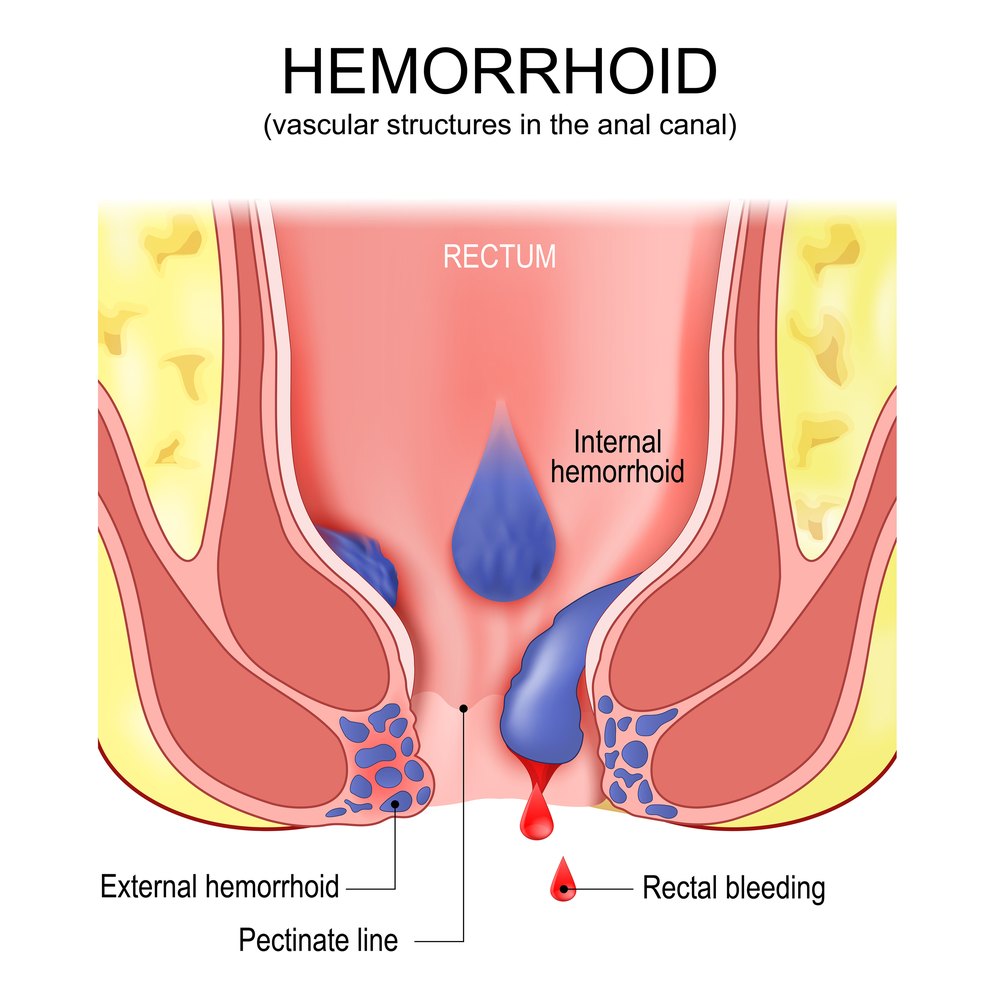
What separates the two kinds is a border inside the anal canal called the pectinate line. Above the line is internal. Below the line is external. That one landmark decides almost everything else: what you feel, what you see, and which treatment reaches it.
Internal hemorrhoids
Internal hemorrhoids sit above the line, inside the lower rectum, where you can’t see or feel them. The lining there has very few pain-sensing nerve fibers. What it has instead are baroreceptors — nerve endings that sense stretch and pressure. So an internal hemorrhoid can swell and bleed without the sharp, stabbing pain people expect, and many patients feel rectal fullness and pressure instead.
The signature symptom is painless, bright-red bleeding — on the paper, in the bowl, or on the stool. The second is prolapse: as the cushion enlarges it can slide down and out during a bowel movement, then slip back in on its own or need to be pushed back. Alongside either one, many people notice pressure, fullness, or the feeling that a bowel movement didn’t quite finish — incomplete evacuation.
External hemorrhoids
External hemorrhoids sit below the line, under the skin around the opening. That skin is full of pain-sensing nerves, which is why external hemorrhoids are the ones you feel: a lump at the rim, itching, swelling, soreness when you sit or wipe.
When a clot forms inside one — a thrombosed external hemorrhoid — it shows up suddenly as a firm, tender, bluish lump, and it can be very painful for several days.
How to tell which one you have
| Internal | External | |
|---|---|---|
| Where | Inside the lower rectum, above the pectinate line | Under the skin at the opening, below the line |
| Main symptom | Painless bright-red bleeding; pressure, fullness, or a feeling of incomplete evacuation | A lump, itching, swelling, soreness |
| Pain | Usually none — fullness and pressure instead | Common — sharp if a clot forms |
| Can you see or feel it? | Not unless it prolapses (grades 2 and up) | Yes |
| Blood supply | Primarily the superior rectal artery; in about 15% of patients the middle rectal artery as well | The inferior rectal artery |
Many people have both kinds at once, and the symptoms overlap enough that guessing from home only gets you so far. A brief, private exam at a consultation settles it in minutes — and if you aren’t sure which you have, that’s a reason to come in, not a reason to wait.
The four grades of internal hemorrhoids
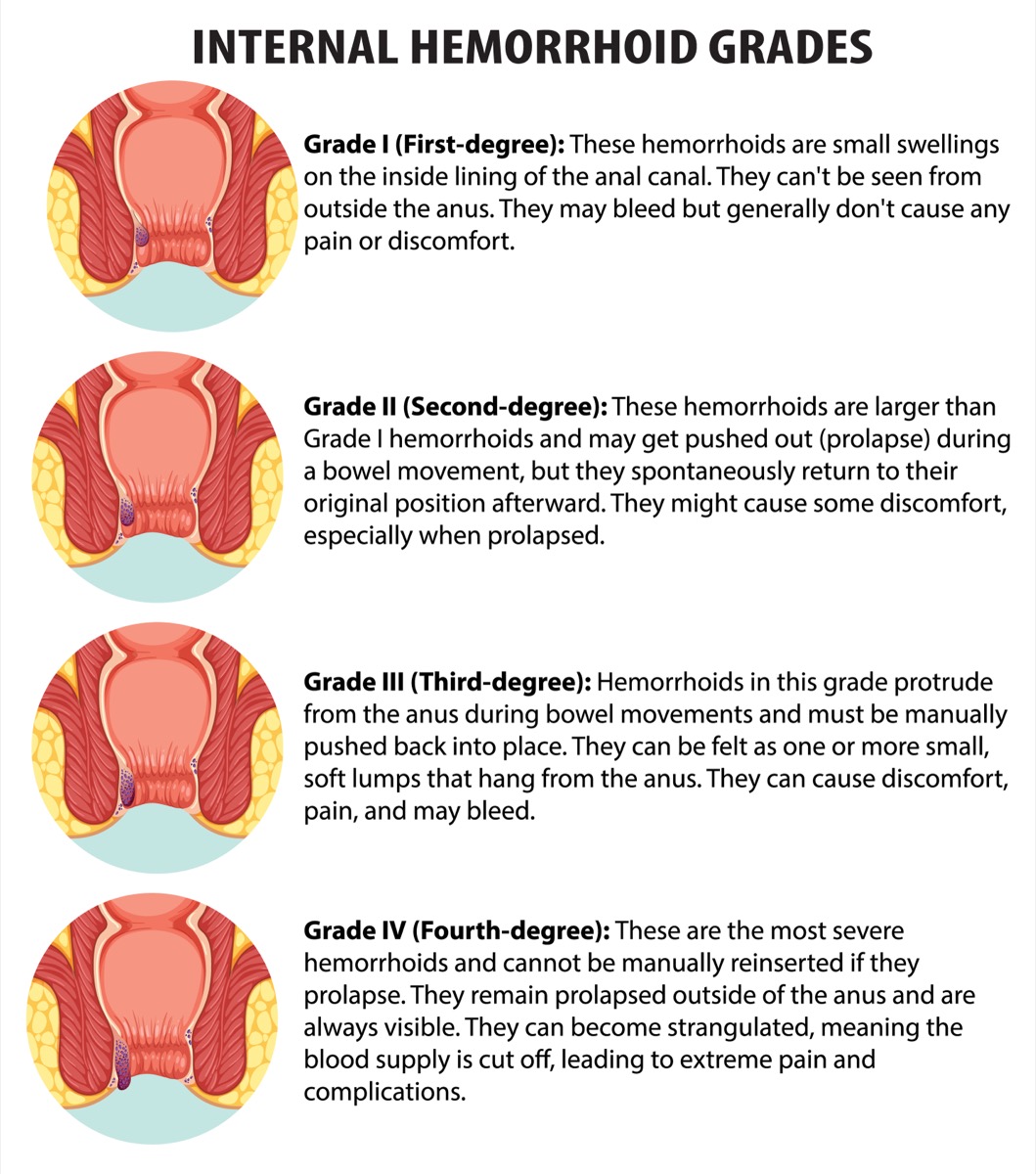
Internal hemorrhoids are graded by how far they prolapse. The grade is what a doctor uses to match you to a treatment.
| Grade | What it does | Embolization |
|---|---|---|
| Grade 1 | Stays inside. May bleed; does not prolapse. | Candidate |
| Grade 2 | Slides out with a bowel movement and goes back in on its own. | Candidate |
| Grade 3 | Slides out and has to be pushed back in by hand. | Candidate |
| Grade 4 | Stays out and will not go back in. | Surgery — we refer |
The treatment options, one by one
Home care
More fiber and fluids, less time sitting on the toilet, warm sitz baths, and over-the-counter creams or suppositories. This is the starting point for both kinds, and for external hemorrhoids with no significant bleeding or prolapse it is usually the whole plan. It calms symptoms. It doesn’t change the blood supply that keeps an internal hemorrhoid swollen.
Rubber band ligation
A small band is placed around the base of an internal hemorrhoid through a scope in the anal canal. The banded tissue loses its circulation and falls away over about a week. Banding treats one cushion at a time, usually over several visits, and it works best on smaller internal hemorrhoids. It can’t be used on external ones — the skin there feels everything.
Sclerotherapy and infrared coagulation
Two more office treatments for small internal hemorrhoids. One injects a solution that scars the cushion down; the other uses a pulse of heat. Both are delivered through the anal canal, both are aimed at grades 1 and 2, and both treat the surface of the tissue.
Surgery
A hemorrhoidectomy cuts the hemorrhoid out. It is the treatment for grade 4 internal hemorrhoids and for large or stubborn external ones, and it is done in an operating room under anesthesia. It leaves a wound in a place that can’t be rested, and recovery is measured in weeks. A stapled procedure is a variation that lifts prolapsing internal tissue back into place. For a freshly thrombosed external hemorrhoid, the clot can be removed in the office under local numbing if it’s caught in the first few days.
Hemorrhoid artery embolization — the non-surgical treatment we perform
This is what we do at ARV Centers. Every treatment above works on the hemorrhoid itself, from the outside in. Hemorrhoid artery embolization — HAE — works on what feeds it, and it does that without surgery.
Internal hemorrhoids are supplied primarily by branches of the superior rectal artery. In about 15% of patients the middle rectal artery feeds them as well, which is why the first step on the table is an angiogram that maps your own supply. In people with symptoms, those branches carry more blood than the cushions can drain, and that extra inflow is what keeps them swollen and bleeding. HAE turns it down.
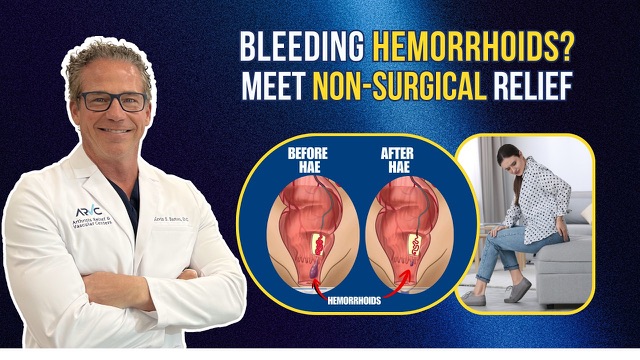
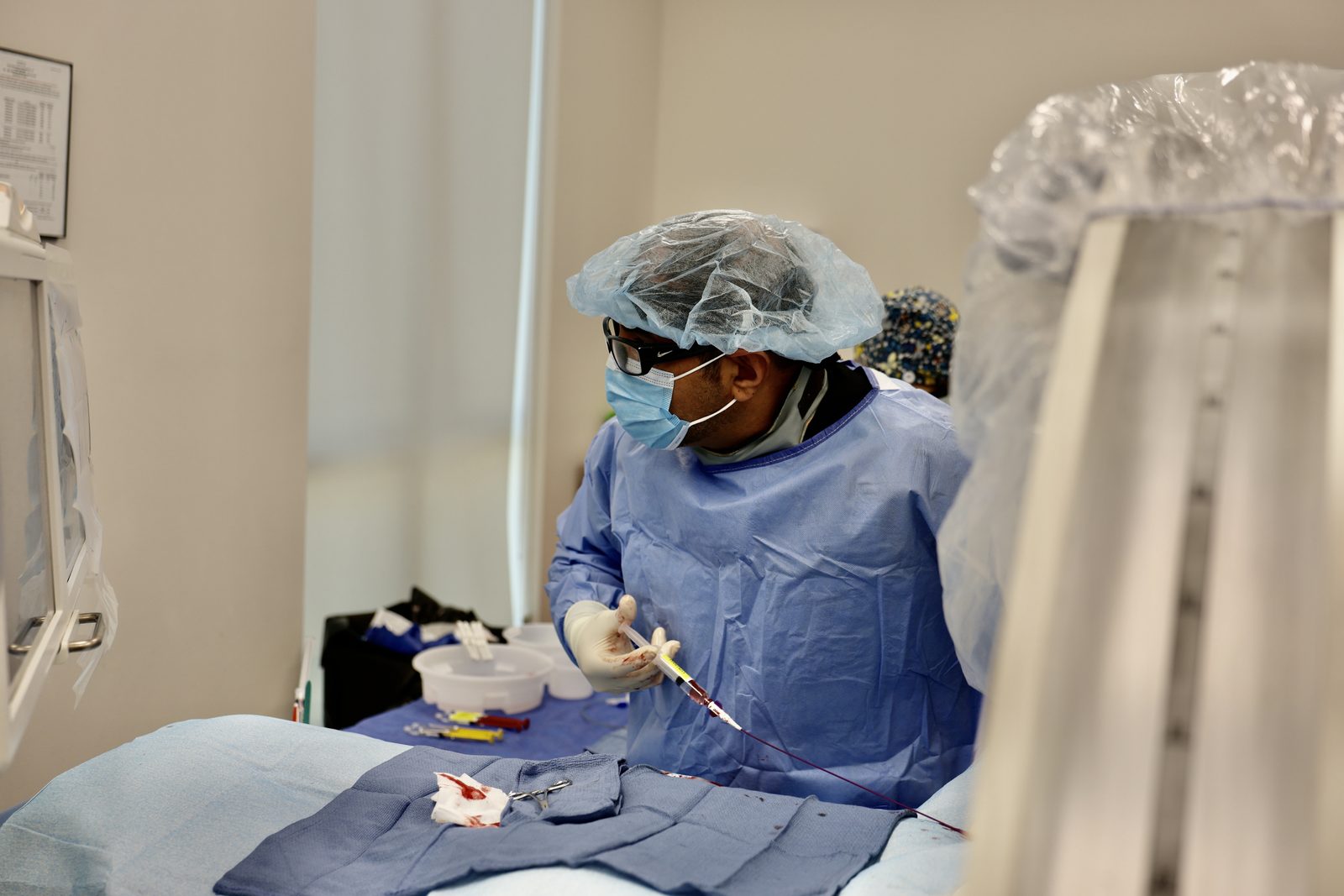
Through a pinhole in the upper thigh, an interventional radiologist steers a catheter thinner than a phone-charger cord to those branches, guided by live X-ray, and places tiny coils and microscopic particles in them. The hemorrhoidal tissue stays where it is. With its supply reduced, it shrinks over the following weeks and the bleeding settles.
Why non-surgical embolization fits internal hemorrhoids, grades 1 through 3
HAE treats internal hemorrhoids that haven’t prolapsed at all, ones that slide out and return on their own, and ones that have to be pushed back — grades 1, 2 and 3. And because it treats the arteries on both sides, it treats the whole hemorrhoidal cushion in a single session, not one hemorrhoid per visit.
- It is not surgery. No incision, no stitches, no operating room — a pinhole in the upper thigh, performed in our own office suite.
- Nothing enters the anal canal. No scope, no band, no instrument. The whole procedure happens inside the bloodstream, from the top of the thigh.
- Nothing is cut or removed. There is no wound where you sit, and no surgical recovery to get through.
- The muscle that gives you control is never touched. The published reviews report anal tone preserved and no direct anorectal trauma.
- No general anesthesia. IV sedation keeps you relaxed and comfortable, lying on your back and covered the whole time.
- Home the same day. About an hour on the table, about an hour of observation, light activity for 48 hours, then your normal routine.
- It closes no doors. Banding, a repeat embolization and surgery all remain available afterwards.
Rectal bleeding is what embolization does best
Controlling blood flow is the core of what interventional radiologists do — embolization has been used to stop bleeding elsewhere in the body for decades. Hemorrhoidal bleeding is the same problem at a smaller scale: too much arterial flow into fragile tissue. Reduce the flow and the bleeding has nothing behind it.
That makes HAE a particularly strong fit when bleeding is the main symptom — blood on the paper or in the bowl week after week, bleeding that has left you anemic, or bleeding on a blood thinner that makes surgery a poor choice. A blood thinner doesn’t rule you out; we coordinate a short pause with your prescribing doctor.
See it on the angiogram
These are X-ray pictures taken while dye flows through the arteries, from a hemorrhoid artery embolization performed here. In the “before” images, the dark tangle is the cluster of vessels feeding the hemorrhoids. In the “after” images, minutes later, it no longer fills.
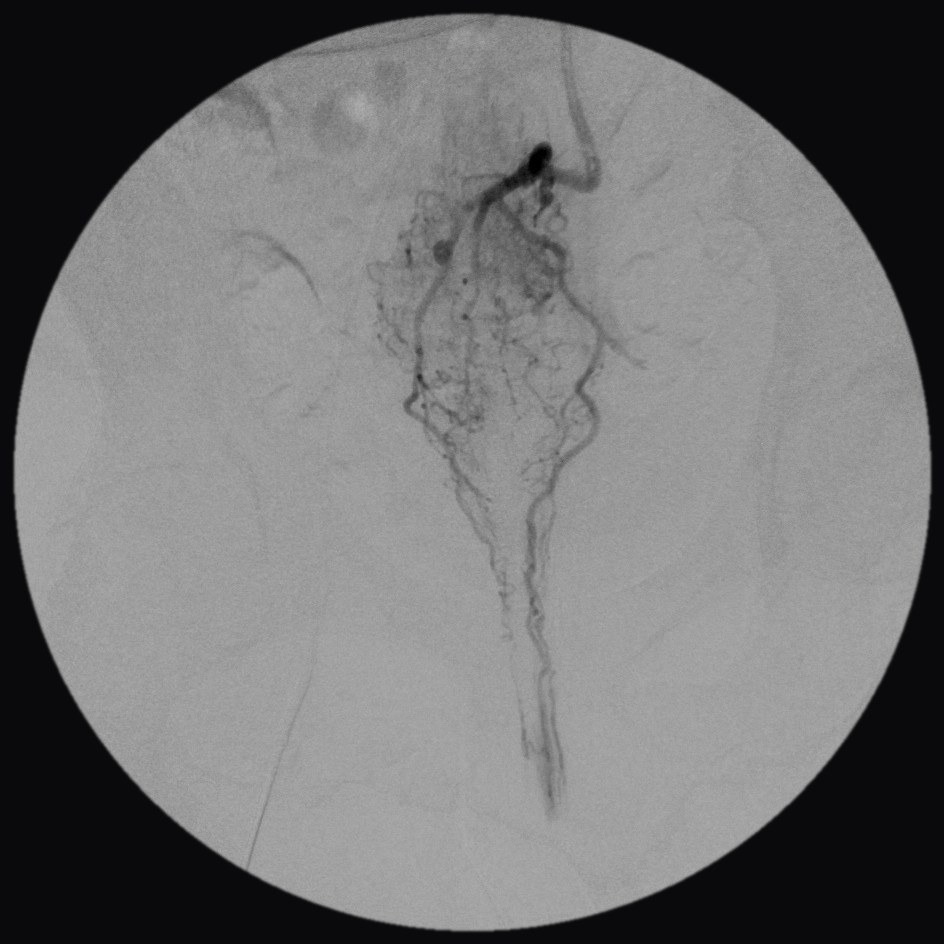
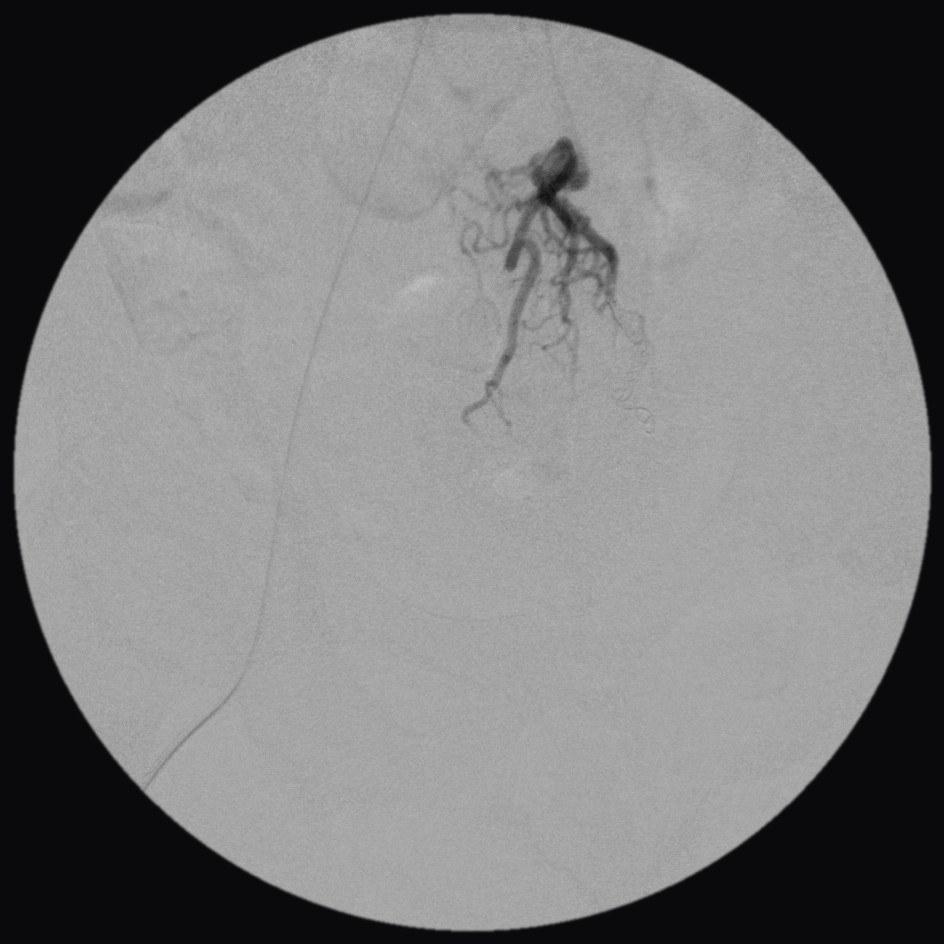
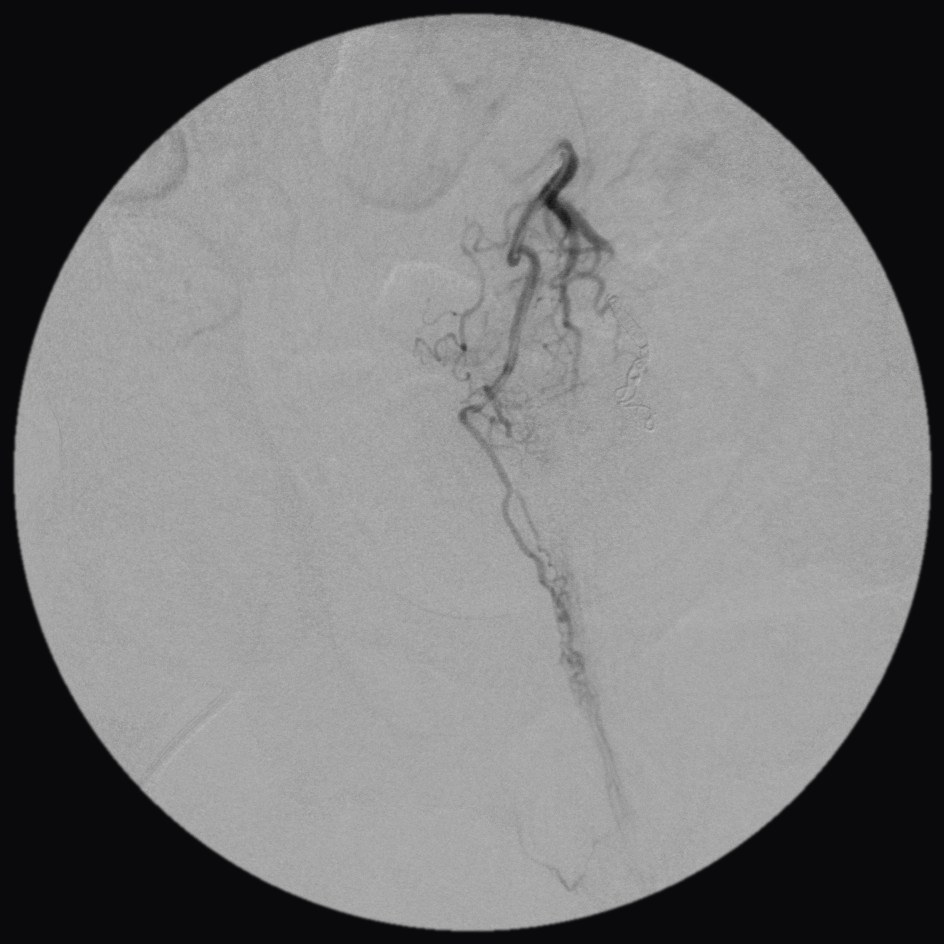
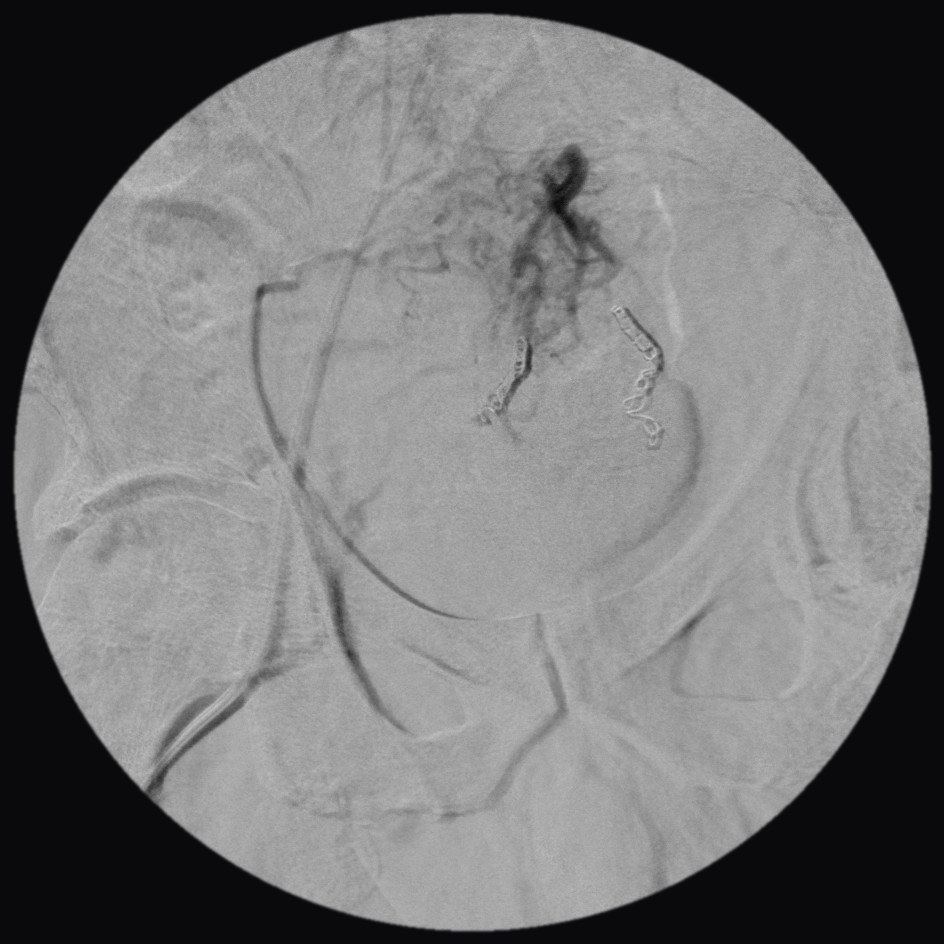
Angiograms from a hemorrhoid artery embolization performed at ARV Centers, San Antonio. Nothing in these pictures went anywhere near the anal canal. Patient identifying information removed. Individual results vary — the study data below is the fairer way to set expectations.
What the published studies show
A 2022 review in Diagnostic and Interventional Imaging gathered a dozen published series — roughly 250 patients with grade 1–3 internal hemorrhoids, most of whom had already tried creams, fiber or banding.
| What the review found | |
|---|---|
| 93–100% | of procedures were technically successful — the branches feeding the hemorrhoids were reached and treated. |
| 63–94% | clinical success — roughly 2 in 3 to 9 in 10 patients got lasting relief of their symptoms. |
| Zero | serious complications reported across every study reviewed. |
| 1 in 7 | patients had bleeding return and were treated with a second embolization session. |
The most common after-effect is a pressure sensation, like needing the restroom, that lasts a few days and is managed with ibuprofen and Tylenol. Results vary from person to person, and the consultation is where you find out what to expect for yours.
The options side by side
| Treatment | Treats | How it gets there | Recovery |
|---|---|---|---|
| Home care | Symptoms of both kinds | Diet, habits, creams | None |
| Banding | Smaller internal hemorrhoids, one at a time | Through the anal canal | A few days of pressure; often several visits |
| Sclerotherapy, infrared | Internal, grades 1–2 | Through the anal canal | Short; may need repeating |
| Embolization (HAE) — what we do, non-surgical | Internal, grades 1–3, and rectal bleeding | Through an artery, from a pinhole in the thigh | Light activity for 48 hours |
| Surgery | Grade 4 internal; large external | Cut out, in an operating room | Weeks, with a wound to heal |
Where each kind lands
- External only, no real bleeding or prolapse: home care. Surgery is reserved for external hemorrhoids that are very painful, keep coming back, or don’t respond. Embolization isn’t built for these — they are fed by a different vessel, the inferior rectal artery.
- Internal, grades 1 through 3: this is who non-surgical HAE is for — above all when bleeding is the main complaint, when creams and fiber haven’t been enough, or when banding didn’t hold.
- Internal, grade 4: surgery, and we’ll refer you for it.
- Both kinds at once: common. The exam identifies which one is causing your symptoms, and treatment follows that.
Bleeding needs a diagnosis first
Hemorrhoids are by far the most common cause of bright-red rectal bleeding. Before treating it as hemorrhoidal, we make sure that’s what it is — which means a colonoscopy if you haven’t had one recently, or if your symptoms have changed since your last one.
The next step
Hemorrhoid artery embolization is what we do here, and it treats internal hemorrhoids without surgery. If yours bleed or prolapse, one consultation tells you your grade and whether embolization fits. You’ll sit with a provider in a private room, and the exam is brief. No referral is needed, HAE is a covered benefit under most insurance plans, and we do a complimentary benefits check when you come in.
The full procedure page shows the treatment itself, step by step, or you can book a consultation on our calendar below. There is nothing you could say that this team hasn’t heard.
Written and reviewed by the physicians of Arthritis Relief & Vascular Centers. This article is general health education, not medical advice, and reading it does not create a doctor–patient relationship. Every case is different — talk with a physician who has seen your imaging and examined you before making a treatment decision. If you are having a medical emergency, call 911.