
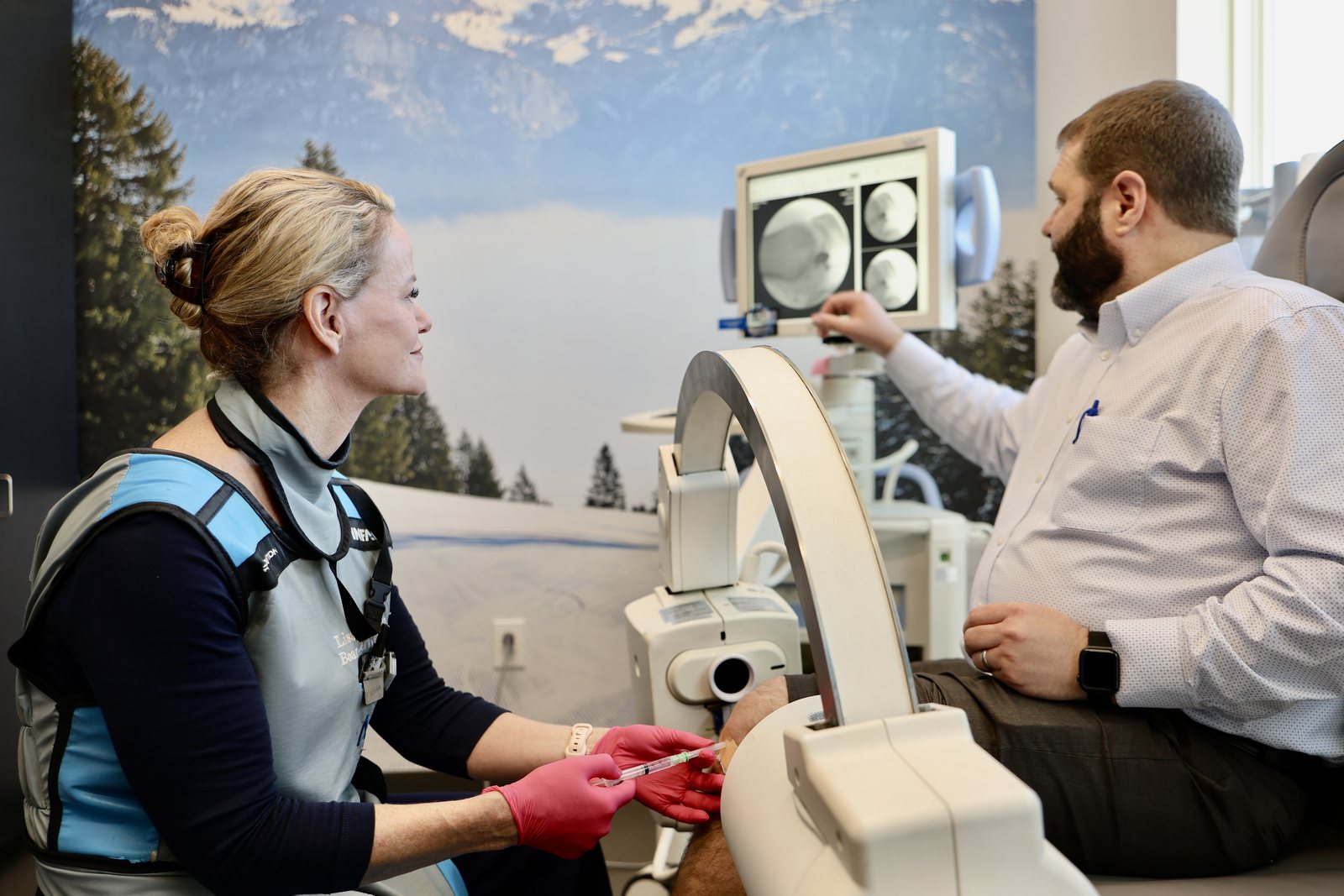
If you have knee arthritis, you already know the sequence by heart. Ibuprofen. Then physical therapy. Then a cortisone shot — maybe two, maybe three. And for a while it works.
Then one day it doesn’t work like it used to. The shot that bought you six months buys you six weeks. You start scheduling the next one before the last one has worn off.
And that is usually when a patient hears the sentence that sends them looking for articles like this one: “At this point, really the only thing left is a knee replacement.”
For a long time that sentence was accurate. This article is about why it isn’t anymore.
Knee arthritis care was built with two settings
For decades, treatment for knee osteoarthritis had two phases and nothing in between.
Phase one is conservative management. Anti-inflammatories, physical therapy, weight management, and injections — corticosteroid or hyaluronic acid gel.
Phase two is a total knee replacement. An operation, a hospital, an implant, and months of rehabilitation.
The problem has always been the distance between them. A very large group of patients respond well to phase one at first and then plateau. The pain comes back. Function slips. The injections get shorter. And yet nothing about that moment means they are ready for phase two.
The injections stopped being enough long before the knee was ready for an operating room. That distance is the gap.
Who ends up in the gap
Nearly every patient we see in this situation lands there for one of three reasons.
- A medical reason. Diabetes, heart disease, blood thinners, a body that makes general anesthesia and a major operation a genuine risk. Surgeons are right to be cautious — but caution offered on its own isn’t treatment.
- An age reason. Younger patients are routinely told to wait. Implants have a service life, and a revision at 70 for a replacement done at 55 is a harder operation than the first one. “Come back in ten years” is sound surgical advice and a very long time to hurt.
- A life reason. Recovery from a knee replacement is measured in months, not days. Some people cannot hand over a season of work, or a parent they care for, or a business that doesn’t run without them.
This group is well known in the research, and named in it. The team behind the GENESIS trial, writing up their two-year results in 2024, described patients with mild-to-moderate arthritis who don’t respond to conservative care and aren’t suitable surgical candidates as “currently left without further treatment options.” Their word for what that leaves behind is the same one we use: a treatment gap.
The UCLA embolization trials were built around the same people — enrolment was open specifically to patients ineligible for or refusing surgery. This is not a marketing idea. It is a documented population, and it is large.
“Wait it out” was never a neutral instruction
Waiting sounds like the safe, conservative choice. In a knee, it usually isn’t a standstill.
Pain limits how much you move. Less movement means more stiffness and quiet loss of the quadriceps muscle that protects the joint. Less movement often means weight gain, and added weight accelerates the arthritis that started the whole chain. It is a loop, and each turn of it makes the next turn easier.
Then there is the part patients rarely say out loud in an exam room. Cancelling plans. Dropping out of the walking group. Taking the elevator. Saying “let me think about it” to an invitation you would once have accepted without a thought. Patients describe it the same way over and over: the knee started running the calendar.
None of that is in your head, and none of it is a character flaw. It is what a joint that hurts every day does to a life — and it is a reason to treat the pain now rather than bank it against a surgery you may not want for years.
What changed: arthritis is not only wear and tear
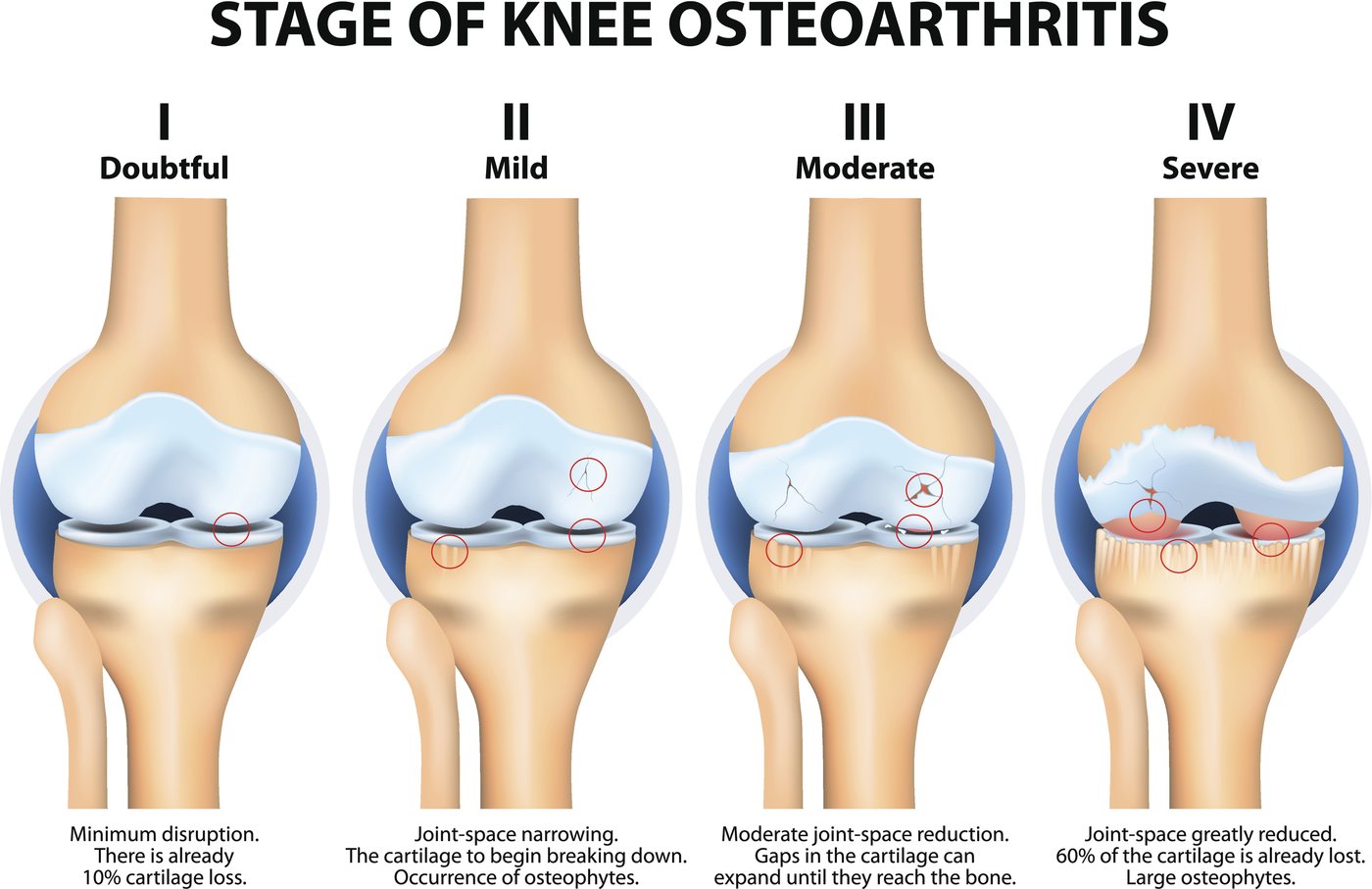
The standard explanation of knee arthritis is mechanical. Cartilage wears down, bone rubs on bone, it hurts. That story is real, but it is incomplete — and you can see the gaps in it from your own experience. It doesn’t explain the swelling. It doesn’t explain the throbbing at night when you aren’t standing on the knee at all. It doesn’t explain good weeks and bad weeks on cartilage that hasn’t changed. And it doesn’t explain the patients whose X-rays look alarming and whose knees feel fine.
What research over the last fifteen to twenty years has added is inflammation. The lining of an arthritic joint — the synovium — becomes chronically inflamed, and inflamed tissue does something specific to sustain itself: it grows a web of new, abnormal little blood vessels. The medical word is neovascularization.
Here is the part that matters. Those vessels don’t arrive alone. New pain nerve fibers grow in alongside them, into areas of the joint that are normally nerve-free. More vessels, more nerve endings, more inflammation — a patch of tissue inside the knee that is permanently irritated, permanently over-supplied with blood, and permanently wired to complain.
Which raises an obvious question. If abnormal blood vessels are feeding the inflammation and the pain, what happens if you shut off blood flow to just those vessels and leave everything else in the joint alone?
That is genicular artery embolization
Embolization is not new. Interventional radiologists have used it for decades to reach a target through the arteries with a catheter and block the specific vessels feeding a problem — it is how fibroids are treated without a hysterectomy, and how bleeding is stopped without an operation.
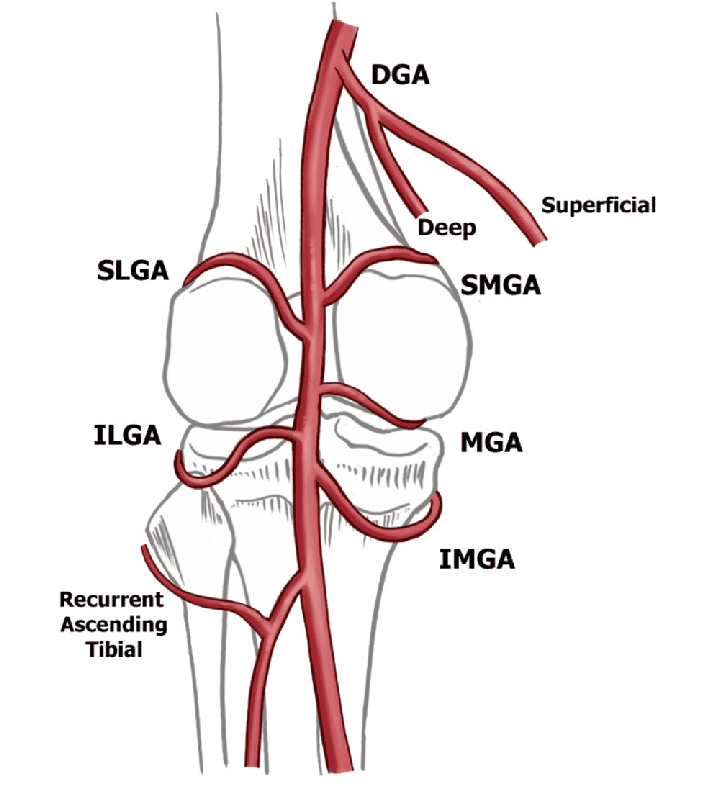
Genicular just means “of the knee.” The genicular arteries are the small vessels that ring the joint; roughly eight of them can feed an inflamed lining.
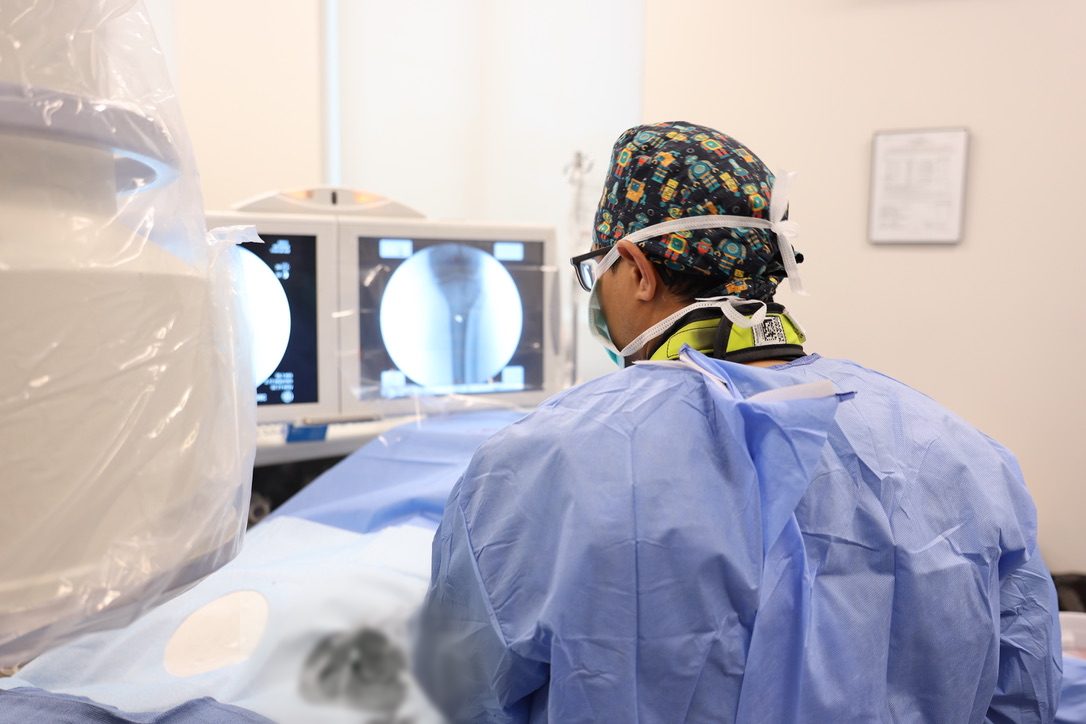
The procedure itself is outpatient and image-guided:
- You’re comfortable, not asleep. Twilight sedation through an IV — relaxed and drowsy, breathing on your own. No general anesthesia and no breathing tube.
- A pinhole, not an incision. The skin at the top of the thigh is numbed and a catheter thinner than a strand of spaghetti goes in through a puncture in the artery. Nothing is cut and there is nothing to stitch.
- The map. Contrast dye plus live X-ray shows which vessels are abnormal in your knee. The dark “blush” of an inflamed lining is unmistakable once you’ve seen it.
- The treatment. Only those vessels are blocked, with particles about the size of a grain of sand — far too small to disturb the healthy blood supply the knee needs.
- Home the same day. The whole thing takes about 30 to 45 minutes. No hospital admission, no incision to heal. Most patients walk out with a bandage over the access site.
What we use to block those vessels is temporary: an antibiotic mixed with X-ray contrast, which forms microcrystals that plug the abnormal vessels and then dissolve into the bloodstream within about 30 to 45 minutes. Nothing permanent is left in your body. Afterwards, don’t lift anything heavy for three to five days while the artery puncture heals — ordinary daily activity starts again right away.
“Are you cutting off the blood supply to my knee?”
No — and almost every patient asks, so it deserves a straight answer. The arteries that nourish bone and healthy tissue are left alone. Only the abnormal vessels that grew in response to years of inflammation are targeted, and the knee’s circulation is built with plenty of redundancy. You can watch that in the loops below: the blush disappears, the artery beside it keeps flowing.
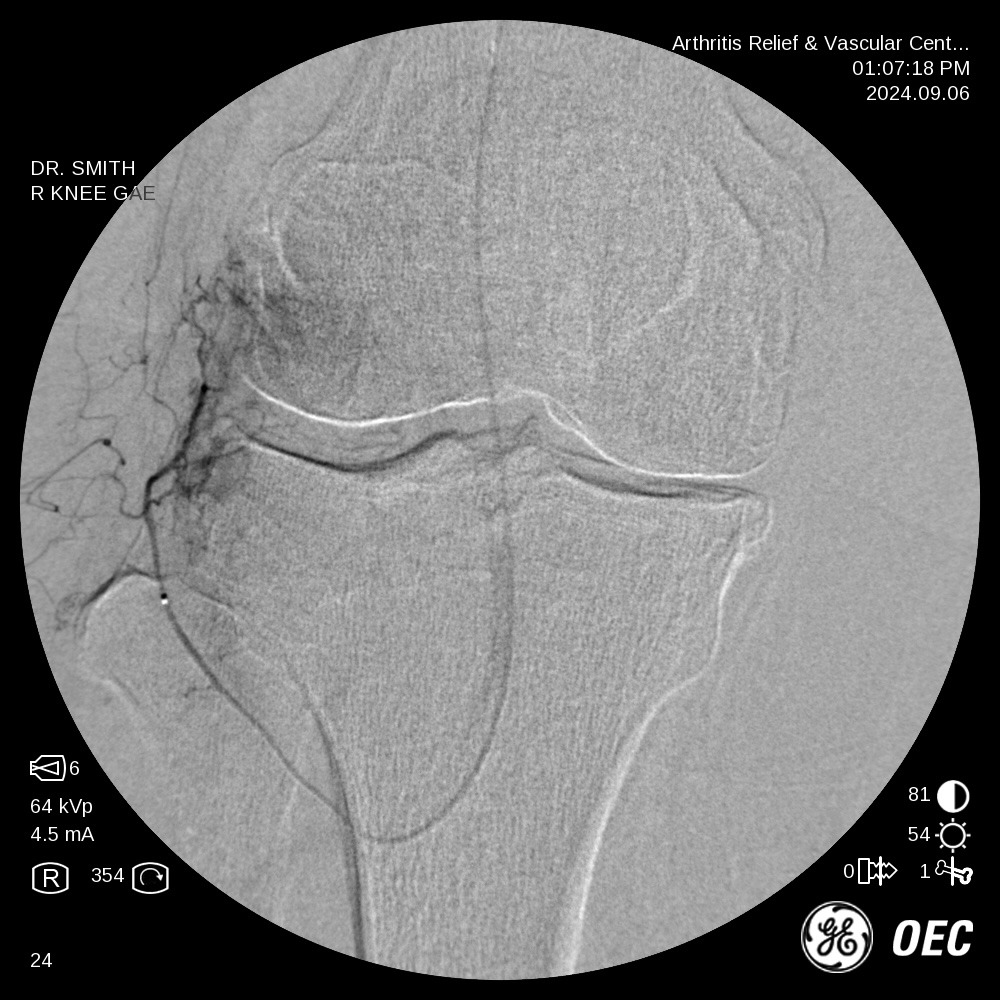
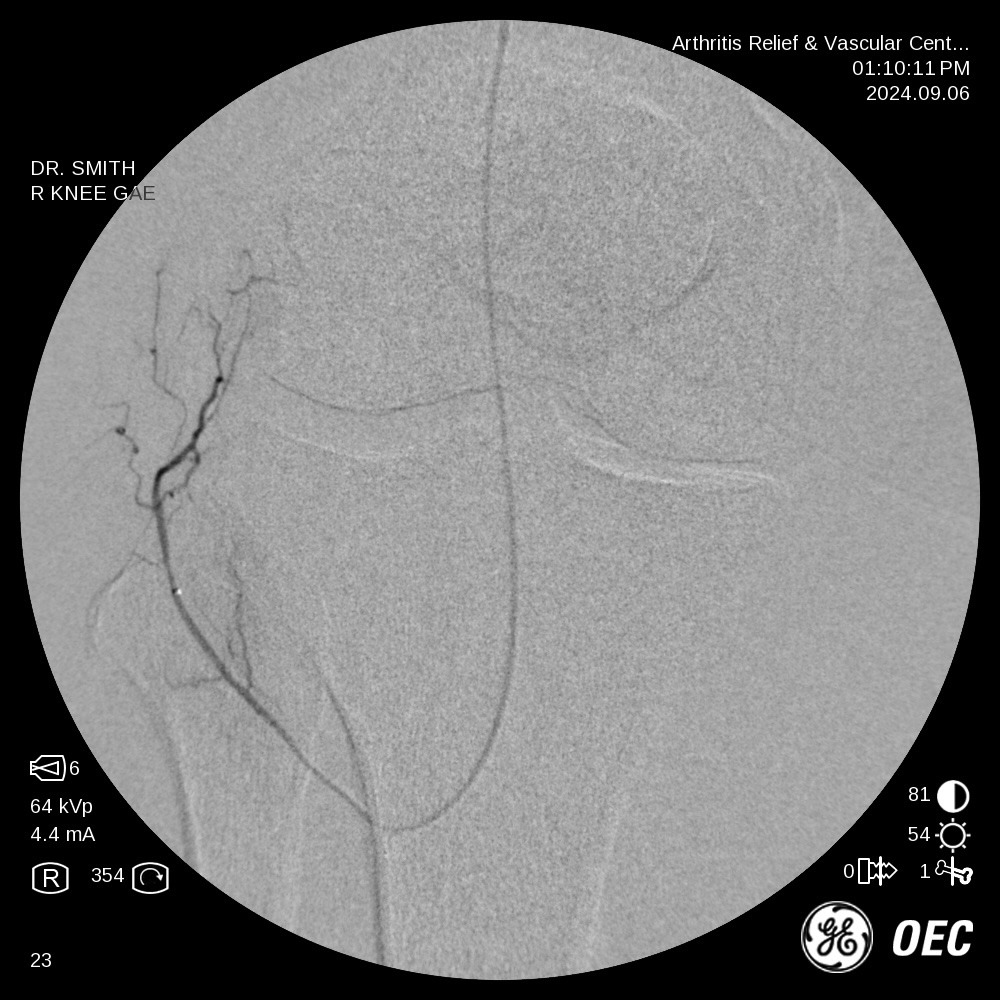
Angiograms from genicular artery embolizations performed at ARV Centers, San Antonio. Patient identifying information removed. Individual results vary.
What the evidence actually shows
GAE has been studied in exactly this population — patients who plateaued on conservative care and weren’t heading for surgery — for more than a decade. The numbers, and their limits:
| Question | What the studies found |
|---|---|
| Is it just a placebo? | In the only US randomized sham-controlled trial, patients were assigned to a real embolization or a convincing fake one — same sedation, same catheter, no treatment. Not one patient in the sham group improved, and every one of them chose to cross over to the real procedure once unblinded. About four in five treated patients responded within a month. |
| Does it hold up for a year? | In a prospective trial at UCLA, published in JBJS Open Access, 68% of patients cut both their pain and their WOMAC symptom scores at least in half at twelve months — and this trial deliberately included severe, bone-on-bone knees. |
| And longer than that? | A Japanese series followed mild-to-moderate arthritic knees that had already failed conservative treatment: clinical success in 86% at six months, and 80% still holding a meaningful response at three years. |
| How often does it work technically? | Across nine studies and 270 patients pooled in a systematic review, the procedure was technically successful 99.7% of the time. |
| Is it safe? | In those same 270 patients, side effects were minor and temporary — the most common was skin discoloration near the knee that fades on its own, in about one patient in nine. Hospitalization was needed in 0.3%. No deaths were reported. |
| Does it postpone surgery? | In the pooled data, about 5% of patients went on to a knee replacement within two years. A single-center study that followed its own patients closely reported a higher figure — roughly one in five by around eighteen months. The populations differ, and both are worth knowing. |
The testing hasn’t stopped. The largest sham-controlled trial of GAE ever run — GENESIS 2, 110 patients randomized one to one, half receiving a placebo procedure — is underway now. We will publish its results here when they come out, whatever they show.
What it doesn’t do
GAE does not regrow cartilage and it does not reverse arthritis. It treats the inflammation driving a large share of the pain, which is why MRI studies at one and two years show measurably less synovitis in treated knees. About one in five patients won’t get meaningful relief, and if your imaging tells us your knee is a poor candidate, we will say so before you spend a dollar.
It also closes no doors. In the two-year British series, every patient who later chose a knee replacement had a normal operation with no added surgical difficulty. Injections, a repeat embolization and surgery are all still available afterwards. Nothing about having this done makes the next step harder.
Who this conversation is for
You may be a candidate if you have had knee arthritis pain for six months or more; therapy, medication and injections have stopped giving lasting relief; and a replacement is off the table for now — because you’ve been told you’re too young, because surgery carries real risk for you, because your weight has been made a precondition, or simply because you don’t want one yet.
It isn’t right if your pain is coming from something other than arthritis, if you have certain circulation problems or advanced kidney disease, or if your knee genuinely needs an operation. There is no way to know from an article. It takes imaging, an exam, and a conversation about your history — which is exactly what a consultation is.

Already had a knee replacement, and it still hurts?
That is a different situation with a different workup — your surgeon has to confirm the implant is sound first — but the same inflamed lining can be the source, and it can be treated the same way. The angiogram below is from one of those cases. We wrote a full article on it.
The practical questions
Is it covered? By most insurance, including Medicare. We run a complimentary benefits check when you come in, so you know the number before anything is scheduled.
Do I need a referral? Not for your initial consultation.
Who performs it? A vascular and interventional radiologist — a physician trained to work inside blood vessels under image guidance. Ask any doctor how many they have personally performed. Ours is more than 700 genicular artery embolizations.
What it gives back
In the end this isn’t about a procedure. It is about the stairs you stopped thinking about. The walk you used to take without planning around your knee. Being the person who says yes to the invitation instead of the person who has to think about it first.
For years, patients in exactly this position were told to live with it until they were sick enough for surgery. There is now a step in between: outpatient, no incision, no general anesthesia, home the same day, and the knee still your own.
If that is where you are — injections not holding, and a replacement either unwanted or off the table — it is worth finding out whether your knee is a candidate. Read the full procedure page, or book a consultation and bring your imaging.
Written and reviewed by the physicians of Arthritis Relief & Vascular Centers. This article is general health education, not medical advice, and reading it does not create a doctor–patient relationship. Every case is different — talk with a physician who has seen your imaging and examined you before making a treatment decision. If you are having a medical emergency, call 911.